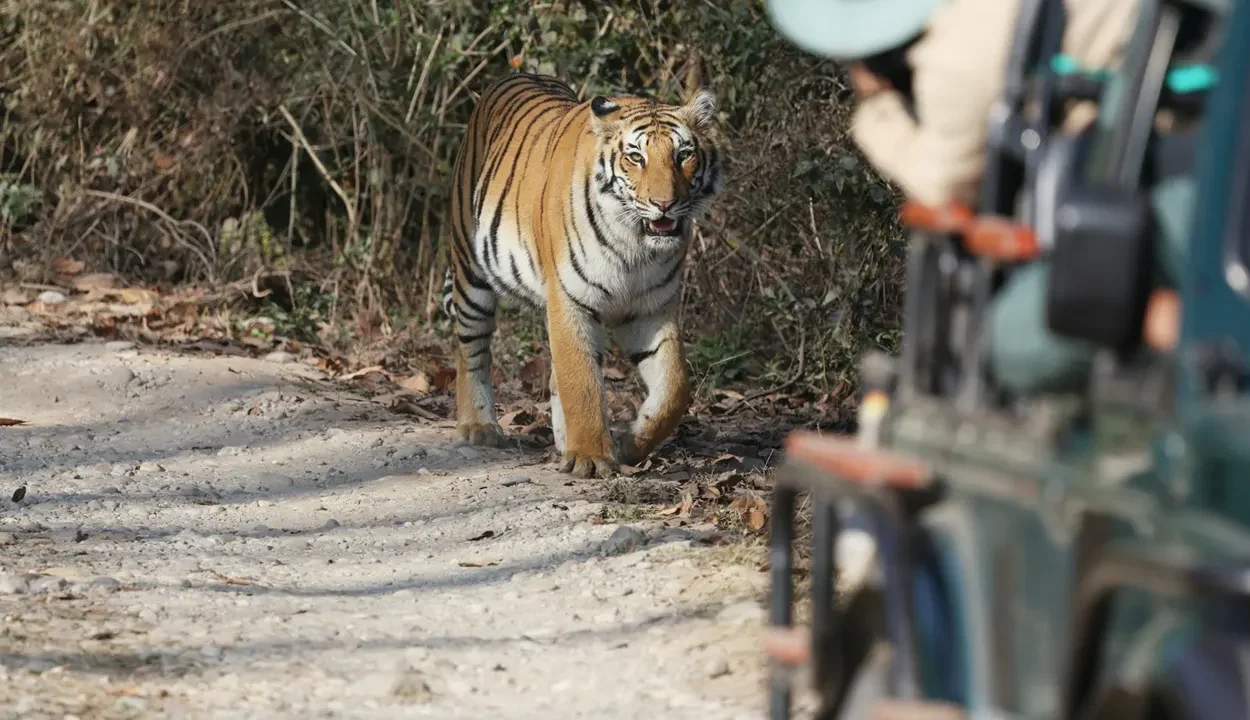
“Safari in India” gets used as shorthand for “tiger safari,” but that undersells the country by a lot. In the same list you’ll find one-horned rhinos in Assam’s flooded grasslands, the only wild Asiatic lions left on Earth, snow leopards tracked across Himalayan ridgelines in winter, and camel safaris through the Thar Desert. This guide covers all of it — the parks, the zones that actually matter, how booking works, what to wear, and what it’ll cost you.
Quick Guide: Best Safari Trips in India
| National Park / Reserve | Famous For | Best Safari Zone | Ideal Booking Window |
|---|---|---|---|
| Jim Corbett (Uttarakhand) | Royal Bengal Tiger, elephants | Dhikala, Bijrani | 45–90 days in advance |
| Ranthambore (Rajasthan) | Tigers & fort ruins | Zones 1–5 | 90 days in advance |
| Kaziranga (Assam) | One-horned rhinoceros | Kohora (Central), Bagori | 15–30 days in advance |
| Bandhavgarh (Madhya Pradesh) | Highest tiger density | Tala, Magdhi | 60–90 days in advance |
| Gir National Park (Gujarat) | Asiatic lions | Sasan Gir safari route | 30–60 days in advance |
Top Tiger Safaris in India
1. Jim Corbett National Park, Uttarakhand
India’s oldest national park, and still one of the most reliable places in the country for a genuine wild tiger sighting, set against the Ramganga river landscape.
- Best Time for Sightings: November to June; the premium Dhikala zone specifically opens November 15 and closes for monsoon around mid-June.
- Safari Types Available: Jeep safari, Canter safari (shared open-bus, up to ~18 seats), and Elephant safari in select zones.
- Top Safari Zones: Dhikala (best for landscape and elephant herds, overnight stays only), Bijrani (closest to Ramnagar, strong tiger density), Jhirna (open year-round, including monsoon).
- Permit Booking Process: Book through the official Corbett booking portal (corbettonline.uk.gov.in); domestic bookings typically open 45 days ahead, though popular zones and dates sell out fast.
- Pro-Tip: Book a night stay inside the Dhikala Forest Rest House if you can get a permit — it’s a genuinely different experience from a day-safari-only visit, and permits for it go quickly.
Planning this alongside a longer Delhi getaway? Our long weekend trips from Delhi guide covers Corbett as a standalone 3-day option.
2. Ranthambore National Park, Rajasthan
One of India’s most photographed tiger reserves, thanks to the striking backdrop of a crumbling 10th-century fort inside the park itself, and genuinely high sighting odds.
- Best Time for Sightings: October to June; April to June sees tigers venture closer to water sources, often improving visibility.
- Safari Types Available: Jeep (Gypsy) and Canter safari.
- Top Safari Zones: Zones 1–5 are generally considered the strongest for tiger activity; zones 6–10 are quieter but less crowded.
- Permit Booking Process: Official Rajasthan Forest Department portal; book roughly 90 days ahead for the zones and time slots you actually want.
- Pro-Tip: Ranthambore is a genuinely easy add-on from Jaipur — worth combining if you’re already covering Rajasthan’s heritage circuit.
If you’re routing through Rajasthan, our places to visit in Jaipur guide covers the city as a natural 3-hour extension point for this leg.
3. Bandhavgarh & Kanha National Parks, Madhya Pradesh
Bandhavgarh holds the highest tiger density of any Indian reserve, while neighboring Kanha’s dense Sal forests are widely credited as part of the inspiration behind Rudyard Kipling’s The Jungle Book.
- Best Time for Sightings: October to June; peak summer months (April–June) often push tigers toward waterholes, improving sighting odds.
- Safari Types Available: Jeep safari (the primary option at both parks).
- Top Safari Zones: Tala and Magdhi in Bandhavgarh (Tala specifically has the highest tiger density); Kanha and Kisli zones in Kanha.
- Permit Booking Process: Madhya Pradesh Forest Department’s official portal; book 60–90 days ahead for peak season.
- Pro-Tip: If you can only pick one, Bandhavgarh’s Tala zone generally offers the single best sighting odds of any zone in either park.
4. Tadoba-Andhari Tiger Reserve, Maharashtra
Maharashtra’s largest and oldest national park, known for consistently high tiger sighting probability and a core-buffer zone system that keeps parts of the park accessible even when others are closed.
- Best Time for Sightings: October to June; the buffer zones stay open even during parts of the year when core zones close.
- Safari Types Available: Jeep safari across both core and buffer zones.
- Top Safari Zones: Moharli and Kolara gates are the most popular core-zone entries.
- Permit Booking Process: Maharashtra Forest Department’s official booking system; book 30–60 days ahead for core zone slots.
- Pro-Tip: If core zone permits are sold out for your dates, buffer zone safaris here still deliver genuinely strong sighting rates — don’t write off the trip if Plan A falls through.
Beyond Tigers: Big Mammal & Exotic Safaris
5. Kaziranga National Park, Assam
Home to the largest population of the one-horned rhinoceros anywhere in the world, with dry-season grasslands making sightings noticeably easier than at most Indian wildlife parks.
- Best Time for Sightings: November to April, with peak dry-season visibility from December onward.
- Safari Types Available: Jeep safari and elephant-back safari (elephant safari availability depends on park regulations and can vary by season).
- Top Safari Zones: Kohora (Central Range) is the most popular and accessible; Bagori Range is known for strong rhino density.
- Permit Booking Process: Assam Forest Department’s official portal; book 15–30 days ahead, less competitive than the major tiger reserves.
- Pro-Tip: Book the earliest available morning jeep slot — sighting rates drop noticeably in the afternoon heat.
6. Gir National Park, Gujarat
The only place on Earth where you can see wild Asiatic lions — a genuinely unique safari experience found nowhere else in the world.
- Best Time for Sightings: December to March for the most comfortable weather; the park closes during monsoon (roughly mid-June to mid-October).
- Safari Types Available: Jeep safari, allocated by zone through a permit system.
- Top Safari Zones: The Sasan Gir safari route (the main and most established entry point).
- Permit Booking Process: Gujarat Forest Department’s official online portal; book 30–60 days ahead for peak winter season.
- Pro-Tip: Lion sighting rates here are genuinely high compared to tiger parks — this is one of the more reliable “big cat” safaris on this list for first-timers.
7. Hemis National Park, Ladakh
A completely different kind of safari — winter snow leopard tracking across high-altitude terrain, for travelers willing to trade jeep comfort for serious cold and patience.
- Best Time for Sightings: December to March, when snow leopards move to lower elevations in search of prey, making sightings more feasible.
- Safari Types Available: Guided on-foot and vehicle-assisted tracking expeditions, typically multi-day.
- Top Safari Zones: The Rumbak and Husing valleys are the most established snow leopard tracking areas.
- Permit Booking Process: Best arranged through a registered wildlife tour operator specializing in snow leopard expeditions, given the specialized guiding and permits required.
- Pro-Tip: This is a genuinely demanding trip — expect sub-zero temperatures, multi-day treks, and no guaranteed sighting despite the expedition length. Go in with realistic expectations and proper cold-weather gear.
8. Jaisalmer & Little Rann of Kutch: Desert Safaris
Two very different desert experiences — camel safaris through Jaisalmer’s Thar Desert dunes, and jeep safaris through the Little Rann of Kutch’s Wild Ass Sanctuary, home to the endangered Indian wild ass.
- Best Time for Sightings: October to March for both, avoiding the extreme desert heat of summer.
- Safari Types Available: Camel and jeep safari in Jaisalmer; jeep safari in the Little Rann of Kutch.
- Top Safari Zones: Sam Sand Dunes for Jaisalmer; the core sanctuary area of the Little Rann for wild ass sightings.
- Permit Booking Process: Jaisalmer camel safaris are largely informal and bookable through local operators; Little Rann of Kutch jeep safaris require permits through Gujarat’s Forest Department.
- Pro-Tip: These are lower-key, lower-cost safaris compared to the tiger and rhino reserves — a good option if you want the experience without the competitive permit booking.
Jeep vs. Canter Safari: Which One Should You Choose?
- Jeep (Gypsy 4×4): Private or shared with a small group, maneuverable, quieter, and generally better for photography — typically fits around 6 people.
- Canter (Open Bus): More budget-friendly per seat, higher seating elevation for viewing over grass and bushes, but noisier and less flexible for repositioning — typically fits 16–20 people.
If photography or a quieter wildlife experience matters to you, the jeep is worth the extra cost. If budget is the priority and you’re happy sharing the experience with a larger group, the canter gets the job done.
How to Book Safari Permits in India
Always book directly through each state’s official forest department portal rather than third-party sites — unofficial resellers routinely charge double the actual permit cost, and some aren’t legitimate at all. Resort and lodge packages that bundle safari permits with accommodation are a reasonable alternative if you’d rather not navigate the government booking system yourself, though they typically cost more than booking permits independently.
You’ll need original government ID (passport for foreign nationals, any accepted photo ID for Indian nationals) at the time of booking, and you must carry the same document during the actual safari — details can’t be changed once a booking is confirmed.
Safari Rules, Etiquette & Clothing Tips
- What to Wear: Earthy tones — khaki, olive green, brown — blend into the environment and don’t startle wildlife. Avoid bright red, yellow, or white, which stand out and can affect both sightings and photos.
- Noise: Keep conversation low and avoid loud noises — this isn’t just etiquette, it genuinely affects whether wildlife stays visible or bolts.
- No plastic littering: Most parks strictly enforce this, and violations can result in fines.
- Stay inside the vehicle: Stepping out inside the park is prohibited at essentially every Indian wildlife reserve, for obvious safety reasons.
Budget Breakdown for a Safari Trip
| Traveler Type | Approximate Cost | What’s Included |
|---|---|---|
| Budget Traveler | ₹2,500–₹4,000 per safari | Shared jeep or canter, budget stay nearby |
| Mid-Range / Luxury | ₹8,000–₹20,000+ per day | Private jeep, luxury jungle lodge, naturalist guide |
Costs vary meaningfully by park — Ranthambore and Bandhavgarh tend to run higher during peak season, while Kaziranga and the desert safaris are generally more affordable.
Frequently Asked Questions
Bandhavgarh, Tadoba, and Ranthambore consistently report among the highest tiger sighting rates in the country, thanks to a combination of high tiger density and terrain that offers good visibility.
Most government booking portals open 45 to 90 days in advance depending on the park, and popular zones for peak-season dates (especially Dhikala at Corbett and Zones 1–5 at Ranthambore) sell out well before the booking window closes.
Most core zones close from roughly July to September or October, including Dhikala, Bijrani, and Durga Devi at Corbett. Some buffer and year-round zones — including Jhirna and Dhela at Corbett, and Tadoba’s buffer areas — remain open through monsoon.
Yes, at less competitive parks like Kaziranga, Gir, or the desert safaris, where 15–60 days ahead is generally sufficient. The major tiger reserves — Corbett’s Dhikala zone, Ranthambore, and Bandhavgarh — are the ones where booking early genuinely matters.