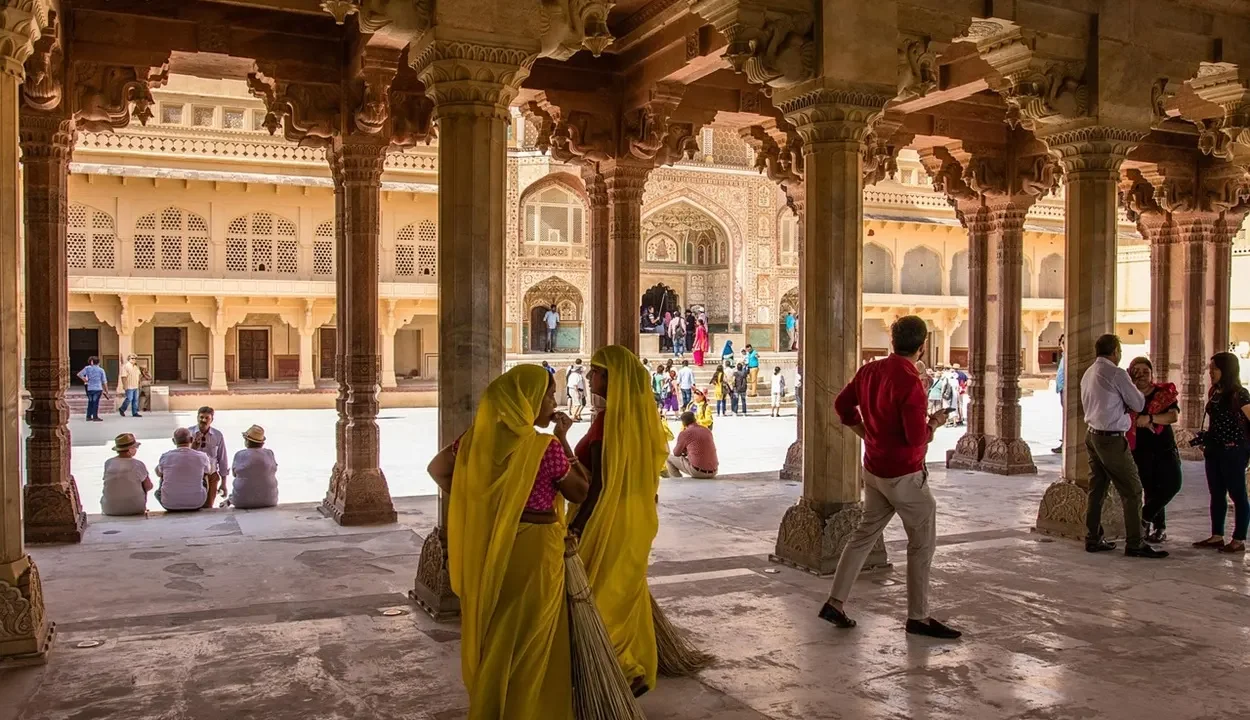
Jaipur’s Pink City core packs an unusual density of major sights into a walkable area, but the best places to visit in Jaipur actually spread well beyond the obvious three (Amber Fort, City Palace, Hawa Mahal) into gardens, lesser-known temples, and viewpoints most first-time visitors never hear about. This guide covers 20+ places organized by type and location, with the practical details — timings, entry fees, distance, and how to reach each one — that let you actually build a sequence rather than a wishlist.
Whether you’re an Indian traveler on a weekend trip or visiting from the USA, UK, Australia, or elsewhere, you’ll also find the logistics that matter most: visa notes, transport options, dress code, and honest timing advice.
Quick Sightseeing Summary
- Must-See Big Three: Amber Fort, City Palace, and Hawa Mahal.
- Best Sunset Spot: Nahargarh Fort, overlooking the entire Pink City skyline.
- Top Free Landmarks: Patrika Gate, Jal Mahal (lake view), and Birla Mandir.
- Ideal Time Needed: 2 to 3 full days to cover both central monuments and surrounding ridge forts.
Quick Reference Table
| Place | Category | Distance from City Center | Time Needed | Entry Fee |
|---|---|---|---|---|
| Amber Fort | Fort | ~11 km | 2.5–3 hrs | Low (Indian), higher (foreign) |
| City Palace | Palace | Central | 2 hrs | Moderate, tiered |
| Hawa Mahal | Palace | Central | 30–45 min | Low |
| Jantar Mantar | Heritage/Science | Central | 1 hr | Low |
| Nahargarh Fort | Fort | ~6 km | 1.5–2 hrs | Low |
| Jaigarh Fort | Fort | ~11 km (near Amber) | 1.5 hrs | Low |
| Albert Hall Museum | Museum | Central | 1–1.5 hrs | Low |
| Jal Mahal | Palace (exterior view) | ~5 km | 20–30 min | Free (exterior) |
| Birla Mandir | Temple | ~5 km | 30–45 min | Free |
| Galtaji Temple (Monkey Temple) | Temple | ~10 km | 1–1.5 hrs | Free |
| Patrika Gate | Landmark | ~8 km | 20–30 min | Free |
| Sisodia Rani Garden | Garden | ~9 km | 1 hr | Low |
| Central Park | Park | Central | 45 min–1 hr | Free |
Majestic Forts
Jaipur’s forts are the reason most people put the city on their itinerary, and each offers a genuinely different experience.
Amber Fort
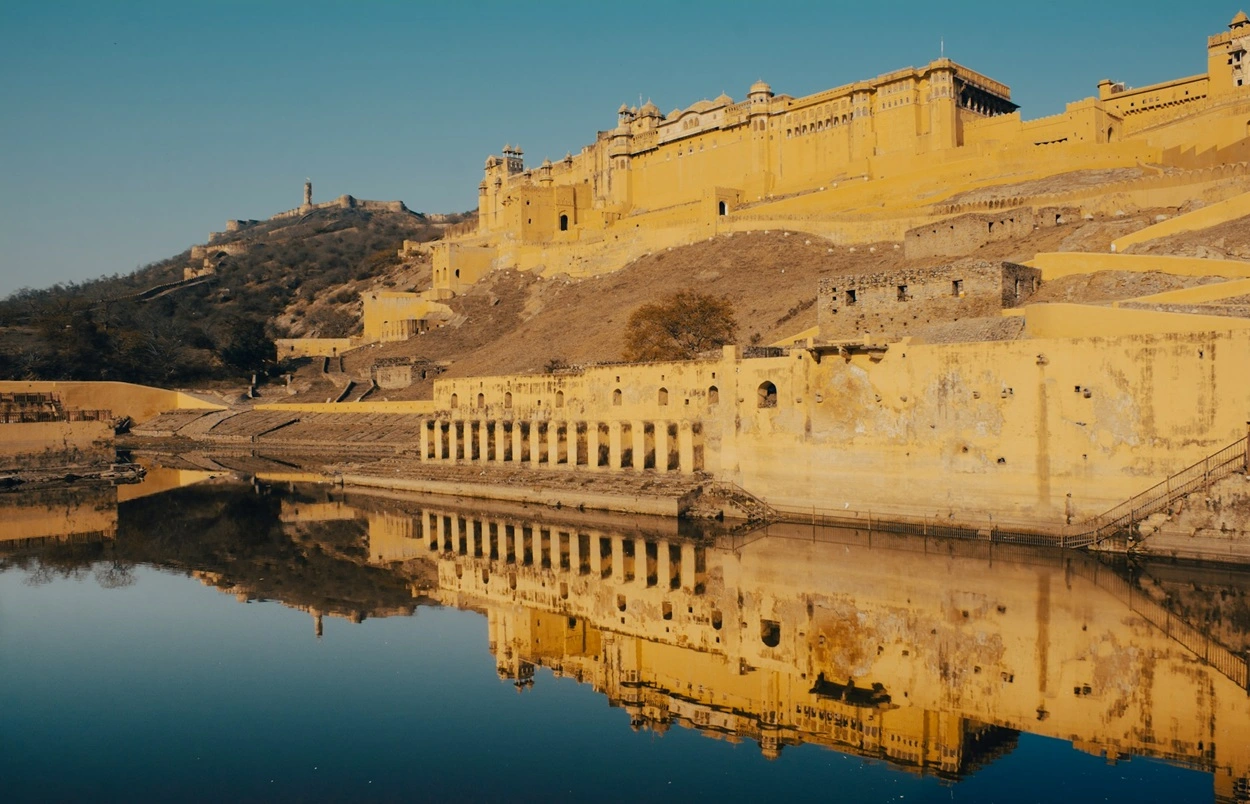
Location & Distance: About 11 km from central Jaipur.
Timings: Sunrise to sunset.
Entry Fee: Nominal for Indian nationals, higher for foreign visitors.
Why Visit: Jaipur’s most iconic monument, with the mirrored Sheesh Mahal and sweeping views over Maota Lake from its hilltop position. Read the complete logistics in our detailed Amber Fort guide.
Tip: Visit early morning to beat tour groups; a jeep ride up avoids the animal welfare concerns tied to elephant rides.
Nahargarh Fort
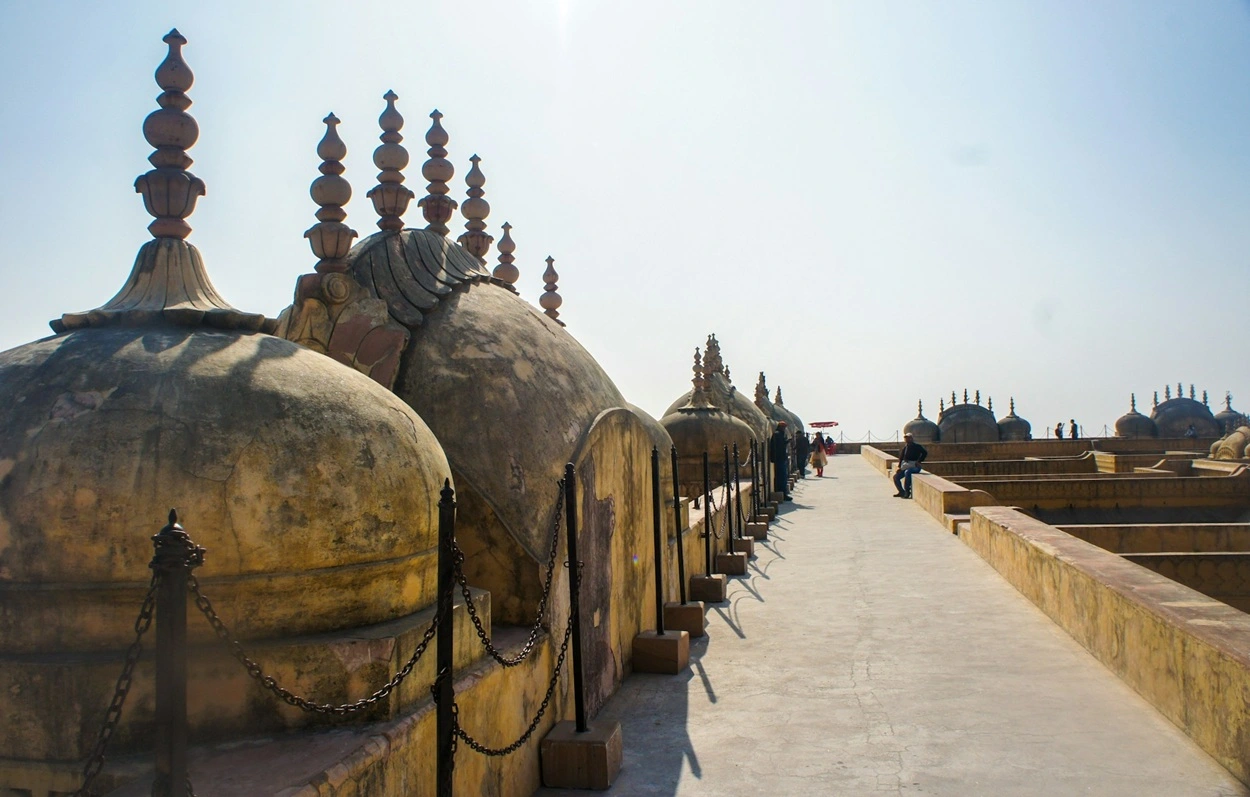
Location & Distance: About 6 km from the city center, on the Aravalli hills overlooking Jaipur.
Timings: Open into the evening.
Entry Fee: Nominal.
Why Visit: The single best sunset viewpoint over the Pink City, with the whole valley visible from the ramparts. Plan your evening using our dedicated Nahargarh Fort guide.
Tip: Combine with dinner at the on-site restaurant for the view after dark too.
Jaigarh Fort
Location & Distance: About 11 km, connected to Amber Fort by an underground tunnel.
Timings: Standard daytime hours.
Entry Fee: Nominal.
Why Visit: Home to the Jaivana cannon, the largest wheeled cannon in the world, and genuinely quieter than Amber Fort despite sitting right next to it. Learn more in our Jaigarh Fort guide.
Tip: Pair this with Amber Fort in the same visit rather than a separate trip.
Royal Palaces
City Palace
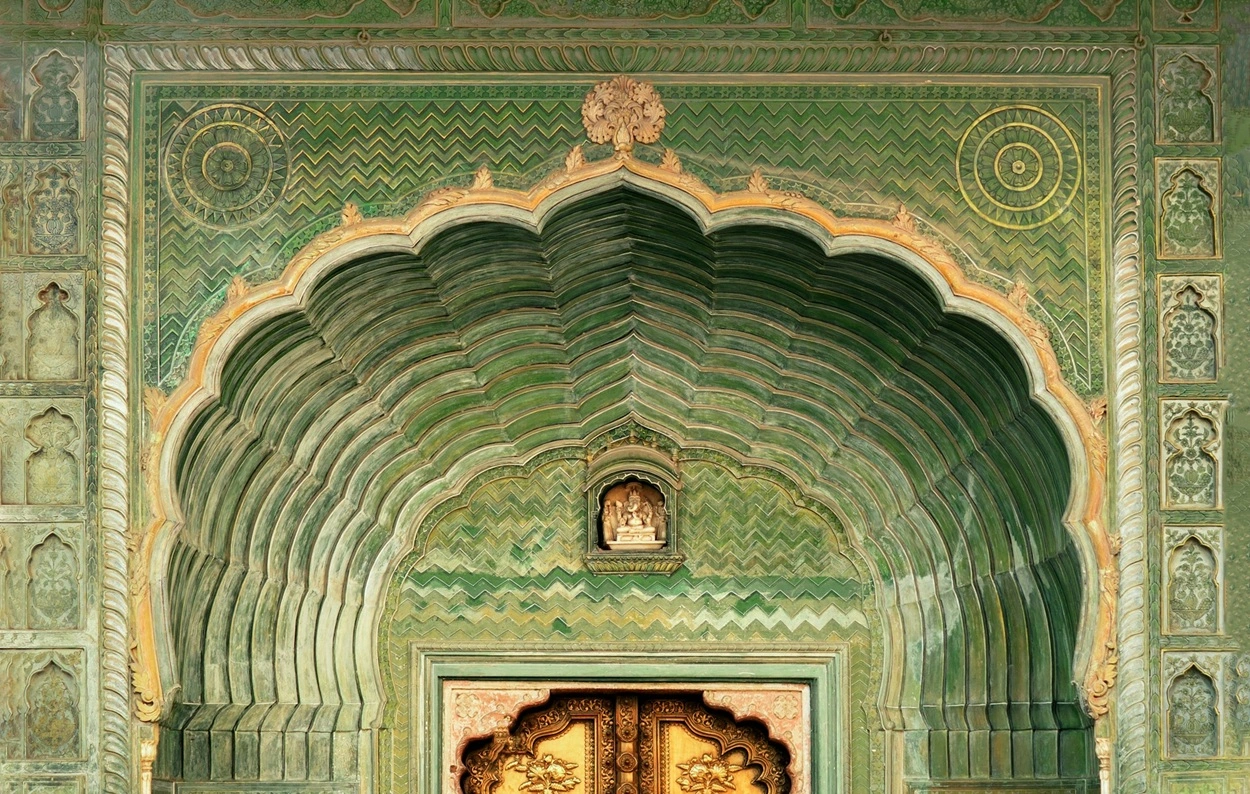
Location & Distance: Central Jaipur, within the old city walls.
Timings: 9:30 AM–5 PM, generally.
Entry Fee: Tiered — a standard ticket and a premium package granting access to additional private areas. For ticket tiers, see our City Palace Jaipur guide.
Why Visit: Still a partial royal residence, blending Rajput and Mughal architecture, with museum sections covering royal costumes and weaponry.
Tip: Late morning avoids the initial rush while staying ahead of afternoon heat.
Hawa Mahal
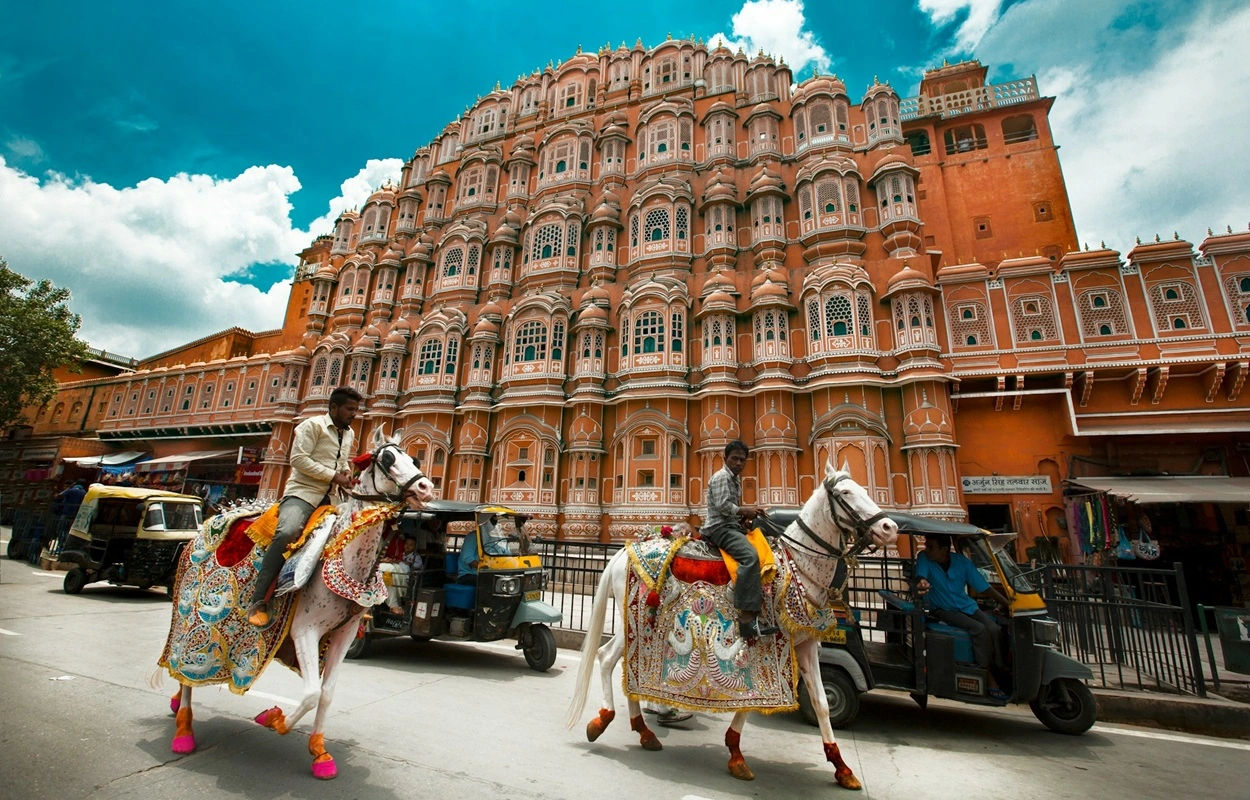
Location & Distance: Central Jaipur, on the edge of City Palace complex.
Timings: Standard daytime hours.
Entry Fee: Nominal.
Why Visit: The honeycomb-facade “Palace of Winds,” one of India’s most recognizable buildings, built so royal women could observe street life unseen. Find photography points in our Hawa Mahal guide.
Tip: The best photo isn’t from inside — it’s from the rooftop café directly across the street, early morning for the best light.
Jal Mahal
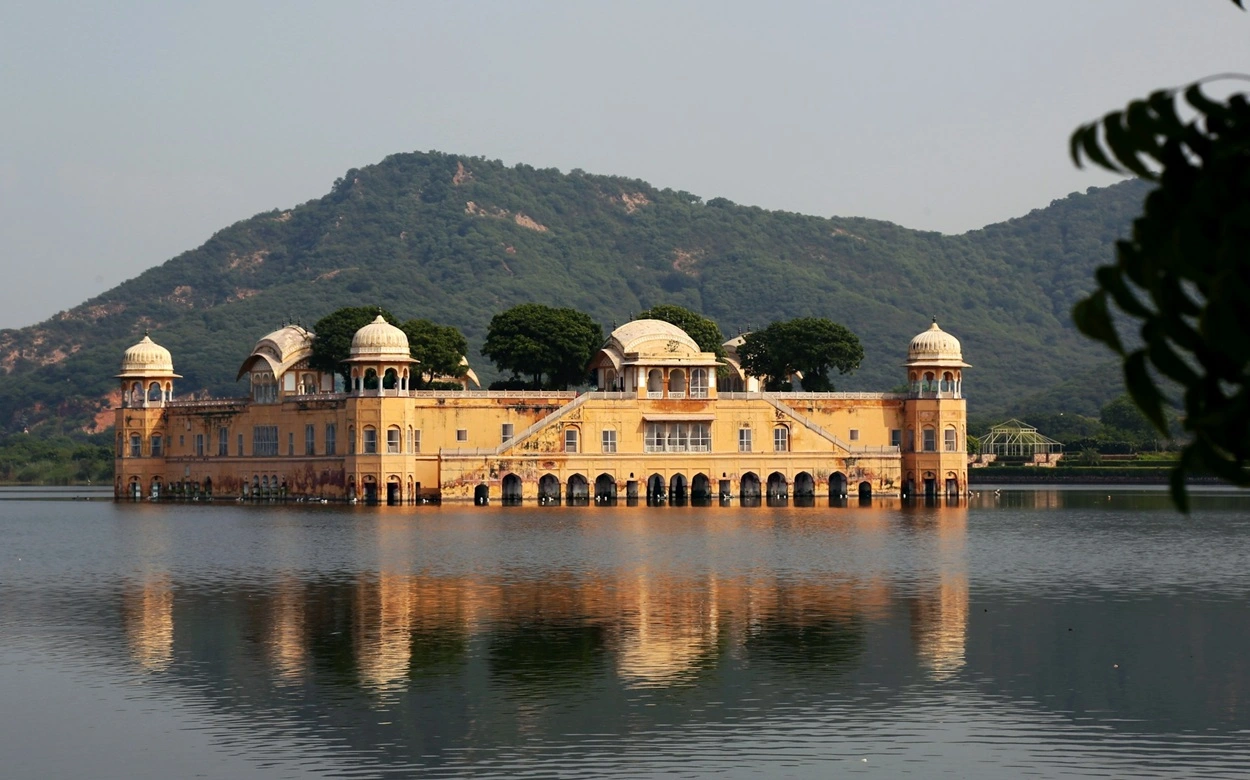
Location & Distance: About 5 km from the city center, on Man Sagar Lake.
Timings: Viewable anytime from the lakeside; interior isn’t open to the public.
Entry Fee: Free to view from outside.
Why Visit: A palace that appears to float on the lake, genuinely striking especially at sunset — this is a photo stop rather than a walk-through attraction. Check our complete Jal Mahal Jaipur guide.
Tip: Combine with a Nahargarh Fort visit, since both sit along a similar route.
Temples & Spiritual Sites
Birla Mandir
Location & Distance: About 5 km from the city center.
Timings: Standard daytime hours, typically closed for a midday break.
Entry Fee: Free.
Why Visit: A white marble temple dedicated to Lakshmi-Narayan, genuinely striking when lit up in the evening.
Tip: Photography is typically restricted inside — check current rules on arrival.
Galtaji Temple (Monkey Temple)
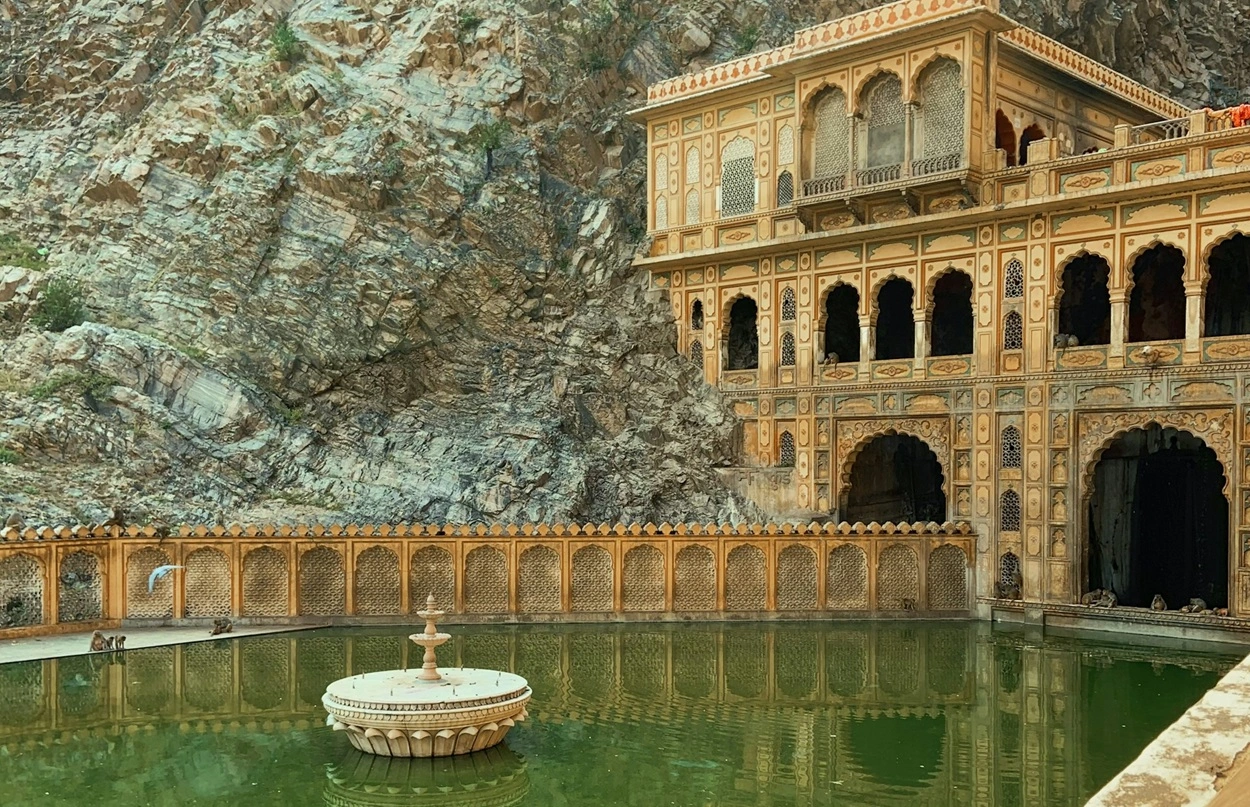
Location & Distance: About 10 km from the city center.
Timings: Standard daytime hours.
Entry Fee: Free.
Why Visit: A pilgrimage site built around natural springs and sacred water tanks, home to a large resident monkey population that gives the site its popular nickname.
Tip: Keep food and loose items secured — the monkeys here are genuinely bold around visitors carrying snacks.
Gardens, Parks & Landmarks
Sisodia Rani Garden
Location & Distance: About 9 km from the city center.
Timings: Standard daytime hours.
Entry Fee: Nominal.
Why Visit: A terraced Mughal-style garden built for a Jaipur queen, with fountains and murals depicting Krishna legends — genuinely peaceful and far less crowded than the central attractions.
Tip: A good stop if you want a break from monument-hopping without leaving the sightseeing route.
Patrika Gate
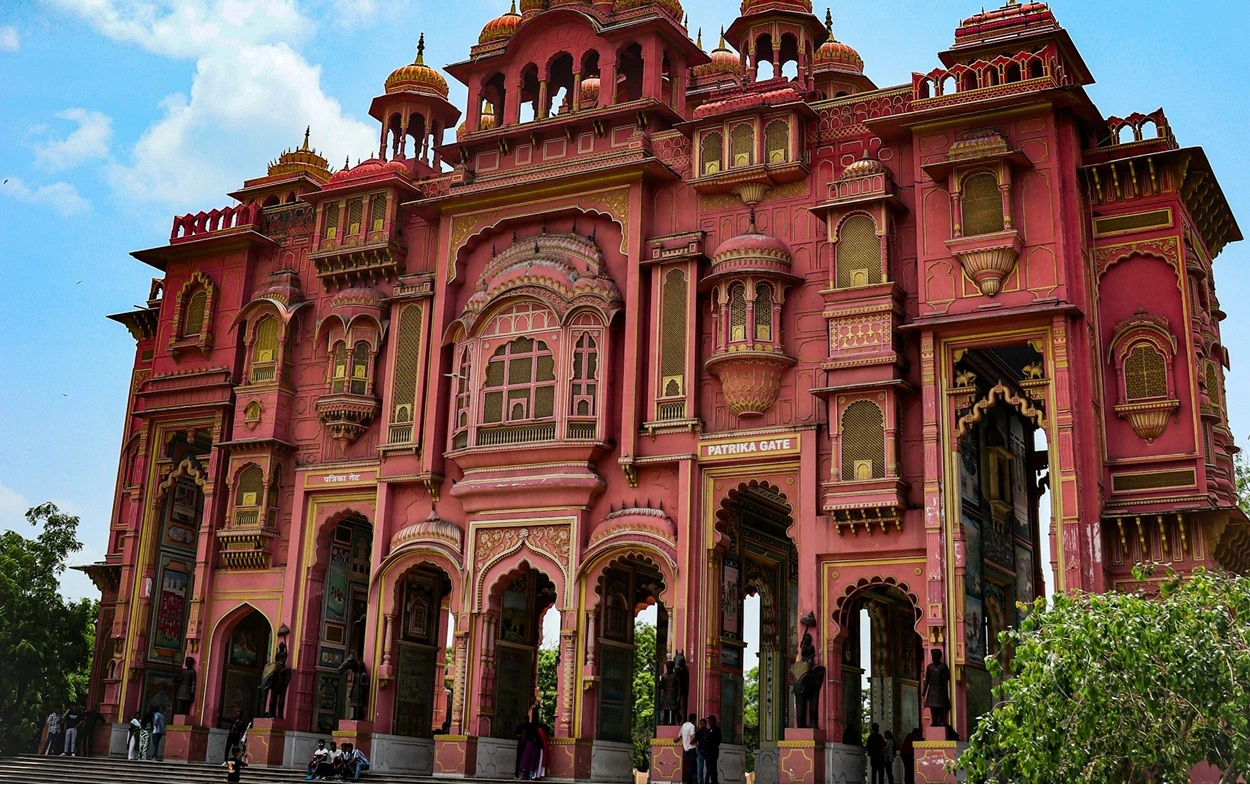
Location & Distance: About 8 km from the city center, in Jawahar Circle.
Timings: Viewable anytime; best lit in the evening.
Entry Fee: Free.
Why Visit: A genuinely spectacular, brightly painted gateway decorated with Rajasthani art — one of the most photogenic and least “official-tourist-trail” spots on this list.
Tip: Evening visits catch the gate illuminated, which is when it photographs best.
Central Park
Location & Distance: Central Jaipur.
Timings: Early morning to evening.
Entry Fee: Free.
Why Visit: A large green space in the middle of the city, home to a giant national flag and a genuinely pleasant walking loop.
Tip: Good for an early morning walk before the day’s sightseeing heat sets in.
Museums & Heritage Sites
Jantar Mantar
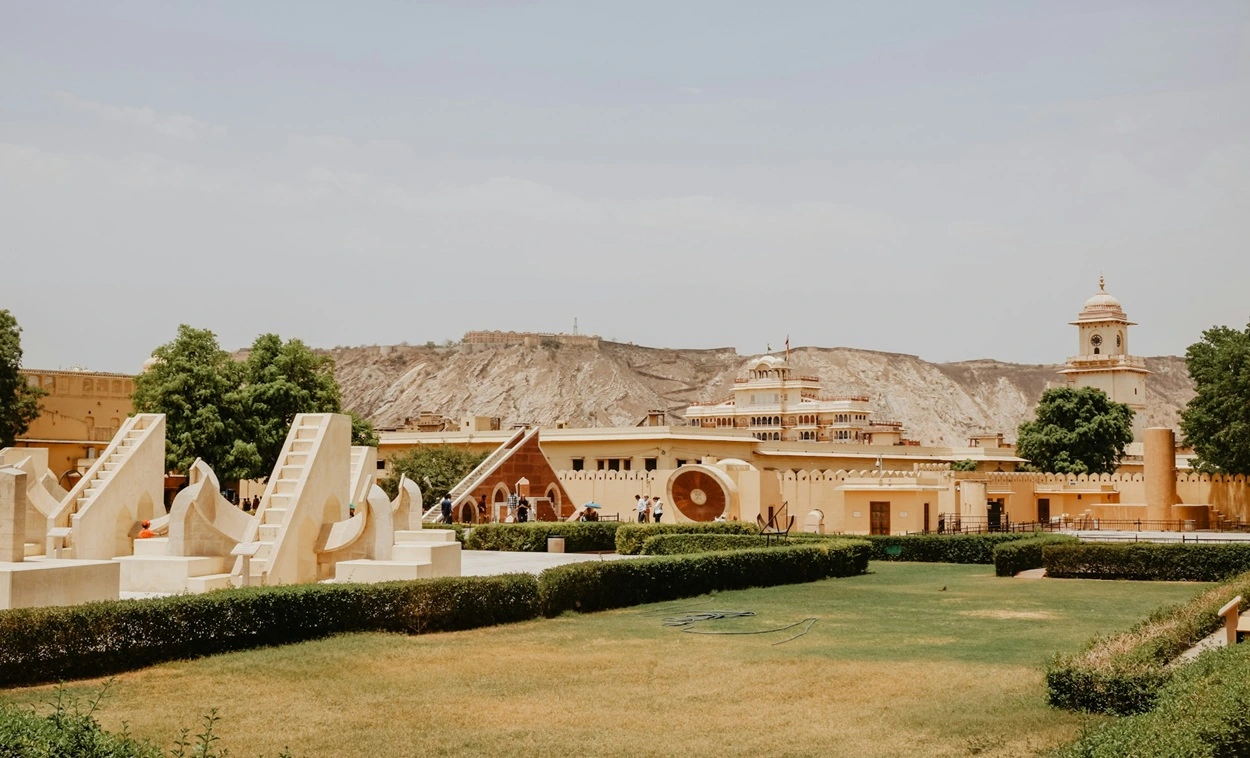
Location & Distance: Central Jaipur, adjacent to City Palace.
Timings: Standard daytime hours.
Entry Fee: Nominal.
Why Visit: A UNESCO World Heritage astronomical observatory built in the 18th century, home to the world’s largest stone sundial. See operational details in our Jantar Mantar Jaipur guide.
Tip: Midday actually works well here — the sundial’s function is easier to appreciate with the sun higher overhead.
Albert Hall Museum
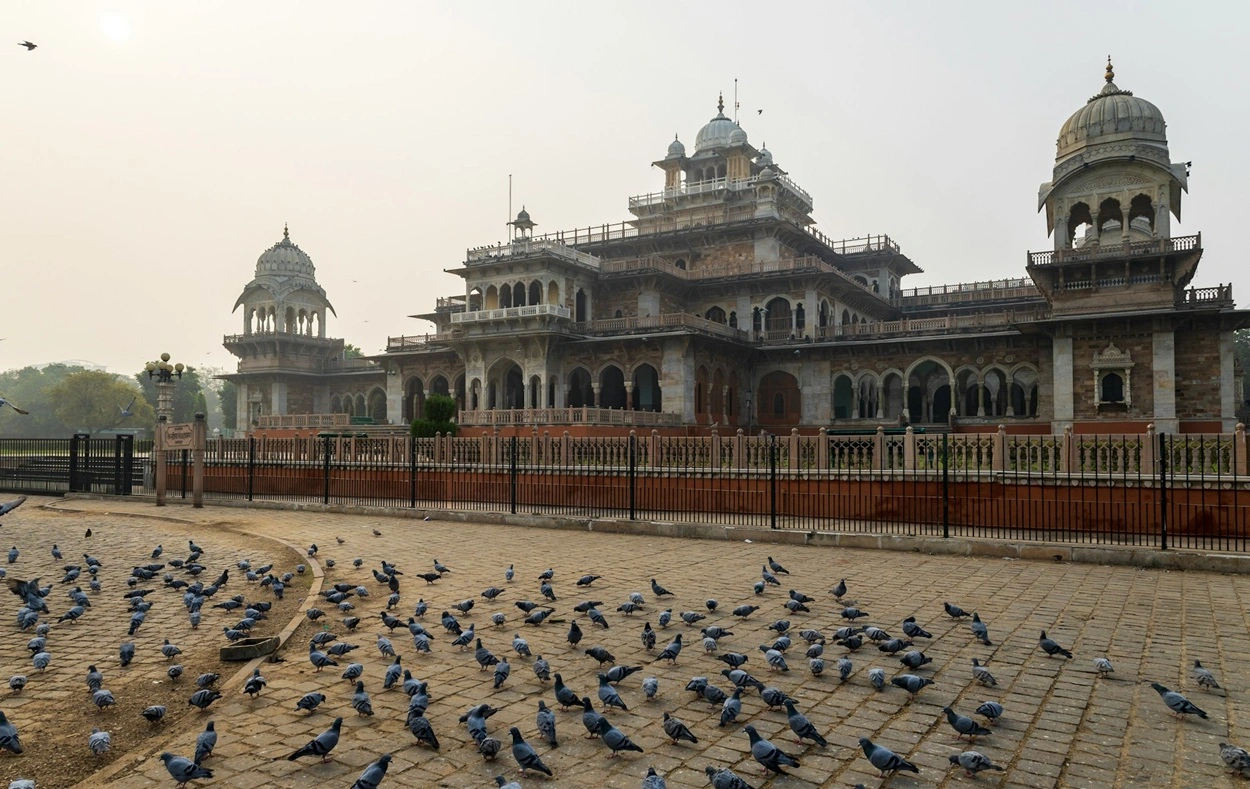
Location & Distance: Central Jaipur, in Ram Niwas Garden.
Timings: Standard daytime hours, plus evening opening for the illuminated exterior.
Entry Fee: Nominal.
Why Visit: Jaipur’s oldest museum, housing an eclectic collection of art, textiles, and artifacts inside a genuinely striking Indo-Saracenic building.
Tip: The building itself, lit up at night, is worth a separate evening visit even if you’ve already seen the interior during the day. It’s also featured in our guide on things to do in Jaipur at night.
Places Near Jaipur (Day Trips)
If you have an extra day, these are genuinely worth the drive out of the city. Explore more options in our dedicated places to visit near Jaipur and best day trips from Jaipur guides.
- Chand Baori (Abhaneri Stepwell): About 95 km, roughly 2 hours each way — a dramatic 13-story geometric stepwell, one of the most photogenic and least typical sights in the region.
- Sambhar Salt Lake: About 75–80 km, roughly 1.5–2 hours each way — India’s largest inland saline lake, with flamingo sightings in winter.
- Bhangarh Fort: About 80–90 km, roughly 2–2.5 hours each way — known as one of India’s “most haunted” sites, with striking abandoned ruins; the ASI restricts entry before sunrise and after sunset.
Practical Travel Information for International Visitors
Visa Requirements
Most international travelers, including visitors from the USA, UK, and Australia, can apply for an Indian e-Visa online ahead of their trip — this is typically the simplest route for standard tourism. Eligible nationalities and requirements can change, so confirm current e-Visa rules on India’s official government visa portal before booking.
Currency & Payments
The Indian Rupee (INR) is the only accepted currency. Cards are widely accepted at hotels and larger restaurants, but carry cash for markets, auto-rickshaws, and smaller vendors, and use ATMs at established bank branches. For a detailed breakdown of daily expenses, shopping in markets, and entry tickets, read our Jaipur trip cost guide and Jaipur shopping guide.
Best Time to Visit
October through March offers the most comfortable weather for a day of sightseeing. Summer (April–June) brings genuinely extreme heat, often above 40°C, which makes outdoor fort and monument visits considerably harder to enjoy. Check monthly climate breakdowns in our best time to visit Jaipur guide.
Getting Around & Reaching Jaipur
App-based cabs (Uber and Ola) are reliable and a good default for international visitors. Auto-rickshaws are cheaper but typically require agreeing on a price before the ride starts, since meters aren’t consistently used. Jaipur’s metro line covers limited routes, useful for specific trips rather than the whole city. Many central-Jaipur attractions (City Palace, Hawa Mahal, Jantar Mantar) sit close enough together to cover on foot. If traveling from the national capital, check our guides on how to reach Jaipur from Delhi or driving via the Delhi to Jaipur road trip guide. Discover more transit advice in our Jaipur travel tips guide.
Dress Code & Cultural Etiquette
Modest clothing — shoulders and knees covered — is expected at temples and generally appreciated elsewhere too. Remove shoes before entering temple areas, and ask before photographing local people, which is almost always received well when done politely. Be sure to try traditional Rajasthani cuisine using our guide to the best food in Jaipur.
Safety & Where to Stay
Jaipur is generally considered safe for tourists, including solo travelers, though standard precautions apply — stick to well-populated, well-lit areas after dark, use registered taxi apps, and keep valuables secure in crowded market areas. For neighborhood breakdowns, check our where to stay in Jaipur guide.
Suggested Itineraries & Further Travel
To sequence these attractions seamlessly without backtracking, follow our master Jaipur travel guide or choose from our specific daily plans: 1-day Jaipur itinerary, 2-day Jaipur itinerary, or 3-day Jaipur itinerary. You can also explore curated activity lists in things to do in Jaipur.
Heading onward from Jaipur? Check out our road and travel guides for Jaipur to Ajmer guide and Jaipur to Pushkar guide.
- 1 Day: Amber Fort and Jaigarh Fort in the morning, City Palace, Jantar Mantar, and Hawa Mahal in the afternoon, Nahargarh Fort for sunset.
- 2 Days: Split the above across two days at a more relaxed pace, adding Albert Hall Museum, Patrika Gate, and Birla Mandir on Day 2.
- 3 Days: Add Sisodia Rani Garden, Galtaji Temple, and a full-day trip to Chand Baori or Sambhar Salt Lake.
Frequently Asked Questions
Amber Fort, City Palace, Hawa Mahal, and Jantar Mantar cover the essentials well, with Nahargarh Fort’s sunset view as a strong addition if time allows.
2 to 3 days covers the major sites comfortably; a single tightly-scheduled day is possible but leaves little room for the lesser-known spots like Patrika Gate or Sisodia Rani Garden.
Yes — Jal Mahal (exterior view), Patrika Gate, Birla Mandir, Galtaji Temple, and Central Park are all free, alongside simply walking through the old city’s pink-painted streets.
Generally yes — Jaipur sees significant solo and international tourist traffic, and standard precautions (registered transport, well-populated areas after dark) apply as they would in any major tourist city.
Yes, most international visitors need a visa to enter India — the e-Visa is typically the simplest option for tourism, though current requirements should be confirmed on the official Indian government visa portal before travel.
October through March offers the most comfortable temperatures, avoiding both summer’s extreme heat and monsoon’s unpredictability.
None are worth outright skipping, but Sambhar Salt Lake and Bhangarh Fort both require a significant day-trip commitment — if your schedule is tight, prioritizing the city-center and near-city sites first is the more efficient approach.


