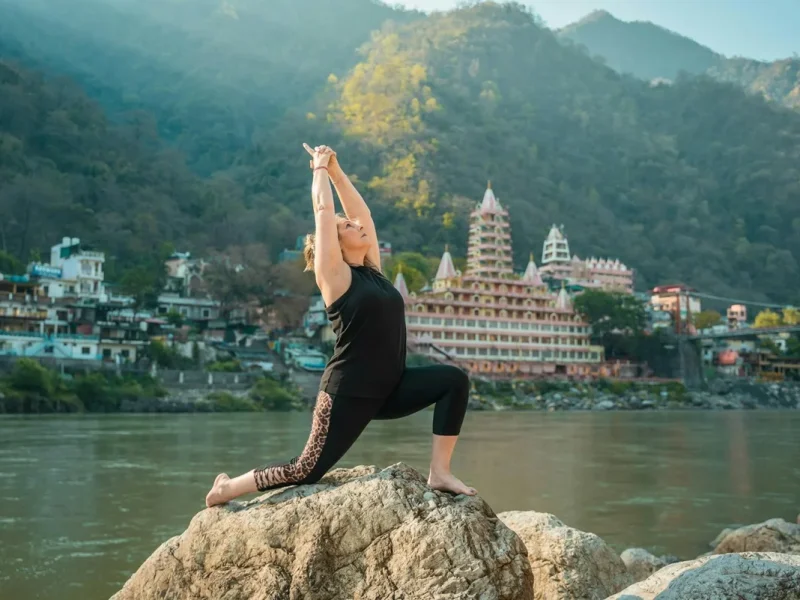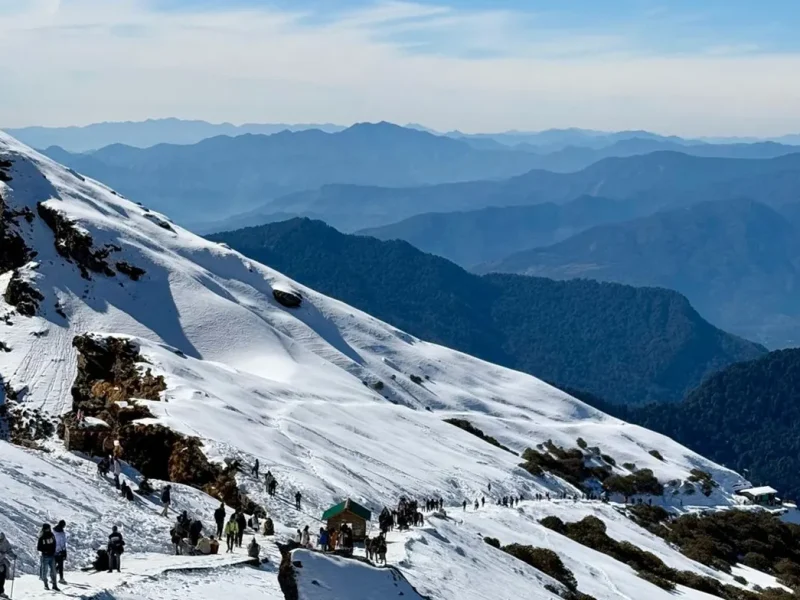
Rishikesh pulls three completely different crowds into the same small town — spiritual seekers here for yoga and the Ganga Aarti, adrenaline chasers here for rafting and bungee jumping, and a younger café crowd here for the Tapovan riverside hangout scene. Somehow it works. This guide covers all three, organized so you can build a trip around whichever version of Rishikesh you’re actually here for. If you’re traveling out from Delhi, explore our quick guide on weekend getaways from Delhi or browse top options for long weekend trips from Delhi.
Tapovan vs Swarg Ashram: Where Should You Base Yourself?
New visitors often get confused about which side of the river to stay on — here’s the quick breakdown.
- Tapovan Side: Hostels, modern cafes, adventure sport operators, and a younger backpacker crowd. Best if rafting, bungee jumping, and café-hopping are your priority.
- Swarg Ashram / Ram Jhula Side: Traditional ashrams, peaceful ghats, pure vegetarian eateries, and a more family-friendly, spiritual atmosphere.
Both sides are connected by the suspension bridges below, so you’re never far from either scene regardless of where you stay.
Iconic Landmarks & Suspension Bridges
1. Ram Jhula & Laxman Jhula
Ram Jhula remains a fully functional pedestrian suspension bridge connecting Sivananda Ashram to Swarg Ashram, with steady foot traffic and Ganga views throughout the day. Laxman Jhula, its iconic older counterpart, has been permanently closed for safety reasons — the newly built Bajrang Setu (India’s first glass-floored suspension bridge, located right beside Laxman Jhula) now serves as its modern replacement.
- Best Known For: River views, pedestrian bridge walk, photography
- Timings & Entry Fee: Open all day, free
- Ideal Duration: 30–45 minutes
- Pro-Tip: Don’t plan around visiting Laxman Jhula itself — it’s closed. Bajrang Setu and Ram Jhula are the two crossings actually in use.
2. Janki Jhula (Janaki Setu)
A newer, noticeably more spacious suspension bridge connecting Swarg Ashram and Muni Ki Reti, built partly to ease foot traffic once Laxman Jhula closed.
- Best Known For: Wide pedestrian bridge, river crossing, views
- Timings & Entry Fee: Open all day, free
- Ideal Duration: 20–30 minutes
- Pro-Tip: Less crowded than Ram Jhula or Bajrang Setu at most times of day — a good option if you want river photos without dodging foot traffic.
3. Triveni Ghat
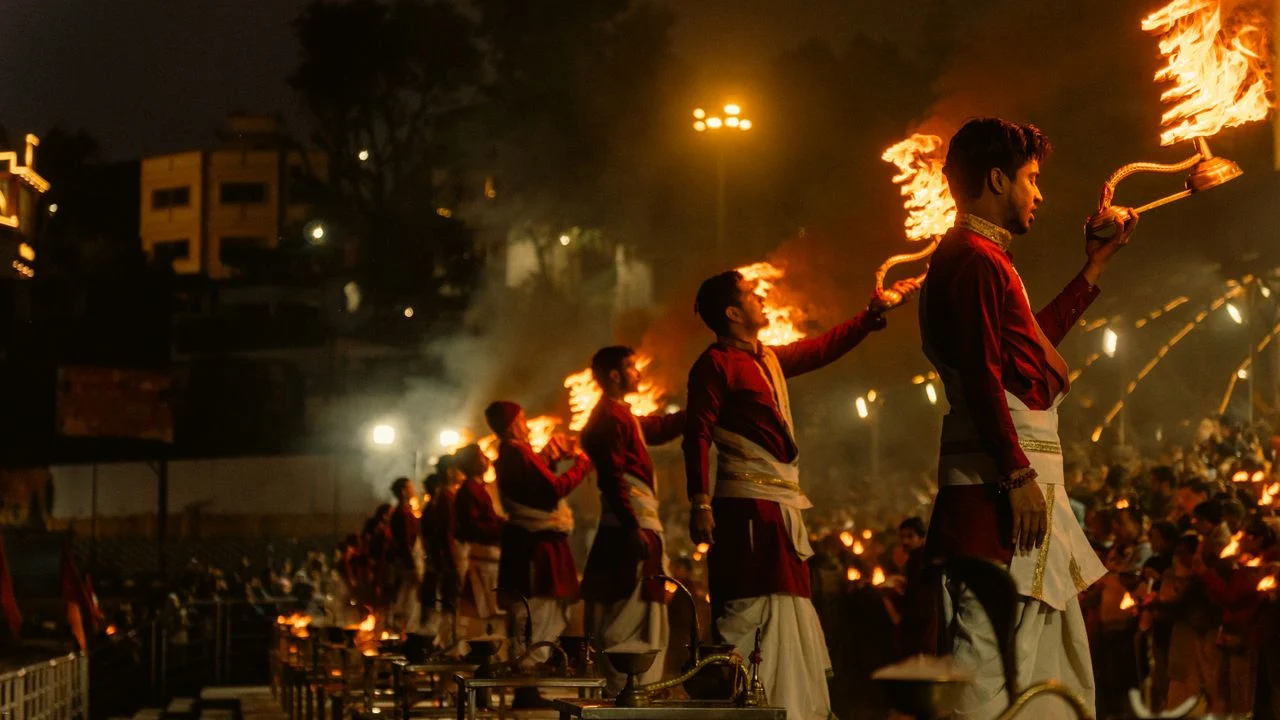
Rishikesh’s main ghat, and the site of a genuinely moving evening Ganga Aarti — locals and travelers gather along the steps as priests perform the fire ritual right at the water’s edge.
- Best Known For: Ganga Aarti, holy dip, spiritual atmosphere
- Timings & Entry Fee: Open all day, free; Aarti typically begins around sunset
- Ideal Duration: 1 hour
- Pro-Tip: Reach Triveni Ghat by 5:30 PM to secure a front-row seat for the Aarti — it fills up fast as sunset approaches.
Spiritual & Cultural Spots
4. Parmarth Niketan Ashram
One of Rishikesh’s largest ashrams, famous for its own large-scale evening Ganga Aarti on the ashram’s private ghat, with a genuinely Vedic, ceremonial atmosphere.
- Best Known For: Evening Ganga Aarti, yoga programs
- Timings & Entry Fee: Open all day, free to attend the Aarti
- Ideal Duration: 1 hour
- Pro-Tip: This Aarti tends to be less crowded than Triveni Ghat’s, and arguably more atmospheric given the ashram setting.
5. Beatles Ashram (Chaurasi Kutia)
The abandoned ashram where the Beatles famously stayed in 1968, now covered in vibrant graffiti and street art, tucked inside the edge of Rajaji National Park’s forest setting.
- Best Known For: Beatles history, graffiti art, photography
- Timings & Entry Fee: Roughly 9 AM–5 PM; entry around ₹600 for foreigners / ₹150 for Indians (subject to revision, confirm current rates locally)
- Ideal Duration: 1.5–2 hours
- Pro-Tip: Go early morning for softer light on the murals and noticeably fewer people in your photos.
6. Tera Manzil Temple (Trimbakeshwar Temple)
A 13-story temple near the old Laxman Jhula crossing, with each floor dedicated to a different deity and sweeping river views from the upper levels.
- Best Known For: Multi-story temple architecture, river views
- Timings & Entry Fee: Open daily, free
- Ideal Duration: 30–45 minutes
- Pro-Tip: Climb to the top floor specifically for the best river panorama — most visitors stop partway up and miss it.
7. Vashishta Gufa
A quiet, naturally cool cave on the banks of the Ganga, associated with the sage Vashishta and used for meditation — genuinely serene compared to Rishikesh’s busier ghats.
- Best Known For: Meditation, quiet natural setting
- Timings & Entry Fee: Open daily, free
- Ideal Duration: 30–60 minutes
- Pro-Tip: It’s about 20 km from central Rishikesh — combine it with a Byasi or Shivpuri visit since they’re along the same stretch.
Waterfalls & Nature Escapes
8. Neer Garh Waterfall (Neer Gaddu)
A short, easy trek leads to natural pools and a cascading waterfall — one of Rishikesh’s most accessible nature escapes, with roadside tea stalls along the trail. If you want to expand your trip to higher mountain views within driving distance, check out our guide on hill stations near Delhi within 300 km.
- Best Known For: Short trek, natural swimming pools
- Best Time to Visit: Daylight hours; nominal entry fee (a few hundred rupees, subject to change)
- Ideal Duration: 2–3 hours
- Pro-Tip: Best visited post-monsoon (October onward) when the water flow is strong but the trail isn’t slippery.
9. Patna Waterfall & Garud Chatti Waterfall
Two quieter, less crowded alternatives to Neer Garh — genuinely offbeat picks for travelers who want a waterfall without the tour-group traffic.
- Best Known For: Offbeat waterfalls, fewer crowds
- Timings & Entry Fee: Daylight hours; free to nominal entry depending on the specific spot
- Ideal Duration: 1.5–2 hours each
- Pro-Tip: Ask locally about current trail conditions before heading out — these are less maintained than the main Neer Garh route.
10. Shivpuri & Byasi
Scenic riverbank stretches upstream from Rishikesh, hemmed in by forested hills — this is also where most of the rafting starts, making it a natural stop for both nature and adventure. Shivpuri also acts as a key transit junction if you’re planning an extended road trip further into Garhwal; learn more in our detailed Delhi to Chopta travel guide.
- Best Known For: River scenery, rafting starting points, riverside camping
- Timings & Entry Fee: Open access; camping and activity charges vary by operator
- Ideal Duration: Half day to overnight (camping)
- Pro-Tip: An overnight riverside camp here is a genuinely good way to break up a rafting day rather than driving back to Rishikesh the same evening.
Adventure Activities & Sports
11. White Water Rafting (Shivpuri to Rishikesh)
Rishikesh’s signature adventure activity, with rapid grades ranging from beginner-friendly (Grade I–II) to genuinely challenging (Grade III–IV) depending on the stretch and season.
- Best Known For: Rapids of varying difficulty, river adventure
- Timings & Entry Fee: Morning and afternoon slots; pricing varies by operator and route length
- Ideal Duration: 2–4 hours depending on the stretch
- Pro-Tip: Book your slot online a day ahead — Saturday morning slots fill up fast in peak season (September to June; closed during monsoon).
12. Bungee Jumping at Jump In Heights (Mohan Chatti)
India’s highest bungee platform at 83 meters, run by a well-established operator on the outskirts of Rishikesh — one of the most talked-about adventure activities in the region.
- Best Known For: India’s highest bungee jump
- Timings & Entry Fee: Typically 9 AM–4 PM by appointment; pricing runs into several thousand rupees and changes periodically — confirm current rates directly with the operator before booking
- Ideal Duration: 2–3 hours including the full process (briefing, gearing up, the jump itself)
- Pro-Tip: Book a few days ahead in peak season, and check the operator’s medical/age restrictions before traveling out to the site.
13. Giant Swing, Flying Fox & Cliff Jumping
The same adventure parks offering bungee jumping typically run these as well — a giant swing and flying fox zipline for a slightly less extreme thrill, and cliff jumping for those craving something more.
- Best Known For: Additional adrenaline activities alongside bungee jumping
- Timings & Entry Fee: Same operator hours as bungee jumping; pricing varies by activity
- Ideal Duration: 30 minutes to 1 hour per activity
- Pro-Tip: Combo packages (bungee + giant swing + flying fox) are usually cheaper than booking each separately if you want to try more than one.
Aesthetic Cafes & Lifestyle Hubs
14. Tapovan Café Circuit
Little Buddha Cafe, Freedom Cafe, Beatles Cafe, and Bistro Nirvan anchor Tapovan’s café scene — a mix of river views, live music evenings, and a genuinely international backpacker crowd.
- Best Known For: Café-hopping, river views, backpacker atmosphere
- Timings & Entry Fee: Most open through the day into evening; no entry fee, just food/drink costs
- Ideal Duration: 2–3 hours for a proper café crawl
- Pro-Tip: Little Buddha Cafe’s rooftop gets crowded by sunset — arrive a little before golden hour for a good table.
15. Kasrou & Swarg Ashram Area
A quieter alternative to Tapovan’s café scene, with peaceful river-view dining and a more traditional, family-friendly atmosphere.
- Best Known For: Peaceful riverside dining
- Timings & Entry Fee: Most eateries open through the day; no entry fee
- Ideal Duration: 1–2 hours
- Pro-Tip: Since Rishikesh is strictly vegetarian and alcohol-free throughout, the food here leans heavily on Indian and Ayurvedic-style vegetarian menus rather than international options.
Ready-to-Use Rishikesh Itineraries
1-Day Express Itinerary
Triveni Ghat (morning) → Beatles Ashram → Ram Jhula and Bajrang Setu walk → an afternoon rafting session. A realistic single day covering spirituality, history, and one adventure activity without feeling rushed.
3-Day Weekend Itinerary
Day 1 (Spirituality & Ghats): Triveni Ghat, Parmarth Niketan Aarti, Ram Jhula, Janki Jhula.
Day 2 (Adventure & Waterfalls): White water rafting in the morning, Neer Garh Waterfall in the afternoon.
Day 3 (Cafes & Beatles Ashram): Beatles Ashram in the morning, Tapovan café circuit for the rest of the day.
If you’re planning to extend this journey deeper into Garhwal after Rishikesh, check out our comprehensive Chopta hill station travel guide or explore other top places to visit near Delhi.
Practical Travel Information
Best Time to Visit Rishikesh
September to November is ideal for post-monsoon rafting, once water levels stabilize after the rains. February to May offers the most pleasant all-round weather for sightseeing and outdoor activities. Monsoon (July–August) sees rafting suspended and general travel caution due to landslide risk on approach roads.
The Dry Town Policy
Rishikesh is a holy town with a strict no-alcohol, vegetarian-only policy — this applies across restaurants and cafes throughout the town, not just near the ashrams. Don’t expect to find alcohol served anywhere within town limits.
Local Transport
Auto-rickshaws and shared Vikram autos cover most short distances within town. Scooter rentals are genuinely the most popular option for getting between Tapovan, Laxman Jhula/Bajrang Setu, and Ram Jhula areas independently, given how spread out the town is along the riverbank.
Frequently Asked Questions
2–3 days covers the core experience — ghats, one major temple or ashram, a waterfall, and a rafting session. Add a day if you want to properly explore the café scene or include an adventure activity like bungee jumping. If you have extra days, you can easily combine Rishikesh with other long weekend trips from Delhi or head further up into the Himalayas to visit the Chopta hill station.
No. Rishikesh is a strictly dry, vegetarian holy town, and alcohol isn’t served or sold within town limits. If you are looking for non-religious mountain getaways, explore other popular hill stations near Delhi within 300 km.
September to June is the general rafting season, with September to November (post-monsoon water levels) and March to May often considered the most reliable stretches. Rafting is suspended during peak monsoon (July–August). For quick road itineraries, check out our guide on weekend getaways from Delhi.
Pricing at Jump In Heights runs into several thousand rupees and is periodically revised — confirm the current rate directly with the operator before booking, since it changes more often than most other activities on this list. Rishikesh remains one of the top adventure-focused places to visit near Delhi.