Deciding where to stay in Rishikesh is the most critical logistical choice you will make when planning a trip to Uttarakhand’s spiritual foothills. Because the city is divided by the rushing Ganges River and framed by steep Himalayan ridges, your chosen neighborhood shapes your entire daily routine. Staying in the wrong sector can leave you facing strenuous uphill stair climbs, trapped in narrow traffic bottlenecks, or unable to easily cross the river with luggage.
Your ideal base depends directly on what brings you to Rishikesh. International yogis, solo travelers, and digital nomads typically gravitate toward the cafe-lined lanes of Tapovan. Spiritual seekers looking for classical meditation, Vedic studies, and quiet courtyards prefer the pedestrianized sanctuary of Swarg Ashram. Meanwhile, families attending the evening Ganga Aarti prioritize accessibility around Triveni Ghat, and adventure enthusiasts escape upstream to the riverside wilderness of Shivpuri. If you are still working out your transit logistics into the foothills by flight, train, or road, refer to our comprehensive guide on how to reach Rishikesh before finalizing your reservation.
Overview: Rishikesh Neighborhood Comparison Matrix
Before booking your stay, review how Rishikesh’s primary lodging zones compare in atmosphere, accessibility, vehicle entry, and traveler suitability:
| Neighborhood | Primary Vibe | Best Suited For | Vehicle & Bridge Access | Typical Budget Range |
|---|---|---|---|---|
| Tapovan (West Bank) | Lively, cosmopolitan, yoga schools, bohemian cafes | Backpackers, solo travelers, yoga students, foodies | Direct road access; near foot of Lakshman Jhula area | Budget hostels, boutique guest inns, wellness retreats |
| Swarg Ashram & Jonk (East Bank) | Tranquil, spiritual, vehicle-free, ashram living | Meditators, long stays, families seeking quiet | Pedestrianized; reached on foot via Janki/Ram Jhula | Traditional ashram guest rooms, modest riverside hotels |
| Triveni Ghat & Town Center | Authentic, bustling, local market pilgrimage | Pilgrims, senior travelers, railway passengers | Wide road access; 10 mins from Yog Nagari station | Budget family hotels, traditional Dharamshalas |
| Shivpuri & Upper Valley (16–20 km North) | Scenic, secluded, nature-focused, luxury | Rafters, couples, luxury seekers, quiet retreats | Direct highway access along NH-7 (car required) | Riverside glamping camps to ultra-luxury 5-star resorts |
1. Tapovan: Best for Yoga Schools, Cafes, and Solo Travelers
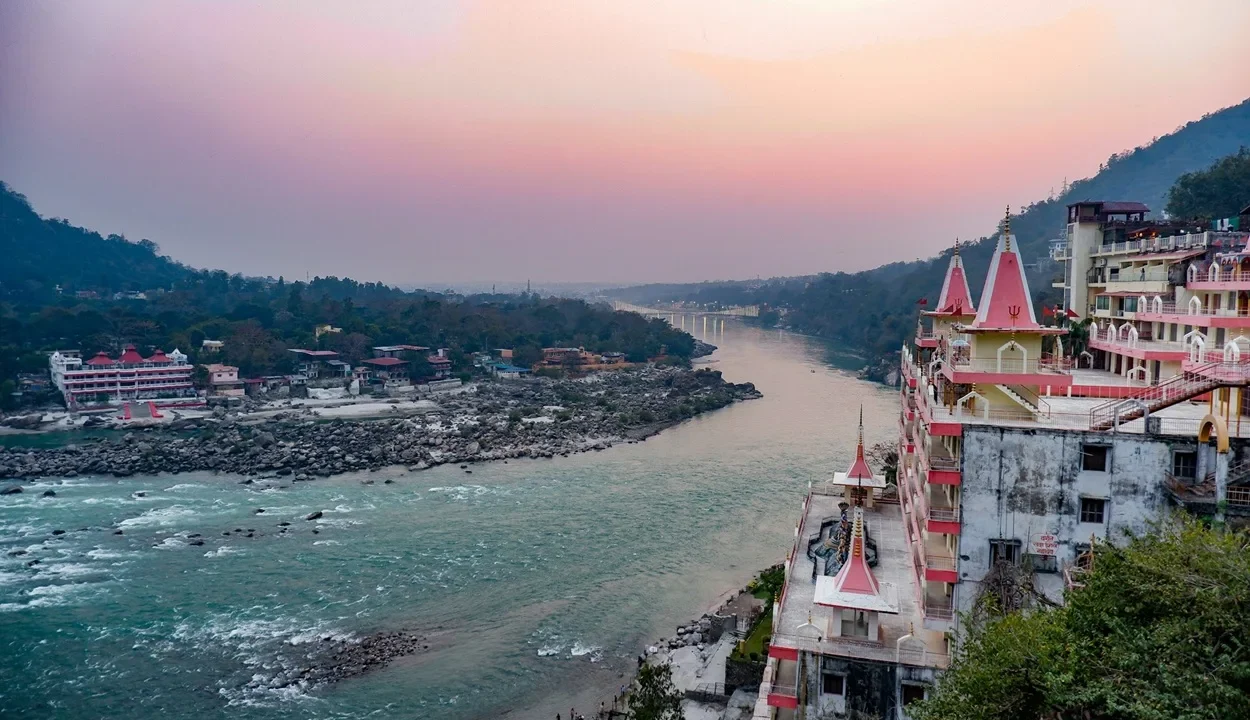
Perched on the western hillside above the Ganges near the Lakshman Jhula bypass, Tapovan is Rishikesh’s most international and vibrant neighborhood. It functions as the cultural crossroads of the town, filled with rooftop juice bars, certified yoga teacher training (YTC) academies, Ayurvedic treatment centers, and lively backpacker hostels.
Why Stay in Tapovan
- Unmatched Cafe and Culinary Variety: Home to dozens of organic bakeries, specialty coffee roasters, vegan eateries, and global dining spots serving everything from wood-fired sourdough pizzas to wholesome Ayurvedic thalis.
- Social and Community Atmosphere: The premier hub for meeting fellow travelers, booking guided day treks, and attending drop-in sound healing, breathwork, or kirtan sessions.
- Direct Vehicle Access: Taxis and auto-rickshaws can drop you directly at hotel doors, eliminating the need to haul heavy luggage across footbridges.
Trade-Offs to Consider
- Traffic Bottlenecks: Tapovan’s internal lanes are narrow and can become heavily congested with cars, motorcycles, and cows during peak midday hours.
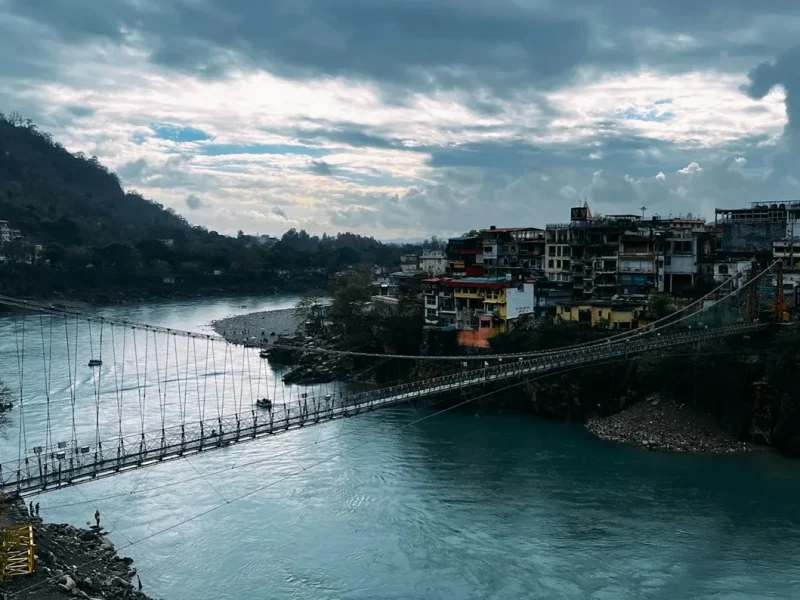
- Distance to River Crossings: Because the historic Lakshman Jhula is permanently closed to pedestrian crossing, walking to the opposite riverbank requires a long stroll down to Janki Jhula or hiring an auto-rickshaw.
2. Swarg Ashram and Jonk: Best for Traditional Ashrams and Deep Peace
Situated on the eastern bank of the Ganges directly across from Muni Ki Reti, Swarg Ashram and neighboring Jonk form the ancient spiritual heart of Rishikesh. Shaded by dense forested hillsides abutting Rajaji National Park, this district is anchored by venerable institutions like Parmarth Niketan and Gita Bhawan.
Why Stay in Swarg Ashram
- Pedestrianized Serenity: The inner streets are largely closed to commercial four-wheeled traffic, creating a quiet environment filled with temple bells, bird calls, and river breezes.
- Authentic Spiritual Routine: Immediate walking access to morning Ganges bathing ghats, dawn meditation halls, and the celebrated daily sunset Ganga Aarti at Parmarth Niketan.
- Historic Sightseeing on Foot: Walk directly to the famous Beatles Ashram (Chaurasi Kutia) without needing vehicle transfers.
Trade-Offs to Consider
- Challenging Luggage Transfers: Most taxis drop passengers on the western bank near Janki Jhula. You must either roll your luggage across the suspension bridge, take a small passenger ferry across the river, or have your driver take the long, 30-minute vehicle detour via the southern Barrage bridge.
3. Triveni Ghat and Central Town: Best for Pilgrims and Transit Travelers
Located roughly 4 kilometers south of the tourist suspension bridges, central Rishikesh wraps around the bustling stone amphitheater of Triveni Ghat. This is the town’s administrative and commercial core, where local commerce thrives independently of the international tourist trade.
Why Stay Near Triveni Ghat
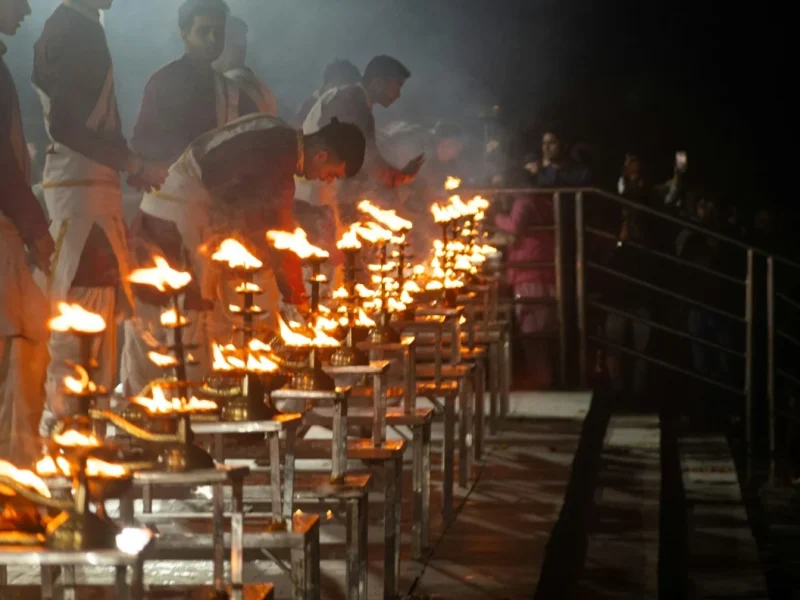
- The Grandest Evening Aarti: Steps away from Triveni Ghat’s nightly Maha Ganga Aarti, where large multi-tiered brass fire lamps and Vedic chanting create a magnificent devotional spectacle.
- Transit Convenience: Just a 5- to 10-minute auto-rickshaw ride from Yog Nagari Rishikesh Railway Station (YNRK) and the inter-city bus terminal, making it ideal for late rail arrivals or departures.
- Elderly-Friendly Terrain: Wide, flat streets along the riverbank offer step-free access for older travelers who cannot handle the steep inclines of Tapovan.
Trade-Offs to Consider
- Central town is loud and commercial, characterized by bustling bazaars and heavy local traffic. It lacks the quiet greenery and bohemian cafe culture found in upper Tapovan or Swarg Ashram.
4. Shivpuri and the Upper Valley: Best for Riverside Luxury and Adventure
Located 16 to 22 kilometers north of Rishikesh along National Highway 7 (the Badrinath corridor), Shivpuri sits in a dramatic mountain gorge where the clear Ganges cuts through white sandy beaches and steep granite cliffs.
Why Stay in Shivpuri
- Premier White-White Rafting Launch: The staging ground for the most famous Grade III rafting stretches down to Muni Ki Reti. Staying here puts you on the river before daytime tour buses arrive from town.
- Scenic Luxury Escapes: Home to high-end boutique retreats, eco-villas, and luxury tented safari camps featuring cliffside infinity pools looking directly onto the rushing river.
- Uninterrupted Nature: Far removed from city noise and construction, offering dark night skies, forest walking paths, and peaceful private river access.
Trade-Offs to Consider
- You will need a private car or booked taxi to reach town sights like the Beatles Ashram or Triveni Ghat (a 35- to 50-minute mountain drive each way). Dining is primarily restricted to on-site resort restaurants.
How to Choose the Right Base for Your Travel Style
- For Solo Travelers & Backpacker Community: Choose Tapovan. Book a social hostel or guesthouse near High Bank to enjoy walking access to rooftop cafes, coworking spaces, and yoga drop-in classes.
- For Meditators, Yogis & Long-Stay Spiritual Seekers: Stay in Swarg Ashram. Book an ashram guest room or quiet heritage guesthouse in Jonk to maintain an inward, peaceful focus without vehicle interruptions.
- For Families with Seniors & Pilgrims: Pick a riverside hotel near Triveni Ghat or lower Muni Ki Reti to ensure flat walking access to boat piers, direct cab drop-offs, and short travel times to the railway station.
- For Honeymooners & Adventure Vacationers: Reserve a luxury riverfront suite or upscale glamping property in Shivpuri for private balcony views of the Ganges gorge and immediate rafting access.
- For Planning Your Daily Excursions: Whichever area you choose as your hub, explore our complete sightseeing walkthrough of the essential places to visit in Rishikesh to structure an efficient multi-day itinerary.
Essential Practical Accommodation & Travel Advice
- Strict Vegetarian and Alcohol Regulations: Under Uttarakhand municipal and religious law, Rishikesh is a designated sacred dry zone. The sale and public consumption of meat, fish, and alcohol are strictly prohibited within the municipal boundaries. High-end resorts located well outside town limits along the highway operate under distinct regional permits.
- Book Months Ahead for Spring and Autumn: Rishikesh operates at peak occupancy during the international yoga window (February to April) and autumn rafting season (September to November). Renowned ashram guest quarters and boutique riverside properties frequently book out two to three months in advance.
- Bridge Crossing Logistics: Remember that Lakshman Jhula is closed. When booking stays across the river in Swarg Ashram or Jonk, plan your arrival via Janki Jhula (a modern, wide suspension bridge with pedestrian lanes) or Ram Jhula. Local porters (*coolies*) wait near bridge entrances to assist with heavy luggage for a modest, pre-negotiated fee.
- Verified State-Approved Homestays: For government-registered heritage homestays, verified village retreats, and community-run lodgings across Uttarakhand, explore the official Uttarakhand Tourism Homestay Directory.
Frequently Asked Questions
If you want lively cafes, international restaurants, social hostels, and direct car access to your hotel door, Tapovan is superior. If you want a peaceful, vehicle-free spiritual environment with immediate access to traditional ashrams, quiet courtyards, and the evening Ganga Aarti at Parmarth Niketan, choose Swarg Ashram.
Generally, no. Swarg Ashram is largely a pedestrianized sector. Most taxis drop passengers on the western bank near Janki Jhula or Ram Jhula, requiring you to walk across the suspension bridge with your luggage. Taxis can only reach the eastern bank directly by taking a 30-minute southern bypass road over the Rishikesh Barrage, which drops off on the outer edge of Jonk village.
Yes. Many renowned ashrams—such as Parmarth Niketan, Sivananda Ashram, and Anand Prakash—welcome domestic and international visitors. Accommodations are generally clean, modest, and peaceful, often including vegetarian meals, daily morning yoga, and meditation in the room tariff. Advance booking via the respective ashram’s official portal is recommended.
If river rafting is your primary objective, staying in Shivpuri (16 km north of Rishikesh) is ideal. Most commercial rafting runs launch directly from Shivpuri’s beaches, allowing you to bypass morning highway traffic and begin your expedition right from your resort or camp.