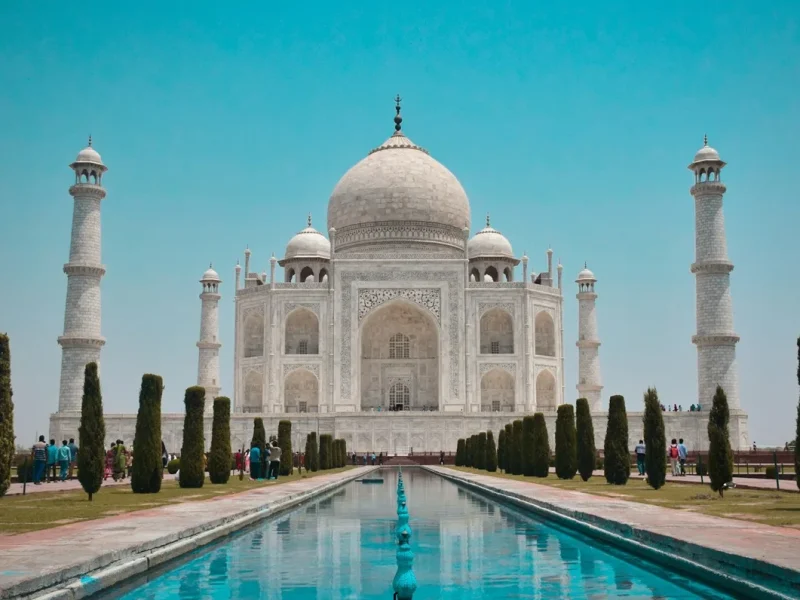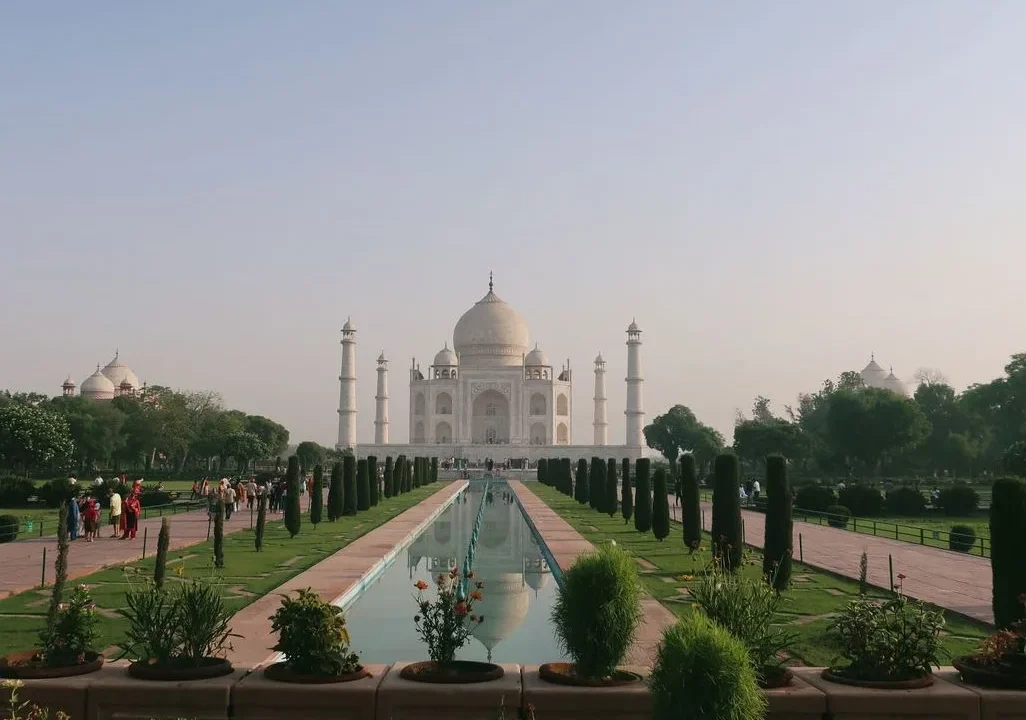
Standing on the southern bank of the Yamuna River in Agra, India, the Taj Mahal is an architectural masterpiece, a UNESCO World Heritage Site, and one of the New Seven Wonders of the World. Whether you are an Indian traveler planning a weekend getaway or an international tourist visiting from the USA, UK, Australia, or Europe, visiting this white marble mausoleum is a bucket-list experience.
Navigating ticket counters, choosing the right entry gates, avoiding crowds, and understanding security restrictions can quickly become overwhelming. This comprehensive Taj Mahal Guide: History, Timings, Tickets & Travel Tips provides everything you need to know for a smooth, hassle-free journey, along with essential insights from a broader Agra travel guide.
1. History & Architecture of the Taj Mahal
The story of the Taj Mahal is deeply rooted in romance, grief, and architectural perfection. Commissioned in 1631 by the fifth Mughal Emperor, Shah Jahan, the mausoleum was built to honor his beloved wife, Mumtaz Mahal, who died during childbirth.
Key Historical & Architectural Highlights:
- Construction Timeline: Construction began in 1632 and was largely completed by 1848, with additional structures and gardens finalized by 1653.
- Master Craftsmanship: Over 20,000 artisans, sculptors, calligraphers, and stonemasons from across Asia were brought together under the direction of chief architect Ustad Ahmad Lahori.
- Pietra Dura (Parchin Kari): The dazzling inlay work features semiprecious stones like lapis lazuli, jade, turquoise, and carnelian embedded directly into the translucent white Makrana marble.
- Optical Illusions & Symmetry: The complex exhibits near-perfect bilateral symmetry, centered on the main tomb—with the notable exception of Shah Jahan’s own cenotaph, which was added later alongside Mumtaz Mahal’s.
2. Taj Mahal Timings & Operating Hours
Understanding the exact schedule is crucial for planning your visit successfully. The monument operates primarily on a solar cycle rather than fixed clock hours.
- Standard Opening Hours: Opens 30 minutes before sunrise and closes 30 minutes before sunset.
- Weekly Closure: The Taj Mahal is STRICTLY CLOSED on FRIDAYS to general tourists for congregational prayers at the active mosque within the complex.
- Time Limit per Ticket: Each entry ticket is valid for a maximum duration of 3 hours. Staying beyond 3 hours incurs an extra charge at the exit gates.
Night Viewing at the Taj Mahal
Night viewing is allowed for 5 nights each month around the Full Moon (the night of the full moon, plus 2 nights before and 2 nights after, excluding Fridays).
- Timing: 8:30 PM to 12:30 AM (in 30-minute time slots for limited batches).
- Booking Requirement: Night tickets must be purchased 24 hours in advance from the Archaeological Survey of India (ASI) office on Mall Road, Agra.
3. Ticket Prices & Online Booking Guide
Entry fees vary depending on visitor nationality. Additionally, accessing the inner chamber (main mausoleum) requires an extra add-on ticket.
| Visitor Category | Standard Entry Fee | Main Mausoleum Access | Total Ticket Cost |
|---|---|---|---|
| Indian Citizens / OCI | ₹50 | ₹200 | ₹250 |
| SAARC & BIMSTEC Nationals | ₹540 | ₹200 | ₹740 |
| Foreign Tourists (USA, UK, AUS, etc.) | ₹1,100 | ₹200 | ₹1,300 |
| Children (Under 15 Years) | Free | Free | Free |
Note: Foreign tourist tickets usually include shoe covers and a bottled water at the gate.
How to Book Tickets Online:
To avoid long ticket counter lines, book online through the official Archaeological Survey of India (ASI) portal or tajmahal.gov.in. Online bookings typically receive a small discount (₹5 off for domestic, ₹50 off for foreign). Always save a screenshot or PDF of your digital ticket on your phone, as cellular signal can be weak near the security checkpoints.
4. Entry Gates & Security Guidelines
There are two primary public entry gates at the Taj Mahal:
- Western Gate: Main entrance used mostly by domestic group tours and daily visitors. Queues can be long during mid-day.
- Eastern Gate: Located near luxury accommodations. This gate generally moves faster and is ideal for early-morning sunrise visitors.
- Southern Gate: Currently reserved for exit only.
Strict Security & Prohibited Items:
Security at the gates is as stringent as an airport. To ensure seamless entry, avoid carrying restricted items.
| Allowed Items | Prohibited Items |
|---|---|
| Mobile Phones | Tripods, Monopods, & Drones |
| Small Handbags / Purses | Large Backpacks & Luggage |
| Water Bottles (Clear Plastic) | Food items, Snacks, & Cigarettes/Lighters |
| Cameras (Standard Digital/DSLR) | Power Banks, Cables, & Electronics (other than phone/camera) |
5. How to Reach the Taj Mahal from Delhi
Most travelers visit Agra as part of the classic Golden Triangle circuit (Delhi – Agra – Jaipur). Read our detailed guide on how to reach Agra from Delhi for a complete breakdown, or select your preferred mode of transit below:
- By Train: The fastest option is taking the high-speed Gatimaan Express or Vande Bharat Express from New Delhi Railway Station (NDLS) or Hazrat Nizamuddin (NZM) to Agra Cantt (AGC). Travel time is approximately 100 minutes. For step-by-step train details, review the Delhi to Agra train guide.
- By Road: You can drive or hire a private taxi via the Yamuna Expressway. The 200 km drive takes roughly 3 to 3.5 hours. Check our Delhi to Agra road trip itinerary for toll details and route recommendations.
6. Expert Travel & Photography Tips
To make the most of your visit, keep these practical Agra travel tips in mind:
- Arrive 45 Minutes Before Sunrise: To be among the first people through security, join the queue at the East Gate by 5:15 AM to 5:30 AM. You will witness the marble shift from soft pink to glowing ivory as the sun rises.
- Dress Respectfully: While there is no strict religious dress code, modest clothing covering shoulders and knees is appropriate. You will also need to put on protective shoe covers before stepping onto the central marble plinth.
- Winter Fog Advisory: From mid-December through January, dense morning fog can reduce visibility in northern India. During these months, late morning visits (after 10:00 AM) often yield clearer views than early sunrise slots.
- Beware of Unlicensed Guides: Hire only official ASI-licensed guides inside the ticket counters or book them in advance through trusted platforms. Certified guides carry official photo badges issued by the Ministry of Tourism.
- Alternative Photography Spot: For stunning, crowd-free reflections across the Yamuna River, head to Mehtab Bagh during sunset.
7. Top Nearby Attractions in Agra
While the Taj Mahal is the main highlight, Agra houses several incredible UNESCO World Heritage Sites and Mughal landmarks. Explore these places to visit in Agra during your trip:
- Places to Visit Near Taj Mahal: Discover key points of interest situated within minutes of the main complex.
- Agra Fort: The red-sandstone fortress residence of the Mughal emperors, offering breathtaking distant views of the Taj Mahal.
- Itmad-ud-Daulah (Baby Taj): An exquisite mausoleum often regarded as the draft design for the Taj Mahal.
- Akbar’s Tomb at Sikandra: The peaceful final resting place of Emperor Akbar, set within serene gardens.
- Fatehpur Sikri: The deserted 16th-century Mughal capital city located 40 km from Agra.
Planning Your Trip Duration & Budget
If you are short on time, follow our 1-day Agra itinerary. For a more relaxed experience that includes street food, craft shopping, and secondary monuments, check out our comprehensive 2-day Agra itinerary.
To help plan your expenses, read our breakdown on Agra trip costs, choose where to stay in Agra, and explore our guides on things to do in Agra, Agra food guide, and Agra shopping guide.
Extending Your Journey
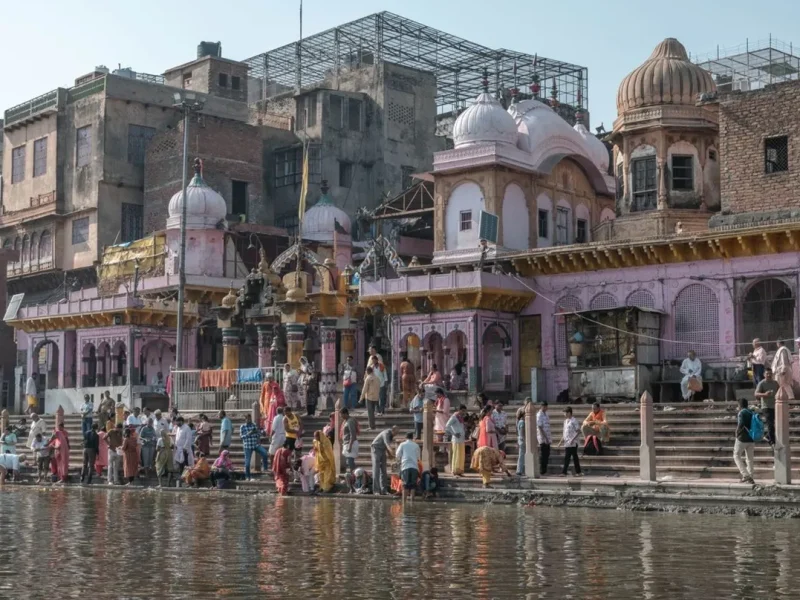
Consider planning day trips from Agra or checking out popular places to visit near Agra. Many visitors travel from Agra to Mathura & Vrindavan for a spiritual retreat, or venture from Agra to Bharatpur to see the Keoladeo National Bird Sanctuary.
Frequently Asked Questions
No, the Taj Mahal is open six days a week and remains strictly closed on Fridays for general visitors.
The optimal travel window is between October and March when weather conditions are cool and pleasant. Check our complete guide on the best time to visit Agra for seasonal tips.
Yes, entering the central mausoleum requires an additional ticket fee of ₹200 for all visitors, over and above the standard complex entry ticket.
No, tripods, monopods, drones, external battery power banks, and large luggage bags are banned for security reasons.
Photography is strictly prohibited inside the main inner chamber where the cenotaphs are located. However, photography is permitted across the outer complex, courtyard, and gardens.