Planning your trip to the top places to visit in Agra means exploring far beyond a single white marble monument. The Taj Mahal draws visitors from across the world. However, Agra was once the imperial capital of the Mughal Empire at its peak.
This royal legacy created three distinct UNESCO World Heritage Sites. In addition, the city features riverside gardens, imposing sandstone battlements, and centuries-old marble inlay traditions. Smart planning is essential because many travelers visit on a brief day trip or a Golden Triangle tour.
This guide clusters the best places to visit in Agra into clear geographic zones. You will find verified transit routes, realistic visit durations, and essential planning advice to help you avoid crowded roads.
Overview: Agra Sightseeing Places at a Glance
Review this comparison table before mapping out your daily route across the city:
| Attraction | Heritage Status | Location | Typical Duration | Weekly Closure |
|---|---|---|---|---|
| Taj Mahal | UNESCO World Heritage | Dharmapuri, Forest Colony | 2.5 – 3 hours | Fridays |
| Agra Fort | UNESCO World Heritage | Near Agra Fort Railway Station | 2 – 2.5 hours | Open Daily |
| Fatehpur Sikri | UNESCO World Heritage | 37 km west of Agra city | 3 – 4 hours (plus transit) | Open Daily |
| Tomb of I’timad-ud-Daulah | ASI Protected Monument | East bank of Yamuna River | 45 – 60 minutes | Open Daily |
| Mehtab Bagh | Mughal Charbagh Garden | Opposite Taj Mahal across Yamuna | 45 – 60 minutes | Open Daily |
| Akbar’s Tomb, Sikandra | ASI Protected Monument | 10 km northwest (Mathura Road) | 1.5 hours | Open Daily |
The UNESCO Crown Jewels: Top Tourist Attractions in Agra
Agra is home to three UNESCO World Heritage Sites. Together, they represent the absolute peak of Mughal architectural ambition.
1. Taj Mahal
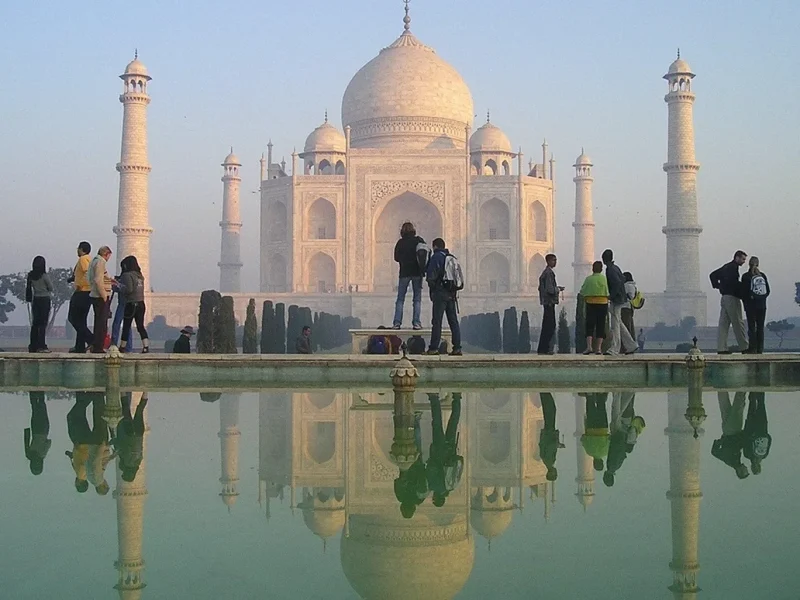
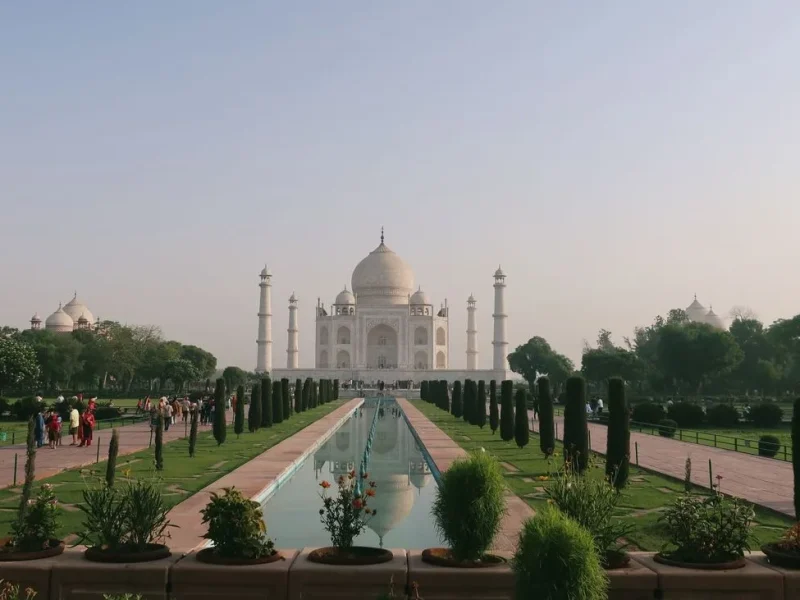
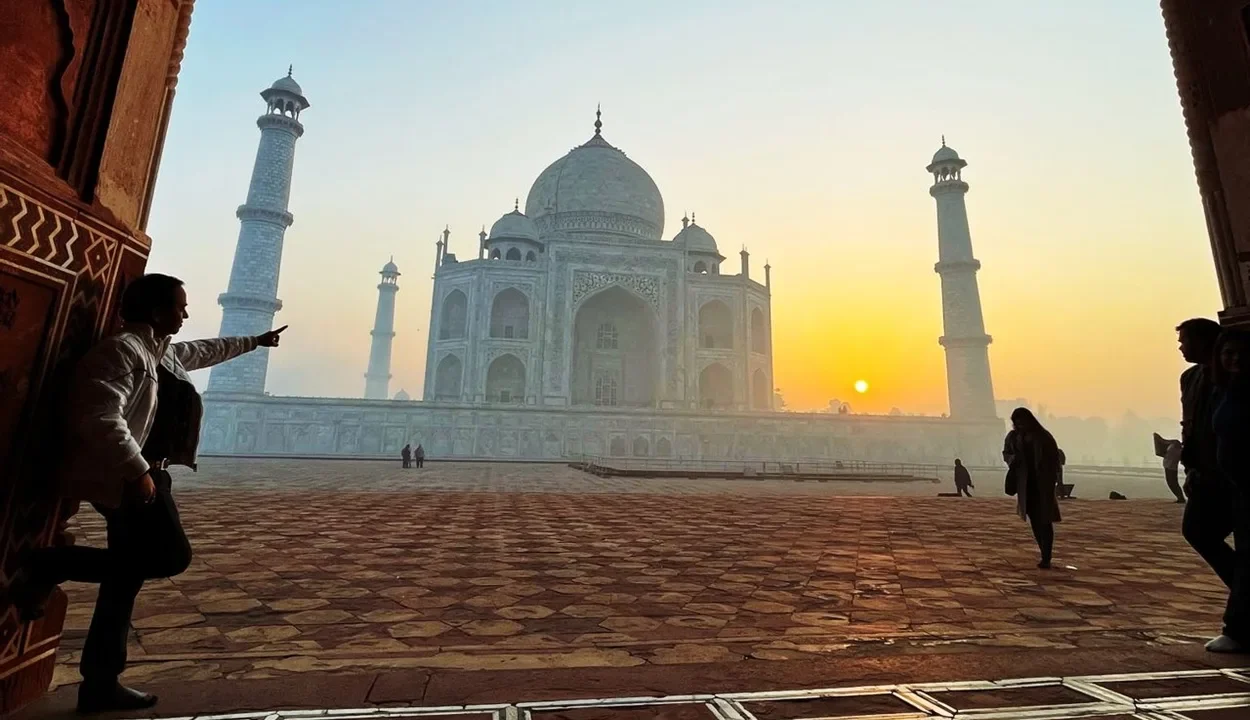
Mughal Emperor Shah Jahan began construction on this grand mausoleum in 1631 in memory of his beloved wife Mumtaz Mahal. It stands today as an unmatched masterwork of symmetry and marble craft.
The monument features pure white Makrana marble that shifts in color throughout the day. Surrounding the tomb, you will find classic formal charbagh gardens and a red sandstone mosque. Craftsmen adorned the walls with intricate semi-precious stone inlays, a technique known as pietra dura or parchin kari.
For advice on entry gates and photo spots, read our in-depth Taj Mahal guide.
- Opening Hours: 30 minutes before sunrise until 30 minutes before sunset.
- Critical Notice: Closed to tourists every Friday. The grounds open only to registered local worshippers for Friday prayers.
- Ticketing Rules: The standard monument entry ticket covers the outer gardens and lower plinth. However, you must buy an extra step-up ticket to enter the main dome chamber where the cenotaphs sit.
- Best Entry Point: The East and West Gates handle most foot traffic. Arrive right at sunrise to beat the heavy midday heat and crowds.
2. Agra Fort (Lal Qila)
Agra Fort sits just 2.5 kilometers northwest of the Taj Mahal. It served as the fortified main home of Mughal rulers until they moved the capital to Delhi in 1638. Emperor Akbar built the fortress from red sandstone, and Shah Jahan later added delicate white marble palaces inside.
The vast complex functions like a fortified city enclosed by double defensive walls. Key palace highlights include:
- Jahangiri Mahal: A grand sandstone palace built by Akbar, displaying intricate Hindu and Central Asian architectural carvings.
- Khas Mahal and Anguri Bagh: A formal courtyard garden flanked by open marble pavilions and painted ceilings.
- Musamman Burj: An octagonal marble tower overlooking the Yamuna River. Aurangzeb placed his aging father Shah Jahan under house arrest here, where he spent his final years gazing out at the Taj Mahal.
- Time Required: Plan for 2 to 2.5 hours.
3. Fatehpur Sikri
Emperor Akbar founded this red sandstone capital in 1571, located roughly 37 kilometers west of central Agra. However, severe water shortages forced the court to abandon the city just fourteen years later. As a result, the site remains exceptionally preserved, making it one of the most remarkable Agra tourist places.
The sprawling heritage complex divides into two distinct zones:
- The Religious Enclosure: Enter beneath the towering 54-meter Buland Darwaza (Victory Gate). Inside the Jama Masjid courtyard sits the white marble tomb of Sufi saint Sheikh Salim Chishti. Visitors still tie red cotton threads to the marble latticework (jali) screens to make personal wishes.
- The Royal Palace Complex: Explore the five-story open pavilion of the Panch Mahal, the Palace of Jodha Bai, and the Diwan-i-Khas with its famous carved central pillar.
- Logistics: Budget 4 to 5 hours total, including the 1-hour drive each way by taxi or bus. Private vehicles must park at the central lot, where green electric shuttles ferry visitors up the hill to the gate.
The Riverfront Heritage: Trans-Yamuna Marvels
Cross over to the eastern bank of the Yamuna River to discover two quieter historical sites. Both provide helpful architectural context to Agra’s grander monuments.
4. Tomb of I’timad-ud-Daulah (“The Baby Taj”)
Empress Nur Jahan built this exquisite jewel-box tomb between 1622 and 1628 for her father, Mirza Ghiyas Beg. The site marks a major transition in Mughal design.
It was the first major Mughal building constructed entirely of white marble instead of red sandstone. It also introduced the extensive geometric stone inlays that later inspired the Taj Mahal. In addition, the grounds receive far fewer visitors, so you can admire the wall paintings and carved lattice screens at a relaxed pace.
- Why Visit: Minimal crowds and intricate stone inlays that set the stage for the Taj Mahal.
- Time Required: 45 to 60 minutes.
5. Mehtab Bagh (The Moonlight Garden)
Emperor Babur originally laid out Mehtab Bagh as the final garden in a chain of riverfront pleasure grounds. Later, the Archaeological Survey of India carefully restored the grounds to their historic footprint.
The garden aligns directly with the Taj Mahal across the river. Because of this view, it is widely considered one of the most scenic famous places in Agra. Travelers and photographers visit in the late afternoon to watch the marble dome change color in the fading sunset light.
- Best For: Peaceful Taj Mahal sunset views without monument crowds.
- Time Required: 45 minutes to 1 hour.
Historic Environs: Sikandra and Heritage Bazaars
If you have extra time, venture into Agra’s outer districts and bustling markets to experience local heritage up close.
6. Akbar’s Tomb at Sikandra
Located 10 kilometers northwest of the city along Mathura Road, this vast sandstone complex honors Emperor Akbar. You enter through an imposing South Gate featuring four white marble minarets and bold geometric calligraphy.
The mausoleum itself features a unique tiered, pyramid-like structure. Furthermore, the surrounding 119-acre walled parkland offers a remarkably peaceful retreat. Peacocks, monkeys, and herds of blackbuck deer roam freely along the shaded paths.
- Best For: History enthusiasts and road travelers arriving in Agra from Delhi.
- Time Required: 1.5 hours.
7. Heritage Bazaars and Street Food
The bustling streets behind the Jama Masjid—including Kinari Bazaar and Sadar Bazaar—showcase the city’s living commercial crafts. Local families have practiced stone carving, leather shoemaking, and carpet weaving here for generations.
When exploring the markets, consider these food and shopping tips:
- Local Street Food: Try a traditional breakfast of Bedmi Puri with spicy potato and pumpkin curry. Afterwards, sample fresh Agra Petha, a sweet treat made from ash gourd available in plain, saffron, and paan flavors.
- Shopping Advice: When buying authentic marble inlay souvenirs, visit government-approved emporiums or established artisan guilds to ensure fair pricing and genuine stone quality.
Suggested Sightseeing Itineraries
Organize your days by location so you spend less time commuting through city traffic:
The Essential 1-Day Express Route
This route works best for travelers arriving on high-speed morning trains like the Gatimaan Express or Vande Bharat Express:
- 08:30 AM – 11:30 AM: Arrive at Agra Cantt Railway Station and head directly to the Taj Mahal (enter via the East Gate).
- 12:00 PM – 01:30 PM: Enjoy a traditional North Indian lunch along Fatehabad Road.
- 02:00 PM – 04:30 PM: Explore the sandstone ramparts and palaces of Agra Fort.
- 05:00 PM – 06:15 PM: Cross the river to Mehtab Bagh for open sunset views of the Taj Mahal before catching your evening train.
The Complete 2-Day Cultural Route
For an unhurried stay, book a hotel in one of the central tourist districts (see our guide on where to stay in Agra):
- Day 1 (Core Heritage): Start at sunrise (06:00 AM) at the Taj Mahal for soft morning light and cooler weather. After breakfast, head to Agra Fort. In the late afternoon, tour the Tomb of I’timad-ud-Daulah, followed by sunset at Mehtab Bagh and an evening walk through Sadar Bazaar.
- Day 2 (Outer Historical Sites): Dedicate your morning to an excursion to Fatehpur Sikri (37 km west). Return to the city by early afternoon. Finally, visit Akbar’s Tomb at Sikandra on your way out of the city toward Delhi or the airport.
Essential Travel Advice: Transport, Safety, and Seasons
Navigating Agra is straightforward when you understand local transport options and seasonal weather patterns:
- Official E-Ticketing: The Archaeological Survey of India (ASI) manages Agra’s major monuments. While physical counters operate on-site, booking official digital passes online helps you skip long queues. For verified guidelines and booking services, check the District Agra Administration Monument Booking Portal.
- Agra Metro: The priority line of the Agra Metro connects the Taj Mahal East Gate directly to Mankameshwar (near Agra Fort). This service provides a fast, air-conditioned link between the city’s two primary monuments. For trips to Fatehpur Sikri or Sikandra, hire an app-based cab (Uber or Ola) or book a day taxi through your hotel desk.
- Pollution Free Zone: Authorities prohibit gas and diesel vehicles within 500 meters of the Taj Mahal to prevent marble staining. You must take an electric golf cart, ride a battery-operated e-rickshaw, or walk from designated parking lots to the ticket gates.
- Best Seasons to Visit: October through March offers the most comfortable weather, with daytime temperatures between 15°C and 28°C. In contrast, May and June bring intense summer heat exceeding 42°C. Meanwhile, mornings in January often see thick winter fog, which can hide the Taj Mahal until midday.
Frequently Asked Questions
The Taj Mahal is closed every Friday. However, Agra Fort, Fatehpur Sikri, Itimad-ud-Daulah, Sikandra, and Mehtab Bagh remain open on Fridays. You can still view the exterior of the Taj Mahal across the Yamuna River from Mehtab Bagh even on a Friday, but if you want to enter the grounds, avoid scheduling your trip on that day.
Yes. A focused day trip comfortably covers the Taj Mahal, Agra Fort, and a brief sunset stop at Mehtab Bagh. Adding Fatehpur Sikri or Akbar’s Tomb requires an overnight stay or an early morning departure from Delhi to accommodate the extra travel time.
The fastest and most comfortable method is by rail. Premium express trains such as the Gatimaan Express (from Hazrat Nizamuddin Station) and the Vande Bharat Express connect Delhi to Agra Cantt in roughly 90 to 100 minutes. Alternatively, driving via the multi-lane Yamuna Expressway takes approximately 3.5 to 4 hours depending on Delhi traffic.
Security at the Taj Mahal is rigorous. Small day bags, smartphones, and still cameras are allowed. However, tripods, camera gimbals, external microphones, power banks, tobacco, matches/lighters, food items, and drone equipment are strictly prohibited and will be confiscated at security checkpoints. Lockers are available outside the main entry gates for a small fee.
About the Author
Jaiveer Rawat
Jaiveer Rawat is the founder of Explore India Guide and a travel enthusiast passionate about discovering India's beautiful destinations, hidden gems, and rich culture. Through this blog, he shares travel guides, tips, and inspiration to help travellers explore India.