Planning your journey through the best places to visit in Rishikesh means exploring two different worlds. On one side, peaceful ashrams and sacred riverbanks make it the “Yoga Capital of the World.” On the other side, roaring Himalayan rapids make it India’s adventure capital.
The city sits where the clear Ganges River flows out of the steep Garhwal mountains into the northern plains. Because the town spreads across three districts and two riverbanks, wandering without a plan can leave you stuck in heavy foot traffic. Before locking down your daily itinerary, review our logistical guide on how to reach Rishikesh by flight, express train, or road from major northern transit hubs.
This guide organizes the best places to visit in Rishikesh into logical geographic zones: the spiritual ashrams of Swarg Ashram, the central river ghats, the cafe hub of Tapovan, and the upstream rapids of Shivpuri. Each section provides practical visit durations, transit options, and local travel tips to save you hours of commuting.
Overview: Rishikesh Sightseeing Places at a Glance
Before planning your daily routes, review how the main sights compare in location, travel time, and core focus:
| Attraction | Zone / Riverbank | Nearest Landmark / Bridge | Typical Duration | Core Focus |
|---|---|---|---|---|
| Triveni Ghat | Town Center (West Bank) | Mayakund / Main Market | 1.5 – 2 hours | Sacred confluence; daily Maha Ganga Aarti |
| The Beatles Ashram (Chaurasi Kutia) | East Bank (Rajaji Reserve boundary) | Swarg Ashram / Janki Jhula | 2 – 2.5 hours | Meditation history; pop-art murals |
| Parmarth Niketan | East Bank (Swarg Ashram) | Ram Jhula / Janki Jhula | 1.5 – 2 hours | Riverside Ganga Aarti; classical yoga ashram |
| Ram Jhula & Janki Jhula | Muni Ki Reti to Swarg Ashram | Ganges River Crossings | 45 – 60 minutes | Pedestrian suspension bridges; river views |
| Neer Garh Waterfall | Badrinath Highway (North) | 5 km upstream from Tapovan | 2 – 3 hours | Limestone pools; shaded forest walk |
| Shivpuri Rapids & Camps | Upper Ganges (16–19 km North) | NH7 Highway | Half to full day | Grade III white-water rafting; beach camps |
| Neelkanth Mahadev Temple | Upper Mountain Ridge (32 km) | Manikoot Parvat | 3 – 4 hours (incl. drive) | Ancient Shiva pilgrimage shrine in pine forests |
| Kunjapuri Devi Temple | Ridge (25 km via Narendra Nagar) | 1,676 m Peak | 3 hours | Sunrise views over Himalayan peaks |
Sacred Ghats and Historic Ashrams: Famous Places in Rishikesh
The spiritual heritage of Rishikesh centers on serene ashrams, stone bathing steps, and centuries-old prayer rituals along the water.
1. Triveni Ghat and the Maha Ganga Aarti
Triveni Ghat is the city’s largest and most sacred bathing bank, located in central Rishikesh. Devotees revere this site as the meeting point of three holy rivers: the Ganges, Yamuna, and subterranean Saraswati.
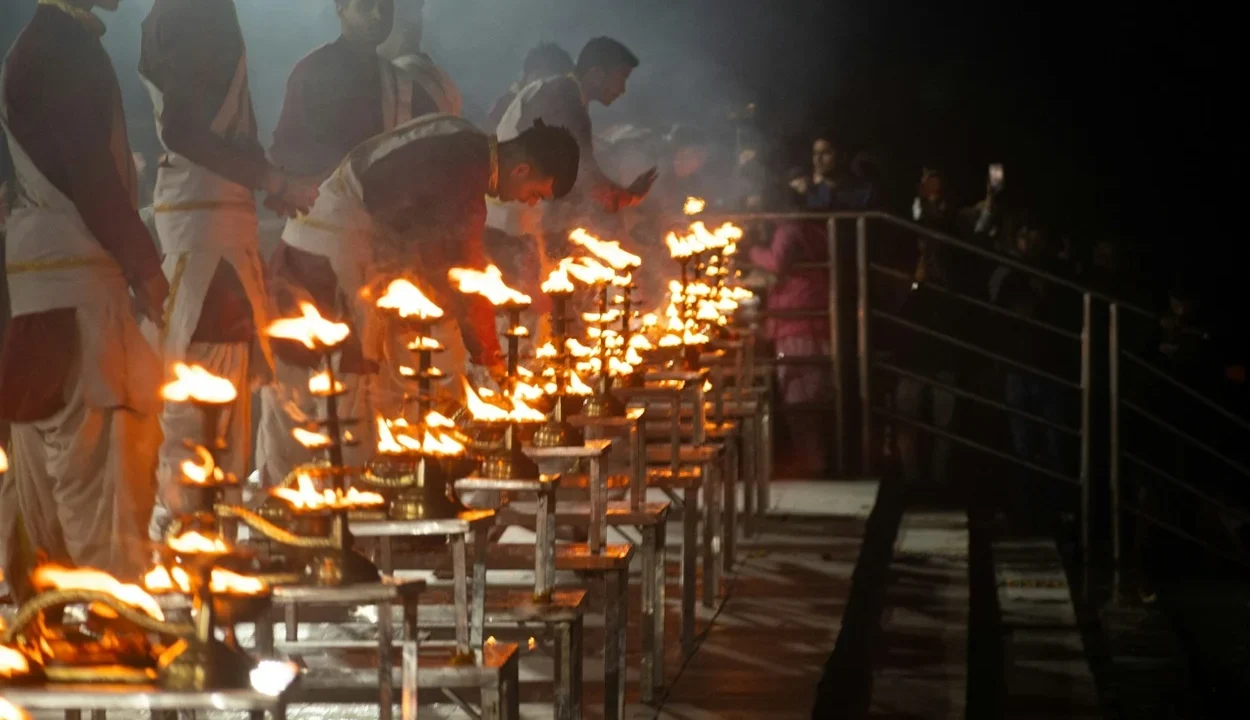
Pilgrims gather at dawn for ritual cleansing baths. However, the biggest gathering happens at sunset for the Maha Ganga Aarti. Priests in saffron robes circle multi-tiered brass oil lamps while Vedic chants echo across the water. Devotees then float small leaf boats with marigolds and glowing wicks down the river.
- Best Timing: Arrive by 05:30 PM in winter or 06:15 PM in summer to secure steps close to the water.
- Time Required: 1.5 to 2 hours.
2. The Beatles Ashram (Chaurasi Kutia)
In February 1968, The Beatles traveled to Rishikesh to practice Transcendental Meditation under Maharishi Mahesh Yogi. During their productive stay, they composed most of the songs for the famous White Album.
The complex sits in a quiet teak forest along the boundary of Rajaji Tiger Reserve. The ashram lay abandoned for decades, but the Uttarakhand Forest Department restored and reopened it in 2015. Today, it ranks among the most intriguing tourist attractions in Rishikesh.
- Key Highlights: Walk through the 84 pebble-covered meditation cells (kutias), the former lecture hall filled with international street art, and the photo museum.
- Hours & Tickets: Open daily from 10:00 AM to 04:00 PM. The forest gate charges separate entry fees for Indian citizens and international visitors.
- Time Required: 2 to 2.5 hours.
3. Parmarth Niketan and Swarg Ashram
Parmarth Niketan is the largest spiritual institution in the city. The grounds feature serene residential quarters, green gardens, and an iconic statue of Lord Shiva meditating on the river.
Every evening, young students lead a joyful Ganga Aarti along the ashram’s private ghat with devotional songs, harmoniums, and drums. In addition, the surrounding Swarg Ashram district offers a peaceful walking zone free from cars. You can browse traditional spiritual bookstores or visit historic complexes like Gita Bhawan.
- Visitor Etiquette: Wear modest clothing covering your shoulders and knees. You must leave your shoes at the designated entrance counters.
- Time Required: 1.5 to 2 hours.
The Bridges and Riverside Promenades: Crossing the Ganges
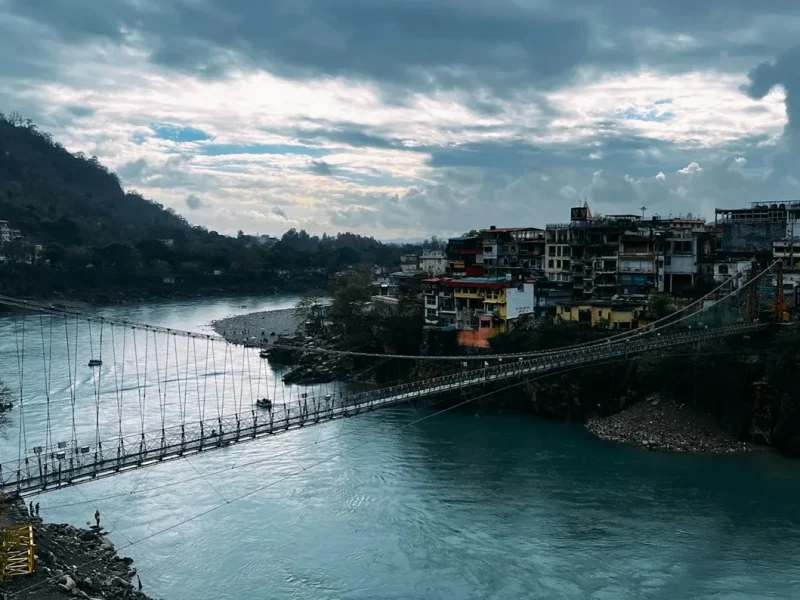
Suspension bridges connect the western bank neighborhoods of Muni Ki Reti and Tapovan to the eastern ashrams of Swarg Ashram and Jonk. These walkways offer some of the most scenic Rishikesh sightseeing places.
4. Ram Jhula and Janki Jhula
These iron suspension footbridges carry travelers across the river while offering sweeping panoramas of forested foothills and sandy river beaches.
- Ram Jhula: Built in 1986, this 228-meter suspension bridge links Muni Ki Reti to Swarg Ashram. It carries heavy foot traffic, monks, and playful monkeys throughout the day.
- Janki Jhula: Built further south to ease pedestrian congestion, this modern suspension bridge features dedicated pedestrian walkways. As a result, it is the smoothest crossing for families and strollers.
- Important Update on Lakshman Jhula: Authorities permanently closed the historic 1923 Lakshman Jhula bridge to pedestrians after structural engineers declared its support cables unsafe. You can still explore the lively cafes, temples, and markets in the surrounding neighborhood. However, you must cross the river using Ram Jhula, Janki Jhula, or local daytime boat ferries.
5. Trayambakeshwar Temple (Tera Manzil Temple)
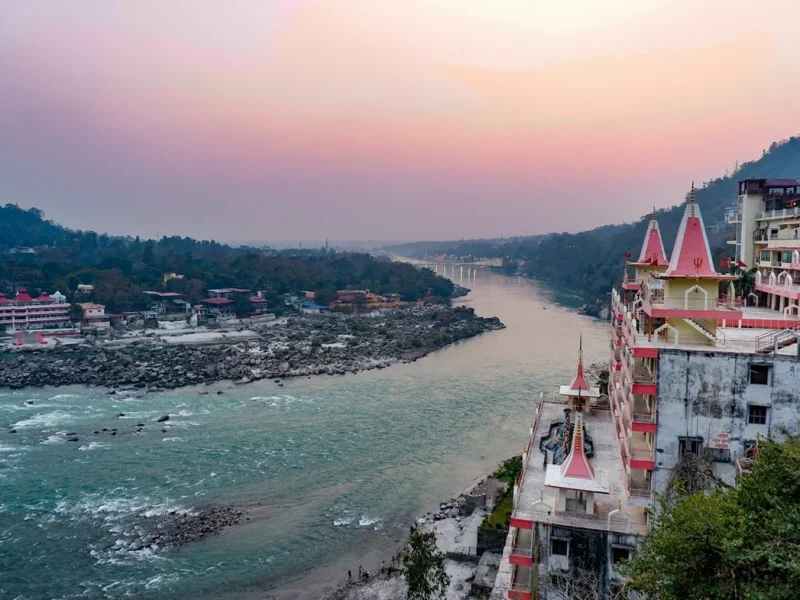
Trayambakeshwar Temple stands tall on the eastern riverbank near the foot of Lakshman Jhula. This 13-story orange-and-white shrine honors Lord Shiva.
Each level houses open balconies lined with small shrines dedicated to various Hindu deities. Climbing the spiral stairs takes some effort, but the open balconies reward you with incredible panoramic views over the river gorge.
- Duration: 45 to 60 minutes.
- Practical Tip: Visit during the late afternoon to catch soft golden light illuminating the mountain slopes.
Outdoor Adventure and Nature: Top Rishikesh Tourist Places
Beyond its peaceful spiritual traditions, Rishikesh attracts outdoor travelers with white-water rivers, jungle trails, and panoramic viewpoints.
6. River Rafting along the Ganges (Shivpuri to Muni Ki Reti)
Melting Himalayan glaciers feed the emerald rapids of the Ganges, creating world-class white-water rafting routes. Tour operators run daily trips from various road points along the Badrinath Highway:
- Brahmpuri Stretch (9 km): Grade I to II rapids; gentle and suitable for beginners, children, and seniors.
- Shivpuri Stretch (16 km): Grade II to III+ rapids, including famous rapids like Roller Coaster and Golf Course; this is the most popular day run.
- Marine Drive to Kaudiyala (24 to 36 km): Grade III to IV+ rapids, featuring challenging white-water sections like The Wall for experienced rafters.
- Important Seasonal Rule: The government suspends all commercial river rafting during the monsoon season (July through mid-September) for safety. The rafting season runs from late September through June.
7. Neer Garh Waterfall
Located roughly 5 kilometers north of Tapovan along the highway, Neer Garh is a multi-tier natural waterfall. The cool mountain water cascades over limestone rock faces into clear shallow pools.
A shaded forest trail winds up through oak trees past small tea stalls. Visitors can wade into the lower pools to escape the midday heat, or hike twenty minutes further up to a quieter second pool.
- Best For: Nature lovers, hikers, and families looking for a cool picnic spot.
- Time Required: 2 to 3 hours round trip.
8. Kunjapuri Devi Temple (Himalayan Sunrise Trek)
Kunjapuri Devi Temple perches on a 1,676-meter ridge roughly 25 kilometers from town near Narendra Nagar. It ranks among the revered Siddha Peethas in the Garhwal hills.
The ridge provides an unbroken 360-degree view. You can look north toward the snow-clad peaks of Chaukhamba and Swargarohini, or gaze south across the Ganges plain. Most travelers take an early morning taxi to watch the sunrise, followed by an optional 9-kilometer downhill nature hike back to Tapovan.
- Time Required: 3 hours by car, or a half-day if you walk the trail down.
- Practical Tip: Leave town around 04:30 AM to reach the hilltop steps before the sun clears the peaks.
9. Neelkanth Mahadev Temple
Neelkanth Mahadev Temple sits deep in a forested valley 32 kilometers from Rishikesh at an elevation of 1,330 meters. According to Hindu mythology, Lord Shiva consumed the cosmic poison here during the churning of the ocean, which turned his throat blue.
The colorful temple complex features intricate stone carvings and natural freshwater springs. You can reach the shrine via a winding mountain road through the Manikoot range, or hike a steep 14-kilometer pilgrimage footpath from Swarg Ashram.
- Duration: 3.5 to 4 hours round trip by taxi.
- Practical Tip: Expect heavy pilgrim lines during Shravan (July–August) and Shivratri.
Curated Sightseeing Recommendations by Travel Style
Tailor your daily schedule around your personal travel style to make the most of your stay:
- For Spiritual Seekers and Yogis: Stay in Swarg Ashram or Tapovan. Join sunrise yoga sessions, study at Sivananda Ashram, visit Parmarth Niketan, and attend the evening prayer ceremony at Triveni Ghat.
- For Adventure Enthusiasts: Book a 16-kilometer Shivpuri rafting expedition, attempt a bungee jump at Mohanchatti, and hike up to Neer Garh waterfall.
- For Photographers and Culture Lovers: Capture the murals at the Beatles Ashram, watch the sunrise from Kunjapuri ridge, and photograph Janki Jhula during golden hour.
- For Families and Leisure Travelers: Take electric shuttles along the bypass road, cross Janki Jhula, relax in Tapovan’s cafes, and reserve seating for the Parmarth Niketan Aarti.
How to Plan Your Days: A Practical 3-Day Itinerary
Group your activities by geographic area so you spend less time crossing the river:
Day 1: Classic Bridges, Ashrams, and Evening Devotion
- Morning (08:30 AM – 11:30 AM): Walk across Janki Jhula into Swarg Ashram. Tour Gita Bhawan and browse traditional spiritual bookshops.
- Midday (12:00 PM – 03:00 PM): Follow the forest road south to explore the peaceful grounds and murals of the Beatles Ashram. Stop for lunch at a garden cafe near Jonk.
- Evening (04:30 PM – 07:30 PM): Cross to the western bank and head to Triveni Ghat to experience the vibrant Maha Ganga Aarti.
Day 2: Mountain Vistas, Canyons, and Cafe Culture
- Early Morning (04:30 AM – 08:30 AM): Take a taxi up to Kunjapuri Devi Temple to watch the morning light strike the snowy Himalayan summits. Return to town for breakfast.
- Midday (10:30 AM – 02:00 PM): Hike to the natural mountain pools of Neer Garh Waterfall for a refreshing swim and tea break.
- Late Afternoon (03:30 PM – 07:00 PM): Wander through the lively cafe lanes of Tapovan, visit the 13-story Trayambakeshwar Temple, and enjoy sunset from a riverfront terrace.
Day 3: White-Water Adventure and Forest Sanctuaries
- Morning to Early Afternoon (09:00 AM – 02:00 PM): Join a guided 16-kilometer Shivpuri river rafting run, navigating Grade III rapids down to Muni Ki Reti.
- Late Afternoon (03:30 PM – 06:30 PM): Drive up through the mountain woods to Neelkanth Mahadev Temple, returning to town as dusk settles.
Because river crossings and hill topography dictate how quickly you can move each day, choosing the right base between peaceful ashram zones and bustling cafe districts is critical. Check out our detailed guide on where to stay in Rishikesh to pick the ideal neighborhood for your travel style.
Practical Travel Advice: Transport, Safety, and Seasons
Getting around Rishikesh is straightforward once you understand local transport and town rules:
- River Crossing Rules: Because Lakshman Jhula remains closed to pedestrians, cross the river on foot via Ram Jhula or Janki Jhula. In addition, public motorboats run shuttle services between riverbanks during daylight hours for a small fee.
- Strict Diet and Alcohol Laws: By local and religious law, Rishikesh is an alcohol-free and strictly vegetarian holy town. City shops and restaurants do not sell meat, fish, or liquor. However, local cafes prepare delicious vegetarian dishes, fresh smoothies, and herbal teas.
- Best Seasons to Visit:
- September to November (Autumn): Clear mountain skies, pleasant daytime temperatures (20°C to 28°C), and excellent water levels for rafting.
- March to April (Spring): Mild temperatures, green hillsides, and the famous International Yoga Festival.
- May to June (Summer): Hot afternoons exceeding 38°C. River rafting remains very active, but sightseeing is best done during early mornings.
- July to Mid-September (Monsoon): Heavy rainfall causes surging river levels and halts all commercial river rafting. Landslides can also block mountain roads.
- Official Tourism Resources: For verified adventure guides, seasonal river rules, and festival schedules, visit the official Uttarakhand Tourism Rishikesh Destination Guide.
Planning Your Rishikesh Journey
Exploring the diverse places to visit in Rishikesh provides a unique blend of spiritual peace and outdoor thrill. Whether you meditate beside the holy river, raft through white-water rapids, or hike up to Himalayan view points, sensible geographic planning makes your trip effortless. Respect local traditions, check seasonal rafting windows, and enjoy your time in this sacred valley.
Frequently Asked Questions
No. The historic 1923 Lakshman Jhula suspension bridge has been closed to pedestrian traffic for safety after engineering assessments determined its suspension cables were structurally strained. Pedestrians cross the river via Ram Jhula, Janki Jhula, or municipal passenger ferry boats, though the markets and temples on both ends of Lakshman Jhula remain accessible.
Rafting operates from late September through June. The sport is completely suspended during the monsoon season (July through mid-September) by state government mandates due to dangerously high water levels and strong currents.
Rishikesh is well connected by air, rail, and road. You can fly into Dehradun Jolly Grant Airport (DED), located just 21 kilometers (a 35-minute taxi ride) from central Rishikesh. Alternatively, express trains run directly to Yog Nagari Rishikesh Railway Station, or to nearby Haridwar Junction (25 km away), connected by frequent buses and taxis. Driving from Delhi via the Delhi-Meerut Expressway takes roughly 4.5 to 5.5 hours.
Both ceremonies offer distinct atmospheres. Triveni Ghat is traditional, grand, and communal, centered on large brass oil lamps, Vedic chants, and hundreds of local devotees. Parmarth Niketan offers a more musical, ashram-centered experience with devotional singing and seated discourses led by resident students, set against a backdrop of a majestic Shiva statue.