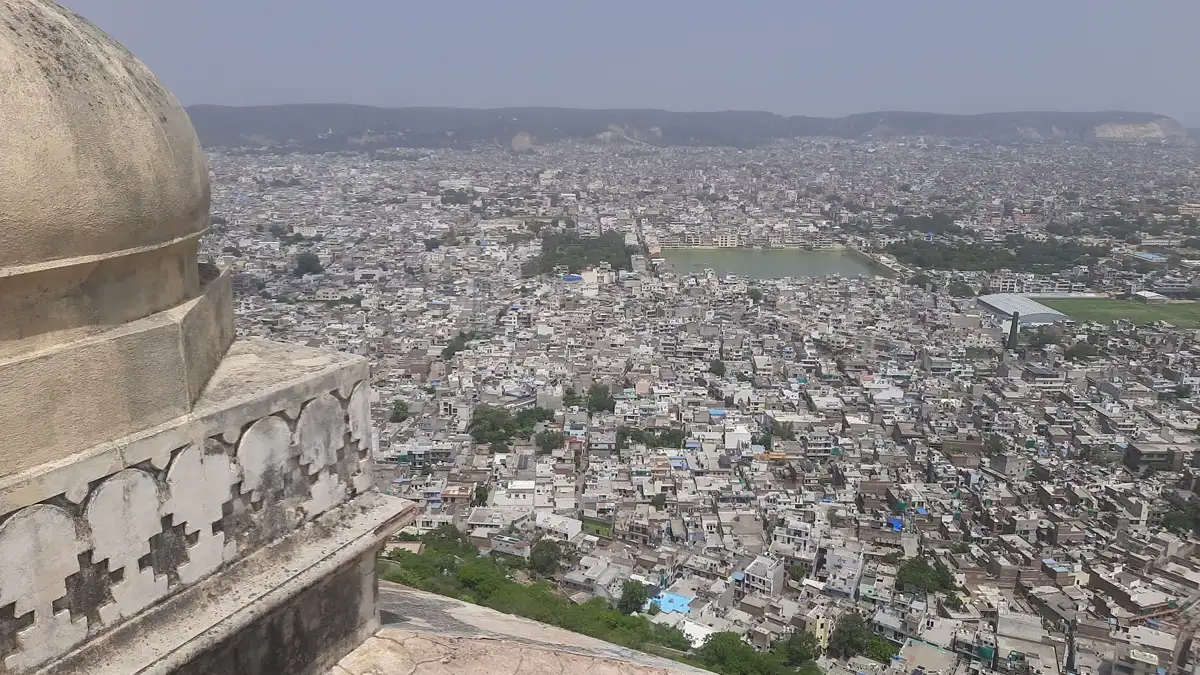
Planning your excursion with an in-depth Nahargarh Fort guide is essential for experiencing one of Jaipur’s most striking historic strongholds. Perched on a sheer precipice of the Aravalli hills, Nahargarh—meaning “Abode of Tigers”—looks down directly over the grid-patterned boulevards of the Pink City. Constructed in 1734 by Maharaja Sawai Jai Singh II, the founder of Jaipur, this yellow-sandstone fortress was designed as a defensive retreat and summer sanctuary for the royal family.
While Amber Fort dazzles with opulent marble courtyards and Jaigarh Fort showcases military armaments, Nahargarh stands out for its sprawling ramparts, unique two-story queen suites, and unmatched panoramic views. Whether you are seeking sunset vistas across the urban basin, studying 18th-century Rajput-Mughal architecture, or planning a day trip along the mountain ridge, this comprehensive guide covers everything you need to know about tickets, timing, transport, and hidden highlights.
Overview: Nahargarh Fort at a Glance
Before ascending the Aravalli ridge, review the core operational details and visitor parameters:
| Parameter | Visitor Information |
|---|---|
| Location | Krishna Nagar, Brahmapuri, Jaipur, Rajasthan 302002 (Aravalli Ridge) |
| Constructed By | Maharaja Sawai Jai Singh II (1734); extended by Sawai Madho Singh II (1880s) |
| Architectural Style | Indo-European / Rajput-Mughal fusion |
| Standard Visiting Hours | 10:00 AM to 05:30 PM (Main Palace Enclosure) |
| Extended Rampart Hours | Open until 10:00 PM for sunset viewing and restaurant dining |
| Annual Closures | Closed on Holi (the main festival of colors) |
| Typical Visit Duration | 1.5 to 2.5 hours |
| Ticketing System | Individual entry ticket or Rajasthan Government 2-Day Composite Pass |
Historical Context: The Guard of the Pink City
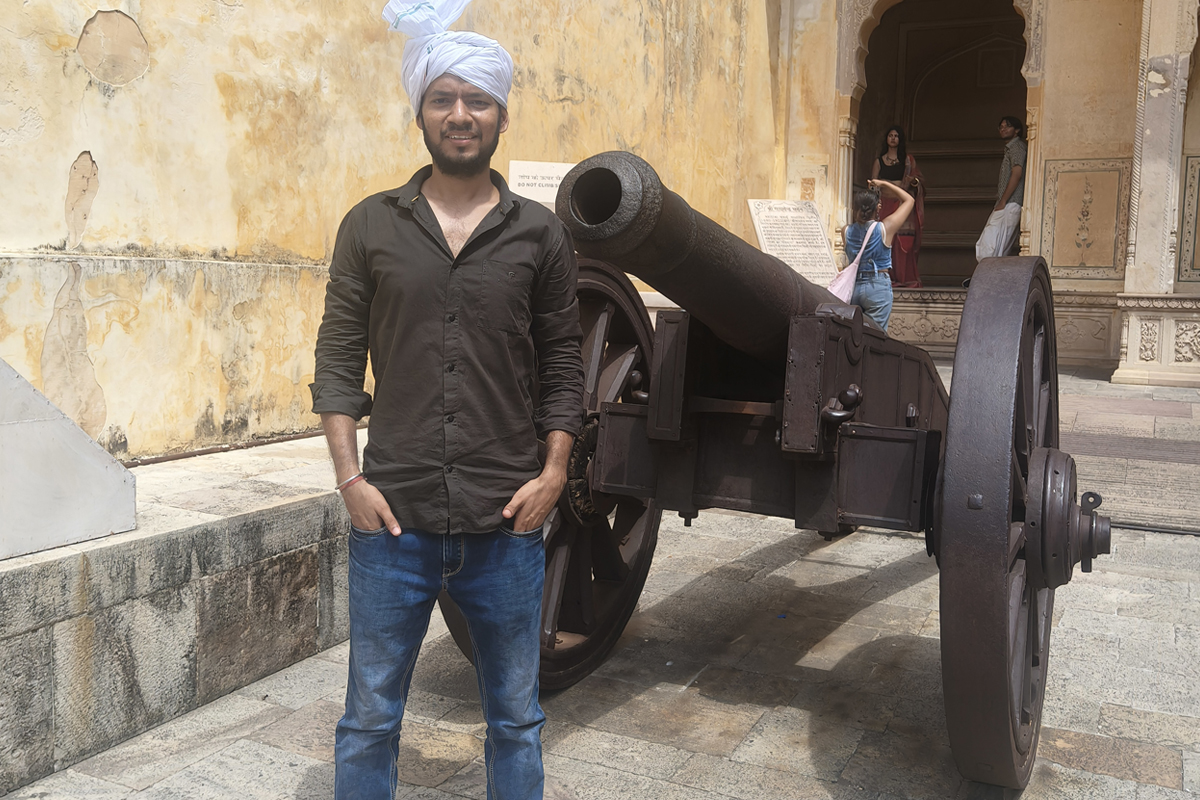
Unlike neighboring Jaigarh Fort, which witnessed military blockades and housed an active cannon foundry, Nahargarh Fort never came under heavy military siege during its operational lifetime. Instead, it formed a multi-layered defensive shield alongside Amber and Jaigarh, connected via fortified stone walls that snake across the Aravalli crests.
Originally named Sudarshangarh, legend holds that construction was initially disrupted by the spirit of a Rathore prince named Nahar Singh. To appease his spirit, a small shrine dedicated to him was established within the fort premises, and the complex was renamed Nahargarh. In the late 19th century, Maharaja Sawai Madho Singh II extensively renovated the fort interior, building a series of pleasure pavilions for his queens that transformed Nahargarh into an elegant royal retreat.
Key Architectural Highlights Inside Nahargarh Fort
1. Madhavendra Bhawan
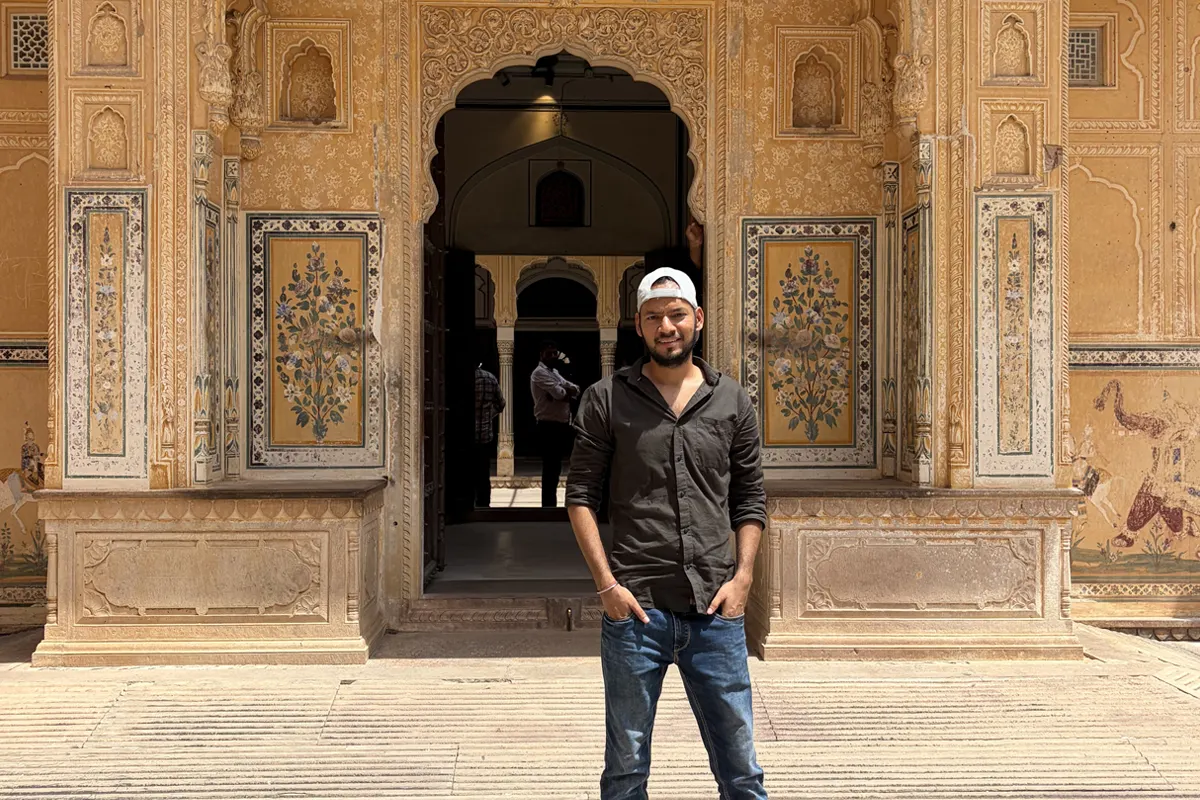
The centerpiece of Nahargarh Fort is Madhavendra Bhawan, a two-story palace complex constructed by Maharaja Sawai Madho Singh II between 1883 and 1892. The structure is a masterpiece of symmetrical design, featuring nine identical residential suites built for the Maharaja’s nine wives, along with a larger suite for the Maharaja himself.
- Ingenious Layout: Each of the nine queen suites is a two-story apartment complete with a reception room, bedroom, kitchen, toilet, and private veranda. The apartments are connected by a network of secluded interior corridors that allowed the Maharaja to visit any of his queens privately without the others knowing.
- Fresco Work & Stained Glass: The suites showcase vibrant Rajasthani wall frescoes, delicate floral plasterwork, and imported European stained-glass windows that cast colorful light across the stone floors during sunny afternoons.
2. The Fortress Ramparts and Viewing Terraces
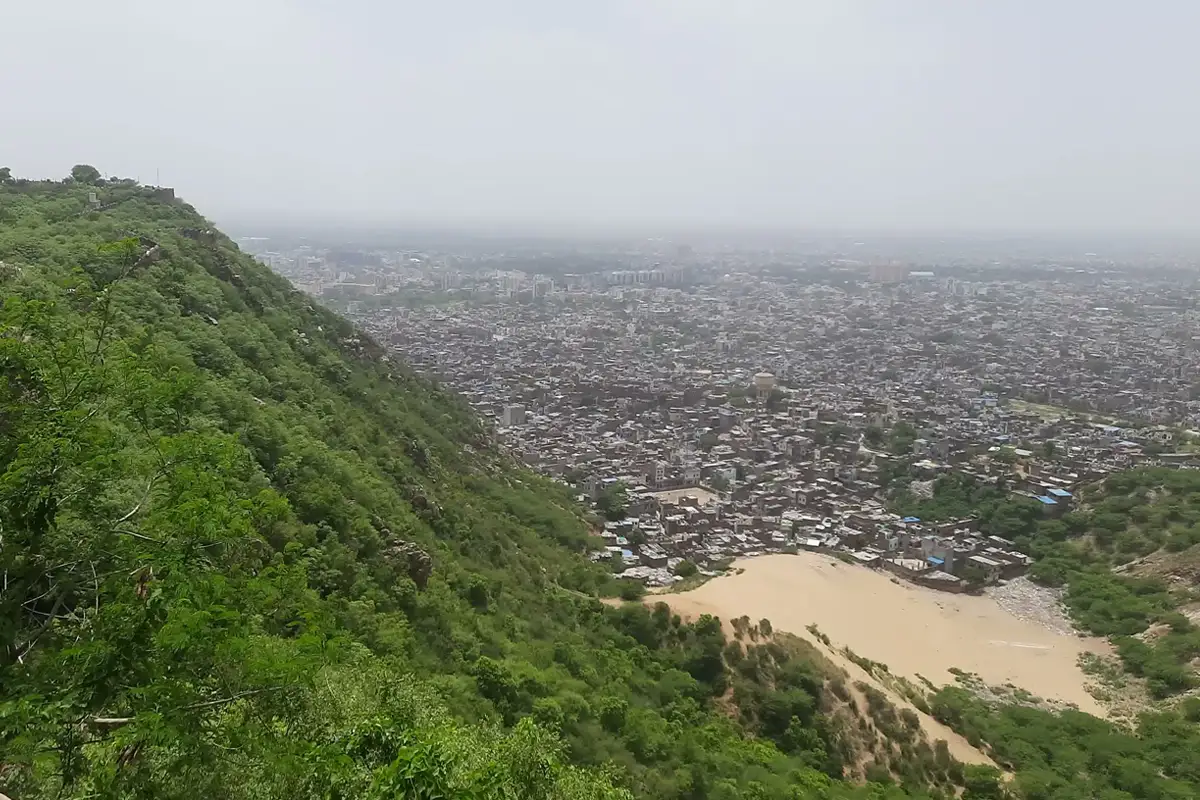
The extensive stone outer walls of Nahargarh offer the finest elevated views of Jaipur. From the western battlements, visitors can look down upon the Man Sagar Lake and Jal Mahal floating in the water below, as well as the geometric layout of the historic Walled City. The elevated terraces become particularly magical during late afternoon as the sun dips below the horizon, illuminating the city in golden hues.
3. The Stepwells (Bawris)
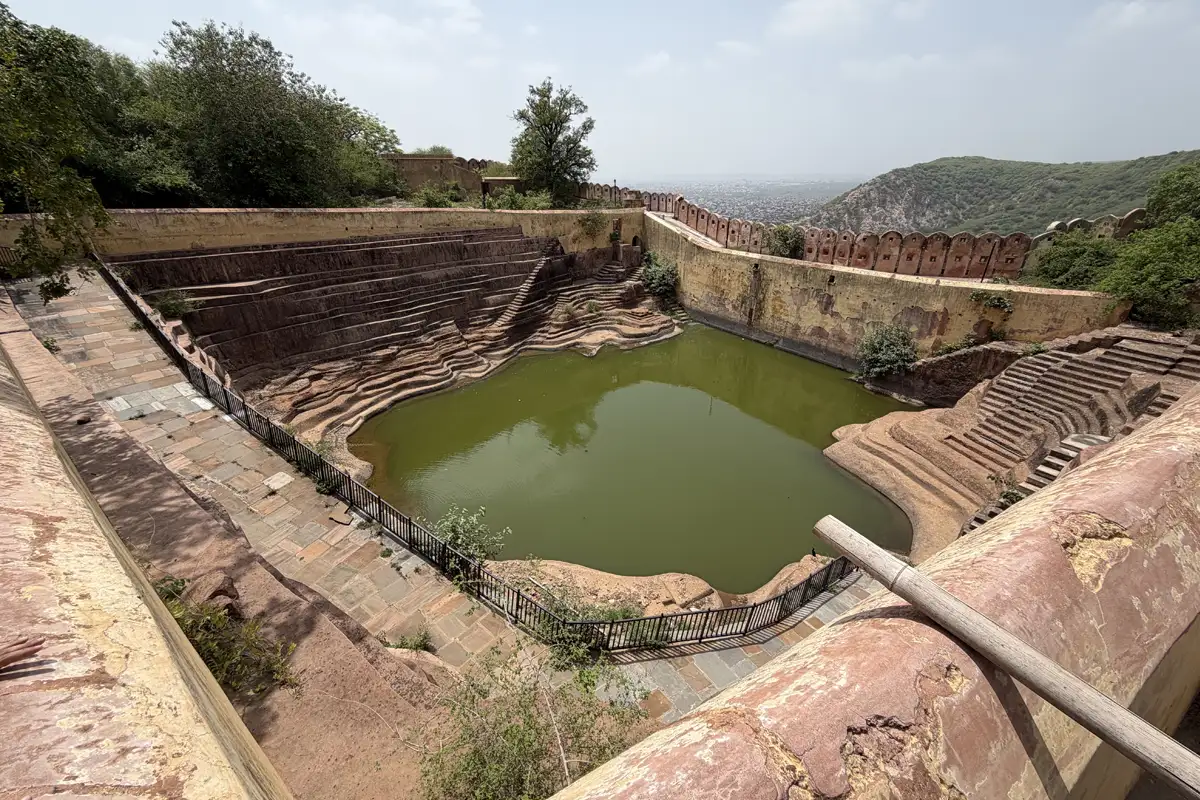
Nahargarh contains two historic water-harvesting stepwells built into the hillside terrain. The larger open stepwell features crisscrossing stone steps designed to collect monsoon runoff from the surrounding Aravalli catchment area.
Visitor Safety Note: To ensure visitor safety and protect historic masonry, local authorities strictly prohibit climbing, sitting, or standing on the outer ledges of Nahargarh’s stepwells. Security guards strictly enforce these safety rules.
4. Jaipur Wax Museum and Sculpture Park
Positioned near the main palace entrance, the complex houses two modern cultural additions:
- The Jaipur Wax Museum: Displays over 30 silicone and wax figures of historical Indian rulers, sports icons, and cultural figures inside the restored Rest House and Sheesh Mahal (featuring over 2.5 million hand-cut glass pieces). Requires a separate admission ticket.
- The Sculpture Park: Set within Madhavendra Bhawan, showcasing contemporary sculpture installations integrated into the historic rooms and courtyards.
The Sunset Experience: Where and When to Go
Watching the sunset from Nahargarh is one of Jaipur’s signature travel experiences. As evening approaches, the sky shifts from orange to purple, and the city lights flicker on across the plains below.
- Timing: Plan to arrive at the fort complex roughly 1 to 1.5 hours before local sunset. This leaves ample time to tour Madhavendra Bhawan before the interior galleries close at 05:30 PM, after which you can head to the outer ramparts.
- Open-Air Dining: The fort complex features state-run and private dining venues along the ramparts, including Padaao Restaurant, located at the highest point of the battlements. It provides open-air seating where visitors can sip cold beverages and enjoy light meals while taking in the night view.
How to Reach Nahargarh Fort: Transport Options
Nahargarh is situated on the Aravalli ridge roughly 15 kilometers from central Jaipur by road. Travelers have two distinct options for reaching the summit:
1. By Car, Taxi, or Auto-Rickshaw (Via the Main Hill Road)
The primary vehicle route winds up the back of the hill starting near Amer Road. The drive takes 30 to 45 minutes from central areas like C-Scheme or Bani Park.
- App-Based Cabs (Uber / Ola): Cab services can easily drop you off at Nahargarh Fort. However, getting an app cab to accept a ride back down the hill after sunset can be extremely difficult due to limited driver availability on the ridge.
- Pre-Booked Round-Trip Taxi (Recommended): Hire a private taxi for a half-day or full-day itinerary, ensuring the driver waits at the summit car park while you explore and takes you back down after sunset.
2. The Pedestrian Foot Ramp (For Energetic Walkers)
A steep, stone-paved pedestrian path rises directly from the Purani Basti / Nahargarh Road quarter at the foot of the hill in central Jaipur. The climb is roughly 2 kilometers long and takes 30 to 45 minutes of strenuous uphill walking. This route is best attempted early in the morning during cooler months; it is unshaded and not recommended during hot afternoon hours.
Ticketing and Entry Details
- Standard Monument Entry: Indian citizens: ₹50 | Foreign tourists: ₹200. Discounted student tickets are issued upon presentation of a valid institutional ID card.
- Free Entry Categories:
- Children: Free entry for young children below 7 years of age.
- Student Groups: Free entry every day between 10:00 AM and 05:00 PM upon an official written recommendation letter from their respective school, college, or institute.
- Annual Free Entry Days: General public entry is completely free on the following official observance days:
- 30 March: Rajasthan Diwas (Rajasthan Day)
- 18 April: World Heritage Day
- 18 May: World Museum Day
- 27 September: World Tourism Day
- Holiday Closures: Please note that Nahargarh Fort remains closed to visitors on Holi (the main festival day of colors).
- Rajasthan 2-Day Composite Ticket: If you are exploring multiple monuments across the city, purchase the government composite pass. It covers entry to Amber Fort, Nahargarh Fort, Hawa Mahal, Jantar Mantar, and Albert Hall Museum across two consecutive days, saving both money and counter queue time.
- Online Advance Booking: You can book verified digital passes via the official OBMS Rajasthan Tourism Portal to skip physical ticket window lines.
- Separate Attraction Fees: The Jaipur Wax Museum, Royal Sheesh Mahal exhibit, and rampart restaurant cover charges are managed separately and are not included in the standard monument pass.
Combining Your Excursion with Nearby Sights
Because Nahargarh sits along the northern ridge, combine your visit with nearby attractions to form a complete itinerary:
- Jaigarh Fort & Amber Fort: Situated further along the same hill ridge. Visit Amber Fort in the morning, tour Jaigarh Fort midday, and end your afternoon at Nahargarh for sunset. For detailed guidance on exploring the neighboring palace courtyards, read our comprehensive Amber Fort guide.
- Jal Mahal (Water Palace): Located at the base of the hill along Amer Road. Stop at the lake promenade for photos on your way up or down the mountain road.
- Complete City Itinerary: To organize your broader travel schedule across the Walled City and museum districts, check our curated overview of the top places to visit in Jaipur.
- Accommodation Strategy: Discover the best heritage havelis, luxury stays, and budget hotels in our guide on where to stay in Jaipur.
Frequently Asked Questions
While the interior palace rooms of Madhavendra Bhawan close to visitors at 05:30 PM, the main fort grounds, outer ramparts, and open-air restaurants remain open until 10:00 PM, allowing visitors to enjoy night views of illuminated Jaipur.
By road, Nahargarh Fort is located approximately 6 kilometers from Jaigarh Fort and roughly 11 kilometers from Amber Fort along the winding hill road. The drive takes about 20 to 25 minutes between the sites.
Relying on app-based cabs for return journeys from Nahargarh after sunset is risky. Drivers rarely accept rides heading up to the ridge to pick up passengers late in the evening. It is strongly recommended to hire a taxi for a round trip with a fixed waiting time.
Amber Fort is a grand royal palace featuring decorative residential halls and courtyards. Jaigarh Fort is an austere military fortress that housed an armory and cannon foundry. Nahargarh Fort was built as a hilltop retreat and defense lookout, famous for its queen suites and panoramic city views.