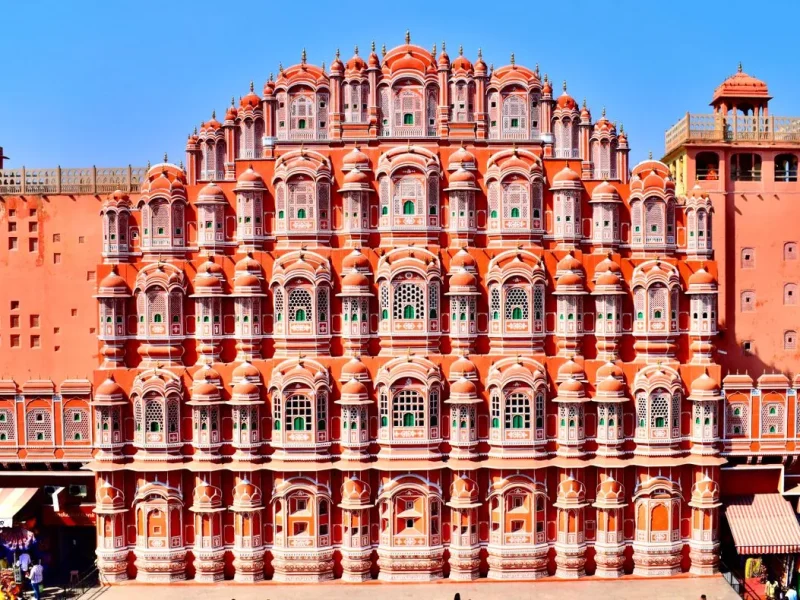
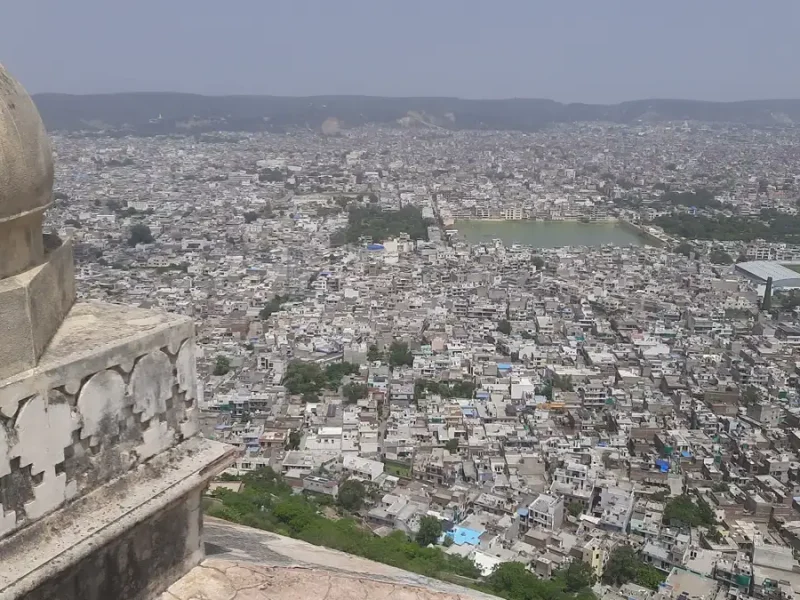
Rising above the waters of Maota Lake in the historic town of Amer, Amber Fort (often spelled Amer Fort) is one of India’s most celebrated hill fortresses. Constructed from yellow and pink sandstone and white Makrana marble, this UNESCO World Heritage Site served as the fortified seat of the Kachhwaha Rajput dynasty for over two centuries before the founding of modern Jaipur on the plains below in 1727. If you are structuring a broader trip to Rajasthan’s capital, explore our complete sightseeing overview of the best places to visit in Jaipur.
Perched against the rugged Aravalli range roughly 11 kilometers north of central Jaipur, the fortress is renowned for its synthesis of Rajput ornamentation and Mughal architectural symmetry. Behind its austere, battlemented defensive exterior lies a palatial interior of marble courtyards, subterranean waterways, mirrored reception chambers, and secluded royal quarters.
Overview: Amber Fort at a Glance
Before planning your visit, review these essential practical specifications:
| Detail | Visitor Information |
|---|---|
| Location | Devisingh Pura, Amer, 11 km north of central Jaipur |
| Heritage Status | UNESCO World Heritage Site (Hill Forts of Rajasthan) |
| Architectural Style | Indo-Islamic / Rajput-Mughal synthesis |
| Standard Daytime Hours | 08:00 AM to 05:30 PM (Daily) |
| Night Tourism Hours | 06:30 PM to 09:15 PM |
| Typical Visit Duration | 2.5 to 3 hours (add 1 hour for Amer town attractions) |
| Ticketing System | Individual entry or Rajasthan Government 2-Day Composite Ticket |
The Four Courtyards of Amber Fort: Architectural Breakdown
The interior of the fortress is organized into four sequential courtyards, each set on a higher level than the previous one and reflecting escalating tiers of privacy and royal ceremony.
First Courtyard: Jaleb Chowk and the Shila Devi Temple
Visitors entering through the grand Suraj Pol (Sun Gate) arrive in Jaleb Chowk, a massive parade ground where returning armies, royal guards, and ceremonial processions assembled. Facing the southern end of the courtyard is the Chand Pol (Moon Gate), which historically served as the entry for private royal visitors.
- Shila Devi Temple: Tucked in the southwest corner of Jaleb Chowk is the revered temple dedicated to Goddess Kali, installed by Raja Man Singh I in 1604 after his military campaign in Jessore (present-day Bangladesh). The shrine features heavy silver-embossed doors depicting the ten avatars of Lord Vishnu.
- Visitor Etiquette: Footwear, leather goods, and cameras must be deposited outside before entering the active temple sanctum.
Second Courtyard: Diwan-i-Aam (Hall of Public Audience)
Ascending a broad flight of stone stairs leads to the second courtyard, dominated by the Diwan-i-Aam. Built by Mirza Raja Jai Singh, this elevated ceremonial hall features a double row of red sandstone columns topped by brackets sculpted in the shape of elephants, transitioning seamlessly into an inner row of cream-colored marble pillars.
Here, the ruler received petitions, held daily administrative councils, and greeted foreign envoys with views looking down toward the fortified valley.
Third Courtyard: Royal Private Chambers and the Sheesh Mahal
Passing beneath the majestic Ganesh Pol—a multi-story gateway covered in original fresco paintings and screened stone casements—brings you into the royal family’s private residential enclosure. This courtyard centers around a formal sunken Persian garden (Aram Bagh) flanked by two facing palaces:
- The Sheesh Mahal (Mirror Palace): Commissioned in 1623, this hall is celebrated worldwide for its walls and ceilings inlaid with thousands of concave Belgian glass mirrors set within floral plaster moldings. When illuminated by candlelight, the convex mirrors reflect the flames to simulate a star-filled sky.
- Jas Mandir: Located above the Sheesh Mahal, this upper pavilion features floral glass mosaics and marble latticework (jali) screens designed to catch cool mountain breezes.
- Sukh Niwas (Hall of Pleasure): Facing opposite the Sheesh Mahal, this cool summer palace features sandalwood doors inlaid with ivory and an ingenious historical air-conditioning system: cold water was funneled through an open marble cascade (chadar) down the center of the room to lower the ambient temperature.
Fourth Courtyard: The Zenana and Palace of Man Singh
The oldest and most private section of the fortress is the Palace of Raja Man Singh I, completed in 1599. It served as the Zenana (secluded quarters for royal women). The layout centers around a pillared pavilion (baradari) surrounded by independent residential suites.
- Clever Layout: The suites were engineered so that each queen’s apartment opened independently onto a central corridor, allowing the Maharaja to visit any of his queens without alerting the others.
- Rooftop Ramparts: The upper terraces of the Zenana provide unobstructed panoramic views of Jaigarh Fort on the ridge above and the defensive battlements winding across the Aravalli crests.
Historic Treasures Beyond the Fort Walls
Most travelers leave after visiting the palace halls, missing several historical sights located within walking distance at the foot of the hill in old Amer town:
1. Panna Meena ka Kund
Located roughly 1 kilometer east of the fort base, this 16th-century community stepwell features an eight-story geometric pattern of crisscrossing stone staircases. Engineered to capture seasonal monsoon run-off and provide a communal gathering place during the dry season, it is among Rajasthan’s most photogenic stepwells.
- Duration: 20 to 30 minutes.
- Tip: Walking down the steps is restricted for safety, but photography from the surrounding perimeter platforms is permitted.
2. Jagat Shiromani Temple
Constructed between 1599 and 1608 by Queen Kanakwati in memory of her son Jagat Singh, this elaborately carved sandstone-and-marble temple is dedicated to Lord Krishna, Lord Vishnu, and the saint-poet Meera Bai. Its entrance features a grand marble torana (ceremonial archway) carved with depictions of deities and elephants.
3. Anokhi Museum of Hand Printing
Situated in a restored haveli near the base of the fort, this cultural museum is dedicated to preserving the traditional craft of Rajasthani woodblock printing. Visitors can watch master artisans carve wooden blocks and print natural dyes onto textiles, with live demonstrations held daily.
- Duration: 45 minutes. (Closed Mondays).
How to Reach Amber Fort and Ascend the Hill
Amber Fort is situated 11 kilometers north of central Jaipur along the Delhi-Jaipur highway (Amer Road). Several transit options connect the city center with the fort (and you can check our curated area guide on where to stay in Jaipur to choose between central heritage havelis or resorts situated closer to the Amer corridor):
Getting to Amer from Jaipur
- Private Taxi / Ride-Hailing Apps: Booking an app-based cab (Uber or Ola) or hiring a private vehicle for the day is the most convenient option.
- Jaipur City Bus: Low-floor air-conditioned bus route AC-5 connects the Ajmeri Gate / Hawa Mahal area directly to the Amer bus stand at nominal fares.
- Auto-Rickshaw: Readily available across Jaipur; ensure you negotiate a return fare or arrange a fixed waiting period, as hailing return rides from Amer in the late afternoon can involve higher rates.
Ascending from the Base to the Main Gate
The fort entrance sits atop a steep hill overlooking Maota Lake. You have three primary ways to reach Jaleb Chowk:
- Walking Up the Stepped Ramp (Recommended): Walking the stone pathway from the main parking area takes roughly 15 to 20 minutes. It offers scenic views of the ramparts and Maota Lake and avoids wait times.
- Authorized 4×4 Tourist Jeeps: Government-authorized jeeps operate from the lower parking stand up through the back entrance (Chand Pol) for visitors seeking a vehicle transfer.
- Driving via the Rear Hill Road: Taxis and private cars can bypass the front climb entirely by driving up the paved back road directly to the designated upper car park near Chand Pol.
Practical Visitor Information: Ticketing and Timing
- Ticketing Options: You can purchase a standalone day ticket at the main counter or use the Rajasthan Government 2-Day Composite Ticket. The composite pass covers Amber Fort, Nahargarh Fort, Hawa Mahal, Jantar Mantar, and Albert Hall Museum across two consecutive days, saving both time and money. Verified online passes are available via the official OBMS Rajasthan Tourism Booking Portal.
- Best Time of Day: Arrive at the ticket gates between 08:00 AM and 08:30 AM. Touring the Sheesh Mahal and Ganesh Pol early allows you to experience the palace in soft morning light before tour buses arrive around 10:00 AM.
- Night Viewing & Light Show: Amber Fort reopens from 06:30 PM to 09:15 PM under atmospheric floodlighting. The nightly Sound and Light Show (held in both English and Hindi at the foot of Kesar Kyari garden) recounts the history of the Kachhwaha kings.
- Audio Guides: High-quality authorized multi-lingual audio guide devices can be rented at the booth inside Jaleb Chowk.
Frequently Asked Questions
Yes. The official two-day composite ticket issued by the Rajasthan Department of Archaeology & Museums includes entry to Amber Fort, along with Nahargarh Fort, Hawa Mahal, Jantar Mantar, and the Albert Hall Museum. It does not include Jaigarh Fort or the City Palace.
Plan for at least 2.5 to 3 hours to tour the four main courtyards, the Sheesh Mahal, the subterranean passages, and the ramparts. If you plan to add Panna Meena ka Kund, Jagat Shiromani Temple, or the Anokhi Museum in Amer town, budget a total of 4 hours.
Yes. An authentic subterranean escape tunnel connects the third courtyard of Amber Fort to the fortress battlements of Jaigarh Fort higher up the hill. Alternatively, you can walk the steep open stone rampway or hire a taxi along the 5-kilometer mountain road to the Jaigarh entrance.
Accessibility inside Amber Fort is limited. While vehicles can drive directly to the upper gate (Chand Pol) to enter Jaleb Chowk without climbing the hill ramp, moving between the higher courtyards involves historic stone steps, narrow corridors, and steep pedestrian inclines.