There’s no other country quite like India. Drive a few hours in any direction and the language changes, the food changes, the architecture changes, sometimes even the climate flips entirely. You can be standing in front of a 17th-century marble tomb on a Tuesday and swimming off a palm-lined beach by Friday. That range is exactly why “must-see places in India” is such a hard list to write honestly — there’s no single circuit that captures it all, and anyone who tells you otherwise hasn’t spent enough time here.
This guide is our attempt at the most useful version of that list. We’ve pulled together 25 destinations that, between them, cover the country’s major regions, climates, and kinds of experiences — deserts, mountains, temple towns, wildlife reserves, beaches, and a couple of places most first-time visitors never think to look for. For each one, you’ll find what actually makes it worth the trip, when to go, how to get there, what it costs, and a few practical details that usually only show up after you’ve made the mistake yourself. There’s also a full breakdown by travel style (families, couples, solo travelers, adventure, and more), ready-made itineraries from a week to three weeks, and a realistic budget guide so you can plan a trip that matches both your time and your wallet.
Quick Fact Card: India Travel at a Glance
| UNESCO World Heritage Sites | 45 (as of 2026) — 37 cultural, 7 natural, 1 mixed. This number is updated periodically, so check UNESCO’s official list before citing it elsewhere. |
| Best Months to Visit | October to March for most of the country; May to September for the Himalayas and Ladakh |
| Ideal Trip Duration | 10–15 days for a first visit covering 2–3 regions; 3+ weeks if you want to add the Northeast or the islands |
| Best For | Heritage and culture, food, mountains, wildlife, spirituality, beaches, photography |
| Popular Experiences | Sunrise at the Taj Mahal, desert camping in Rajasthan, Himalayan road trips, backwater houseboats, Ganga Aarti in Varanasi, wildlife safaris |
| Currency | Indian Rupee (INR / ₹) |
| Languages | Hindi and English are widely understood in tourist areas; India has 22 officially recognized languages and hundreds of regional dialects |
See These Destinations on a Map
Before you start planning routes, it’s worth pulling up a map of India and dropping pins on the places that interest you. Because of how spread out the country is, grouping destinations by region — rather than jumping from the Himalayas to the southern coast and back — will save you an enormous amount of travel time and money. A quick look at the map also makes it obvious which places pair naturally (Agra and Jaipur, for instance, or Munnar and Coorg) and which ones need to be their own dedicated trip (Ladakh, the Andamans, the Northeast).
How We Chose These Places
We didn’t just pick the 25 most Instagrammed spots in the country. Each destination on this list earned its place through a mix of the following:
- Historical importance — sites that shaped, or were shaped by, major periods of Indian history
- Natural beauty — landscapes that are genuinely distinct, not just scenic in a generic sense
- Popularity and proven appeal — places that consistently deliver for the range of travelers who visit them
- Cultural significance — destinations that offer real insight into a specific regional or religious tradition
- Accessibility — realistic to reach and explore without specialized permits or excessive logistics (with a couple of clearly flagged exceptions)
- Unique experiences — something you can only really do in that one place
- Seasonal appeal — destinations that are worth visiting during a specific, plannable window of the year
1. Taj Mahal, Agra, Uttar Pradesh
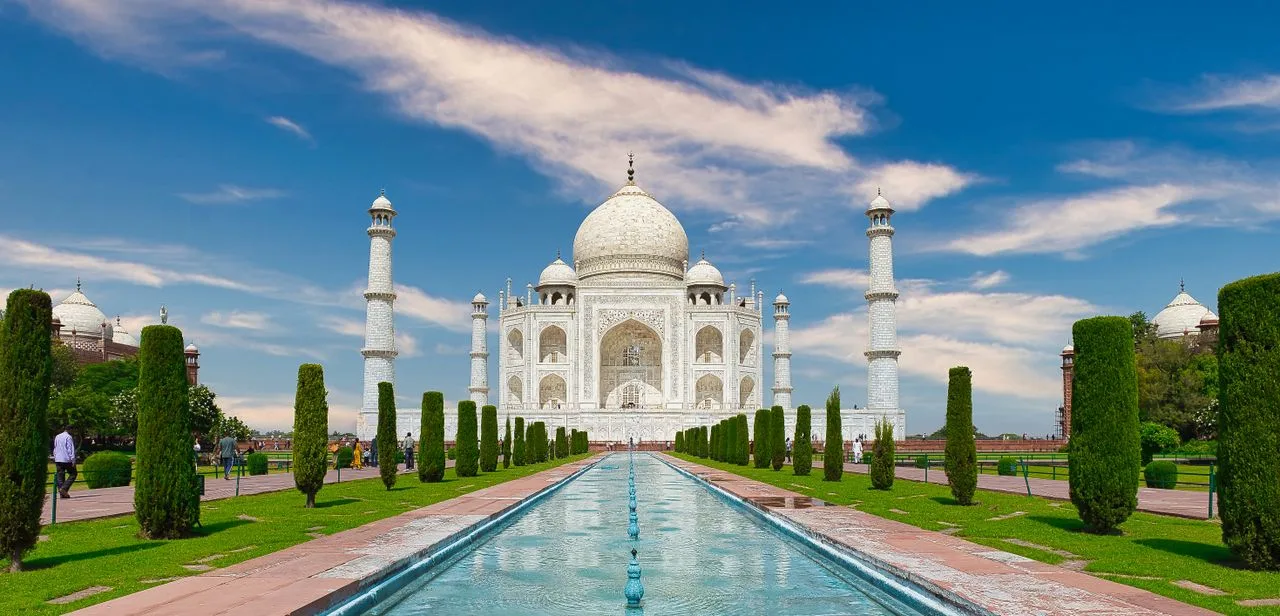
There’s a reason nearly every “must-see” list in the world puts the Taj Mahal near the top. Built by Emperor Shah Jahan as a mausoleum for his wife Mumtaz Mahal, it’s one of the few monuments that genuinely lives up to the hype in person — the way the white marble shifts color through the day, from soft pink at dawn to blinding white at noon to pale gold at sunset, isn’t something photos capture well.
Top Attractions:
- The main mausoleum and its symmetrical Mughal gardens
- Agra Fort, a short drive away, with views back toward the Taj across the river
- Mehtab Bagh, a garden directly across the Yamuna River for a different angle
- Fatehpur Sikri, a well-preserved Mughal ghost city, as a day trip
Best Experiences: Watching the sunrise from inside the complex, walking the full gardens rather than just the main platform, and pairing the visit with a quiet evening at Mehtab Bagh for the reverse view.
- Best Time to Visit: October to March
- Ideal Duration: 1 day (2 with Fatehpur Sikri)
- Nearest Airport: Agra Airport (Kheria)
- Nearest Railway Station: Agra Cantt, well connected by the Gatimaan Express from Delhi
- Ideal For: First-time visitors, couples, history lovers
- Estimated Budget: Moderate — entry fees and a guide add up, but Agra itself is inexpensive for food and stays
Photography Tip: Arrive right at opening time. Not only is the light softer, but you’ll get several minutes with the main platform nearly empty before tour groups arrive.
Local Food to Try: Petha, a sweet made from ash gourd, is Agra’s signature treat — pick some up from a shop near Sadar Bazaar rather than a tourist stall.
Travel Tip: The Taj Mahal sits inside a pollution-controlled zone, so vehicles can’t drive right up to the entrance — you’ll walk the last stretch or take an electric shuttle. Entry fees and timings do change periodically, so confirm current rates with the Archaeological Survey of India before your trip.
Nearby Attractions: Agra Fort, Itmad-ud-Daulah (“Baby Taj”), Fatehpur Sikri.
2. Jaipur, Rajasthan
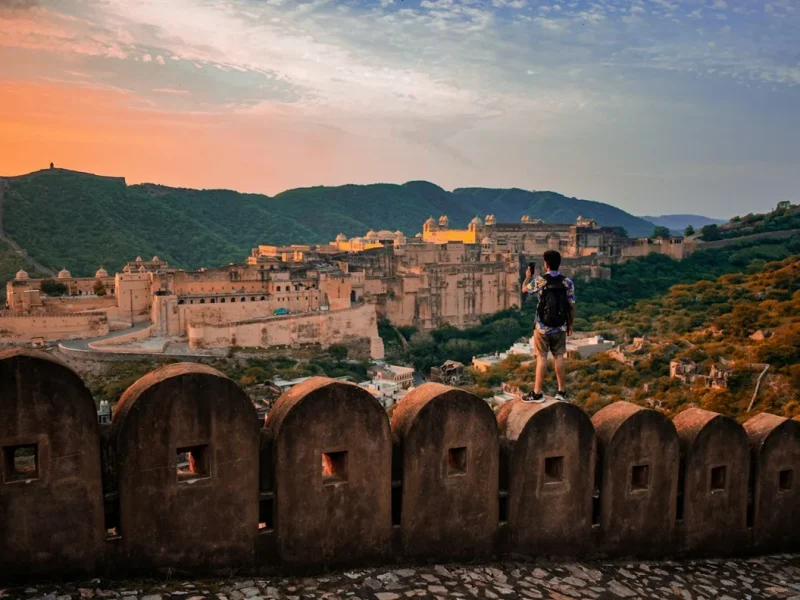
Jaipur earns the nickname “Pink City” from the terracotta-washed buildings of its old quarter, but the color is really just the surface. This is a city built by people who took architecture seriously — forts designed for defense and beauty in equal measure, a palace complex that’s still partly a royal residence, and bazaars that have been selling the same categories of goods for centuries.
Top Attractions:
- Amber Fort, with its Sheesh Mahal (Mirror Palace)
- Hawa Mahal, the honeycomb-windowed “Palace of Winds”
- City Palace and its royal museums
- Nahargarh Fort for sunset panoramas over the whole city
Best Experiences: The evening light and sound show at Amber Fort, a rooftop café view of Hawa Mahal, and an evening at Chokhi Dhani for a taste of staged but genuinely well-done Rajasthani culture.
- Best Time to Visit: October to March
- Ideal Duration: 2–3 days
- Nearest Airport: Jaipur International Airport (Sanganer)
- Nearest Railway Station: Jaipur Junction
- Ideal For: First-time visitors, families, photographers
- Estimated Budget: Budget to moderate, with a wide range of stay options from hostels to heritage havelis
Photography Tip: Amber Fort in early morning light, before the tour buses arrive, is dramatically different from the same shot at midday — the stone takes on a warmer tone and the courtyards are nearly empty.
Local Food to Try: Dal Baati Churma and Pyaaz Kachori, both Jaipur staples worth seeking out at a proper local restaurant rather than a hotel buffet.
Travel Tip: Consider the Jaipur Composite Ticket if you’re covering multiple monuments — it usually pays for itself if you’re visiting three or more sites, though the exact price changes periodically, so confirm it at the counter.
Nearby Attractions: Jaigarh Fort, Panna Meena ka Kund stepwell, Patrika Gate.
To plan your daily sightseeing around Amer Fort and Hawa Mahal, read our detailed guide on the top places to visit in Jaipur.
3. Varanasi, Uttar Pradesh
Varanasi is one of the oldest continuously inhabited cities on Earth, and it feels like it the moment you step down to the ghats. Life and death happen openly here, side by side with tourists, pilgrims, and boatmen, in a way that can be disorienting at first and genuinely moving by the second day.
Top Attractions:
- Dashashwamedh Ghat, the main site of the evening Ganga Aarti
- The wider network of ghats, best explored by boat
- Sarnath, where the Buddha delivered his first sermon, a short drive away
- The narrow old-city lanes around the Kashi Vishwanath Temple
Best Experiences: An early morning boat ride at sunrise, followed by attending the evening Ganga Aarti — the two feel like completely different cities.
- Best Time to Visit: October to March
- Ideal Duration: 2 days
- Nearest Airport: Lal Bahadur Shastri International Airport
- Nearest Railway Station: Varanasi Junction
- Ideal For: Solo travelers, spiritual seekers, photographers
- Estimated Budget: Budget-friendly, with excellent value guesthouses along the ghats
Photography Tip: Shoot the boat ride at sunrise looking back toward the ghats rather than out at the river — the layered light on the buildings is the real subject.
Local Food to Try: Kachori-sabzi for breakfast, and malaiyo (a winter-only milk foam dessert) if you’re visiting between November and February.
Travel Tip: The old-city lanes near the ghats get crowded and disorienting after dark. Stick to well-lit, populated routes in the evening, and agree on boat fares before you get in.
Nearby Attractions: Sarnath, Ramnagar Fort, Tulsi Manas Temple.
4. Delhi
Delhi rarely gets described as anyone’s favorite Indian city, but it might be the most useful one to understand India as a whole. Layers of empire — Delhi Sultanate, Mughal, British colonial, modern republic — sit within a few kilometers of each other, and the food scene alone justifies a couple of extra days.
Top Attractions:
- Red Fort and the adjoining Old Delhi neighborhood
- Qutub Minar and Humayun’s Tomb
- India Gate and the Kartavya Path lawns
- Gurudwara Bangla Sahib and the Lotus Temple
Best Experiences: A food-focused walk through Chandni Chowk, an evening at India Gate, and the community langar at Gurudwara Bangla Sahib.
- Best Time to Visit: October to March
- Ideal Duration: 2–3 days
- Nearest Airport: Indira Gandhi International Airport
- Nearest Railway Station: New Delhi Railway Station
- Ideal For: First-time visitors, food lovers, history enthusiasts
- Estimated Budget: Wide range — Delhi can be done cheaply or expensively depending on where you stay
Photography Tip: Humayun’s Tomb’s symmetry photographs best from the main gateway looking straight down the central axis, ideally in the hour before sunset.
Local Food to Try: Parathas at Chandni Chowk’s Paranthe Wali Gali, and chaat at Bengali Market.
Travel Tip: Use the Delhi Metro over road transport wherever possible — it’s clean, safe, and dramatically faster than fighting traffic by car.
Nearby Attractions: Agra and Jaipur are both easy add-ons as part of the Golden Triangle circuit.
Delhi is a magnificent blend of ancient heritage and modern energy. From the towering Qutub Minar to the sprawling lanes of Chandni Chowk, there are countless places to explore in Delhi that showcase its rich history and culture.
If you are using the national capital as your starting base for a broader North India trip, you can also plan short road trips and weekend getaways from Delhi to popular hill stations like Shimla, Rishikesh, or Agra.
5. Goa
Goa gets reduced to “party state” in a lot of write-ups, which sells it short. Yes, North Goa has beach clubs and nightlife, but South Goa’s quieter shores, the Portuguese-era churches of Old Goa, and the state’s genuinely excellent seafood make it a far more layered destination than its reputation suggests.Top Attractions:
- Baga and Calangute beaches in North Goa for energy and water sports
- Palolem and Agonda in South Goa for a quieter pace
- Basilica of Bom Jesus and Se Cathedral in Old Goa
- Fontainhas, Panaji’s colorful Latin Quarter
Best Experiences: Renting a scooter and beach-hopping at your own pace, watching sunset from a Vagator cliffside shack, and exploring Old Goa’s churches on a quiet weekday morning.
- Best Time to Visit: November to February
- Ideal Duration: 3–5 days
- Nearest Airport: Goa International Airport (Dabolim/Manohar)
- Nearest Railway Station: Madgaon or Thivim
- Ideal For: Friends’ trips, couples, nightlife seekers, and anyone wanting a laid-back stretch on their itinerary
- Estimated Budget: Flexible — genuinely budget-friendly in hostels and shacks, or upscale in the resort belt
Photography Tip: Golden hour at Vagator or Chapora Fort gives you both the coastline and the cliffs in one frame.
Local Food to Try: Goan fish curry-rice and prawn balchão at a beach shack rather than a resort restaurant.
Travel Tip: A rented scooter is the most practical way to get around — an international driving permit or a valid Indian license is required, and helmets aren’t optional.
Nearby Attractions: Dudhsagar Falls, Anjuna flea market, Divar Island.
Goa’s vibrant beach culture and social hostels make it one of the best places for a solo trip in India.
6. Leh-Ladakh
Ladakh doesn’t look like the rest of India, and that’s really the point. High-altitude desert, Buddhist monasteries clinging to cliffsides, and lakes so blue they look edited — this is the trip people plan for years and still find overwhelming in the best way once they arrive.
Top Attractions:
- Pangong Lake, especially at sunrise before the day-trip crowds arrive
- Nubra Valley and its sand dunes
- Thiksey and Hemis monasteries
- Khardung La, one of the world’s highest motorable passes
Best Experiences: A multi-day road trip covering Nubra Valley and Pangong Lake, and sitting in on a morning prayer session at one of the monasteries if visitors are welcome that day.
- Best Time to Visit: May to September, once the mountain passes open
- Ideal Duration: 5–7 days
- Nearest Airport: Kushok Bakula Rimpochee Airport, Leh
- Nearest Railway Station: None directly — most travelers fly into Leh or drive in via Manali or Srinagar
- Ideal For: Adventure travelers, solo riders, photographers
- Estimated Budget: Moderate to high, largely due to flight costs and the need for private transport
Photography Tip: Pangong Lake’s color shifts dramatically through the day — early morning and late afternoon both give strikingly different, equally photogenic results.
Local Food to Try: Thukpa and momos at the small Tibetan-run cafés near Leh’s main market.
Travel Tip: Altitude sickness is the real risk here, not the terrain. Spend at least a full day acclimatizing in Leh before heading to higher passes or lakes, and check current road/pass status with the Border Roads Organisation before departure.
Nearby Attractions: Magnetic Hill, Shanti Stupa, Tso Moriri Lake.
7. Chopta, Uttarakhand
Chopta gets called the “Mini Switzerland of India,” and while that’s a slightly overused label, the meadows and forest trails genuinely earn the comparison. It’s also the base camp for one of India’s most rewarding short treks.
Top Attractions:
- Tungnath Temple, the world’s highest Shiva temple
- Chandrashila Peak, with 360-degree Himalayan views
- Deoriatal Lake nearby
- Kanchula Korak Musk Deer Sanctuary
Best Experiences: The Tungnath-Chandrashila trek, and camping under a genuinely dark, light-pollution-free sky.
- Best Time to Visit: April to June and September to November; December to February for snow
- Ideal Duration: 3 days
- Nearest Airport: Jolly Grant Airport, Dehradun
- Nearest Railway Station: Rishikesh
- Ideal For: Trekkers, offbeat travelers, couples wanting quiet
- Estimated Budget: Budget-friendly, with simple camps and homestays as the main accommodation type
Photography Tip: Chandrashila’s summit view is best shortly after sunrise, before cloud cover typically rolls in later in the morning.
Local Food to Try: Garhwali staples like Aloo ke Gutke and Mandua Roti at a roadside dhaba.
Travel Tip: The trek route runs through the Kedarnath Wildlife Sanctuary, so a nominal forest entry fee applies — carry a government ID and confirm the current rate at the check-post.
Nearby Attractions: Ukhimath, Sari Village.
Before embarking on the trek to Tungnath, review our full Chopta Hill Station guide for trekking tips, as well as our Delhi to Chopta route guide for driving directions
8. Valley of Flowers, Uttarakhand
This UNESCO-listed valley is only accessible — and only worth visiting — during a narrow summer window when it erupts into a genuinely spectacular carpet of alpine flowers. It’s a proper trek, not a casual walk, which keeps the crowds thinner than most Himalayan destinations.
Top Attractions:
- The valley itself, densest in bloom during peak monsoon
- Hemkund Sahib, a Sikh pilgrimage site nearby
- Ghangaria, the base village for both treks
Best Experiences: Timing your trek for peak bloom (typically late July to mid-August) and combining it with the Hemkund Sahib trek from the same base.
- Best Time to Visit: July to September
- Ideal Duration: 2–3 days including the trek
- Nearest Airport: Jolly Grant Airport, Dehradun
- Nearest Railway Station: Rishikesh
- Ideal For: Trekkers, nature photographers
- Estimated Budget: Budget to moderate, depending on trekking gear and guide costs
Photography Tip: Overcast light actually works better here than harsh sun — it brings out the flower colors without blowing out highlights.
Local Food to Try: Simple Garhwali dal-rice meals at the Ghangaria base camp, since options are limited this high up.
Travel Tip: This is a genuine trek with real elevation gain — go in with reasonable fitness, and check park entry rules and permit requirements before you go, as these are periodically updated.
Nearby Attractions: Badrinath Temple, Joshimath.
If high-altitude landscapes are your priority, check out our list of the best mountain places to visit in India.
9. Rishikesh, Uttarakhand
Rishikesh has built an international reputation as a yoga and wellness hub, but it’s equally well known for white-water rafting and a genuinely lively café scene along the river. It manages to be both a spiritual town and an adventure-sports base without feeling contradictory.
Top Attractions:
- Triveni Ghat and Parmarth Niketan for the evening Ganga Aarti
- Ram Jhula, Janki Jhula, and the newly opened Bajrang Setu (glass bridge), which replaced the now permanently closed Laxman Jhula
- Tapovan’s café strip
- Neer Garh Waterfall
Best Experiences: White-water rafting near Shivpuri, and an early morning yoga session by the river.
- Best Time to Visit: September to April; rafting season runs September to June
- Ideal Duration: 2–3 days
- Nearest Airport: Jolly Grant Airport, Dehradun
- Nearest Railway Station: Rishikesh, or Haridwar as a backup
- Ideal For: Solo travelers, wellness seekers, adventure groups
- Estimated Budget: Budget-friendly, with a wide range of guesthouses and hostels
Photography Tip: The view of the river from Bajrang Setu at golden hour captures both the water and the surrounding hills in one frame.
Local Food to Try: Rishikesh is largely vegetarian and alcohol-free — try a proper thali at a riverside café along with fresh-pressed juices, a local specialty.
Travel Tip: Book rafting slots online a day ahead — Saturday morning slots fill up fast in peak season.
Nearby Attractions: Haridwar, Chopta, Devprayag.
10. Amritsar, Punjab
The Golden Temple is one of the most genuinely welcoming religious sites you’ll visit anywhere in the world — the community kitchen alone, feeding tens of thousands of people daily regardless of faith, is worth the trip on its own. Pair it with the Wagah Border ceremony for a completely different kind of energy.
Top Attractions:
- Golden Temple (Harmandir Sahib) and its sarovar
- Jallianwala Bagh, a solemn historical site
- Wagah Border, for the daily flag-lowering ceremony
- Amritsar’s old-city food lanes
Best Experiences: Visiting the Golden Temple at night, when it’s lit and far less crowded, and volunteering at the langar kitchen even briefly.
- Best Time to Visit: October to March
- Ideal Duration: 1–2 days
- Nearest Airport: Sri Guru Ram Dass Jee International Airport
- Nearest Railway Station: Amritsar Junction
- Ideal For: Spiritual travelers, families, food lovers
- Estimated Budget: Budget-friendly
Photography Tip: The temple’s reflection in the sarovar is strongest right after sunset, once the interior lights come on.
Local Food to Try: Amritsari kulcha with chole, and lassi from one of the old city’s well-known stalls.
Travel Tip: Cover your head before entering the Golden Temple complex — scarves are provided free at the entrance if you don’t have one.
Nearby Attractions: Partition Museum, Durgiana Temple.
11. Hampi, Karnataka
Hampi is what’s left of the once-mighty Vijayanagara Empire, and the setting is as strange as the history — temple ruins and royal complexes scattered across a surreal boulder-strewn landscape that looks almost alien in places.
Top Attractions:
- Virupaksha Temple, still an active place of worship
- The Stone Chariot at Vittala Temple
- Matanga Hill for sunrise and sunset views
- The royal enclosure and elephant stables
Best Experiences: Renting a bicycle to cover the sprawling ruins at your own pace, and watching sunset from Matanga Hill.
- Best Time to Visit: November to February
- Ideal Duration: 2–3 days
- Nearest Airport: Hubli or Bengaluru (both require a further drive)
- Nearest Railway Station: Hospet Junction
- Ideal For: History enthusiasts, photographers, backpackers
- Estimated Budget: Budget-friendly
Photography Tip: Late afternoon light on the boulder landscape brings out a warm orange tone that’s very distinctly Hampi.
Local Food to Try: Simple South Indian thalis at the small local eateries around Hampi Bazaar.
Travel Tip: The ruins are spread over a wide area — a bicycle or rented scooter is far more practical than trying to walk between sites in the heat.
Nearby Attractions: Anegundi village, Tungabhadra Dam.
12. Khajuraho, Madhya Pradesh
Khajuraho’s temples are famous for their intricate carvings, which cover a far broader range of subjects — daily life, mythology, spirituality — than the reputation they’ve picked up over the years suggests. Architecturally, they’re some of the finest surviving examples of medieval Indian temple design.
Top Attractions:
- The Western Group of Temples, the most visited and best preserved
- Kandariya Mahadev Temple, the largest in the complex
- The Eastern and Southern Groups, quieter and less crowded
Best Experiences: The evening sound and light show at the Western Group, and a guided walk-through to actually understand the carvings’ context.
- Best Time to Visit: October to March
- Ideal Duration: 1–2 days
- Nearest Airport: Khajuraho Airport
- Nearest Railway Station: Khajuraho Railway Station
- Ideal For: History and architecture enthusiasts
- Estimated Budget: Budget-friendly
Photography Tip: Morning light rakes across the carved surfaces at an angle that brings out the relief detail far better than midday sun.
Local Food to Try: Simple Madhya Pradesh thalis with local dal and bafla (a regional cousin of baati).
Travel Tip: Hire a licensed guide — the symbolism in the carvings is easy to misread without context.
Nearby Attractions: Raneh Falls, Panna National Park.
13. Udaipur, Rajasthan
Udaipur is the most conventionally romantic of Rajasthan’s cities — palaces that appear to float on lakes, a compact old town made for wandering, and rooftop restaurants that make even an average meal feel special because of the view.
Top Attractions:
- City Palace and its museum complex
- Lake Pichola, best experienced by boat
- Jag Mandir, a palace island on the lake
- Saheliyon Ki Bari, a landscaped garden
Best Experiences: A sunset boat ride on Lake Pichola, and dinner at a rooftop restaurant overlooking the water.
- Best Time to Visit: October to March
- Ideal Duration: 2–3 days
- Nearest Airport: Maharana Pratap Airport
- Nearest Railway Station: Udaipur City
- Ideal For: Couples, honeymooners, luxury travelers
- Estimated Budget: Moderate to high, especially for lakeside hotels
Photography Tip: Shoot the City Palace from a boat on the lake at golden hour rather than from the shore — the reflection doubles the impact.
Local Food to Try: Laal Maas, a fiery Rajasthani meat curry, alongside a full thali.
Travel Tip: Book a lakeside rooftop table well in advance for sunset — the best spots fill up fast even on weekdays in peak season.
Nearby Attractions: Kumbhalgarh Fort, Ranakpur Jain Temple.
14. Jaisalmer, Rajasthan
Jaisalmer is one of the few “living forts” left in the world — people still live and work inside its ancient walls, rather than it being purely a preserved monument. Combined with the surrounding Thar Desert, it’s Rajasthan’s most atmospheric stop.
Top Attractions:
- Jaisalmer Fort and its inhabited old town
- Patwon Ki Haveli, known for intricate architecture
- Sam Sand Dunes for desert camping
Best Experiences: An overnight desert camp with a bonfire and folk music, and a camel or jeep safari at sunset over the dunes.
- Best Time to Visit: October to March
- Ideal Duration: 2 days
- Nearest Airport: Jaisalmer Airport (limited seasonal connectivity)
- Nearest Railway Station: Jaisalmer Railway Station, connected by overnight trains from Delhi and Jodhpur
- Ideal For: Adventure travelers, photographers, honeymooners
- Estimated Budget: Moderate, with desert camps typically priced higher than standard hotels
Photography Tip: The fort’s sandstone walls turn a deep gold at sunset — shoot from the outside looking up rather than from within.
Local Food to Try: Ker sangri, a desert-region specialty made from local wild beans and berries.
Travel Tip: Desert nights get close to freezing even when days feel warm — pack proper thermal layers regardless of season.
Nearby Attractions: Kuldhara abandoned village, Bada Bagh cenotaphs.
15. Munnar, Kerala
Munnar’s tea plantations roll across the hills in a way that photographs make look almost too perfect to be real. It’s cooler, greener, and slower-paced than most of Kerala’s coastal destinations, and genuinely one of South India’s best hill escapes.
Top Attractions:
- Tea plantations at Kolukkumalai, among the highest in the world
- Eravikulam National Park, home to the endangered Nilgiri Tahr
- Mattupetty Dam and surrounding viewpoints
Best Experiences: An early morning walk through the plantations before the mist clears, and a tea-tasting session at a local factory.
- Best Time to Visit: September to March
- Ideal Duration: 3–4 days
- Nearest Airport: Kochi International Airport
- Nearest Railway Station: Aluva or Ernakulam Junction
- Ideal For: Couples, nature lovers, families
- Estimated Budget: Moderate
Photography Tip: Mornings before 9 AM are the foggiest and most atmospheric — plan plantation walks early rather than midday.
Local Food to Try: Kerala’s home-style “meals” served on a banana leaf, along with fresh appams and stew in the evening.
Travel Tip: Chembra-style trekking permits at nearby sites are often limited per day — book ahead if trekking is a priority.
Nearby Attractions: Wayanad, Thekkady.
Kerala comes alive during the rainy season—see where it ranks on our list of the top places to visit in monsoon in India.
16. Coorg, Karnataka
Coorg (Kodagu) is Karnataka’s coffee country — misty hills, working plantations, and a distinct Kodava culture and cuisine that sets it apart from the rest of South India’s hill destinations.
Top Attractions:
- Working coffee estates open for stays and tours
- Abbey Falls, fuller and more scenic post-monsoon
- Raja’s Seat viewpoint
Best Experiences: A coffee estate homestay rather than a hotel in Madikeri town, and a sunset stop at Raja’s Seat.
- Best Time to Visit: October to March
- Ideal Duration: 2–3 days
- Nearest Airport: Mangalore International Airport
- Nearest Railway Station: Mysuru Junction
- Ideal For: Couples, nature lovers
- Estimated Budget: Moderate
Photography Tip: Estate walks look best in the soft, diffused light of an overcast morning rather than harsh midday sun.
Local Food to Try: Pandi curry, a Kodava specialty pork dish, along with kadambuttu (rice dumplings).
Travel Tip: Estate homestays generally offer better value and atmosphere than hotels in Madikeri town — worth booking at least one night at one.
Nearby Attractions: Dubare Elephant Camp, Talakaveri.
17. Mysore, Karnataka
Mysore Palace, especially when lit up on Sunday evenings, is one of India’s most photogenic buildings — and Dasara, the city’s flagship festival, turns the entire place into one of the country’s most spectacular cultural celebrations.
Top Attractions:
- Mysore Palace, especially illuminated at night
- Chamundi Hills
- Devaraja Market
Best Experiences: Timing a visit around Dasara (September/October) if possible, and a walk through Devaraja Market for local flavors and colors.
- Best Time to Visit: October to March
- Ideal Duration: 1–2 days
- Nearest Airport: Mysore Airport (limited) or Bengaluru
- Nearest Railway Station: Mysuru Junction
- Ideal For: Families, culture enthusiasts
- Estimated Budget: Budget-friendly
Photography Tip: The palace illumination happens on Sundays and select public holidays — confirm the schedule ahead of time so you don’t miss it.
Local Food to Try: Mysore Pak, a rich ghee-based sweet that originated here.
Travel Tip: Book accommodation well ahead if visiting during Dasara — the city fills up fast for the festival.
Nearby Attractions: Coorg, Srirangapatna.
18. Kaziranga National Park, Assam
Kaziranga holds the largest population of the one-horned rhinoceros anywhere in the world, and the dry-season grasslands make sightings far easier than at most Indian wildlife parks.
Top Attractions:
- Jeep safaris through the core rhino habitat zones
- Early morning elephant-back safaris, subject to availability
- The park’s wetland zones for birdwatching
Best Experiences: An early morning jeep safari, when sighting rates are noticeably higher than afternoon slots.
- Best Time to Visit: November to April
- Ideal Duration: 2–3 days
- Nearest Airport: Jorhat Airport, or Guwahati for wider connectivity
- Nearest Railway Station: Furkating
- Ideal For: Wildlife enthusiasts, photographers
- Estimated Budget: Moderate, safari costs add up over multiple days
Photography Tip: Bring a longer zoom lens than you think you’ll need — rhinos and other wildlife often stay at a respectful distance.
Local Food to Try: Assamese thali with fish tenga (a tangy fish curry).
Travel Tip: Book the earliest available safari slot when reserving — morning sightings are consistently better.
Nearby Attractions: Majuli Island, Kaziranga Orchid Park.
19. Andaman & Nicobar Islands
For genuinely clear water and coral reefs, the Andamans beat mainland India’s beaches by a wide margin. This is where you go for scuba diving and island-hopping, not just sunbathing.
Top Attractions:
- Radhanagar Beach on Havelock Island (Swaraj Dweep)
- Scuba diving and snorkeling sites around Havelock and Neil Island
- Cellular Jail in Port Blair, a significant historical site
Best Experiences: A day of scuba diving at Havelock, and sunset at Radhanagar Beach.
- Best Time to Visit: October to May
- Ideal Duration: 5–6 days
- Nearest Airport: Veer Savarkar International Airport, Port Blair
- Nearest Railway Station: None — the islands are accessible only by air or a multi-day ferry
- Ideal For: Couples, water sports lovers, honeymooners
- Estimated Budget: Moderate to high, driven by flights and inter-island ferries
Photography Tip: Midday sun actually works well underwater and for beach shots here — the light penetrates the clear water best when the sun is directly overhead.
Local Food to Try: Fresh grilled seafood at the beachside shacks on Havelock.
Travel Tip: Book inter-island ferries in advance during peak season, and note that parts of the Nicobar Islands are restricted or require special permits — stick to the open tourist circuit around Port Blair and Havelock.
Nearby Attractions: Neil Island, Ross Island.
20. Varkala, Kerala
Varkala’s defining feature is its cliff — a red laterite ridge running along the coast, lined with cafés that give you both ocean views and a place to sit and watch the day go by.
Top Attractions:
- Varkala Cliff and its café strip
- Papanasam Beach, believed to have spiritual significance
- Nearby backwater boat trips
Best Experiences: A sunset walk along the cliff, and an Ayurvedic massage session at one of the cliffside wellness centers.
- Best Time to Visit: October to March
- Ideal Duration: 2–3 days
- Nearest Airport: Trivandrum International Airport
- Nearest Railway Station: Varkala Sivagiri
- Ideal For: Couples, solo travelers, wellness seekers
- Estimated Budget: Budget to moderate
Photography Tip: The cliff-edge cafés get their best golden-hour light about 30–40 minutes before actual sunset — arrive early for a good table and view.
Local Food to Try: Fresh seafood at the cliffside cafés, alongside Kerala-style fish curry.
Travel Tip: The main beach access points involve a fair number of steps down the cliff — factor that in if mobility is a concern.
Nearby Attractions: Anjengo Fort, Kappil Beach.
21. Darjeeling, West Bengal
Darjeeling built its reputation on tea, and the plantations here remain some of the most famous in the world. Add the colonial-era toy train and views of Kangchenjunga on a clear day, and it’s easy to see why this hill town has stayed popular for well over a century.
Top Attractions:
- Tiger Hill for sunrise views of Kangchenjunga
- The Darjeeling Himalayan Railway (the toy train)
- Working tea estates open to visitors
Best Experiences: An early sunrise trip to Tiger Hill, and a toy train ride on the historic narrow-gauge railway.
- Best Time to Visit: March to May and October to November
- Ideal Duration: 3–4 days
- Nearest Airport: Bagdogra Airport
- Nearest Railway Station: New Jalpaiguri (NJP), with the toy train connecting onward from Siliguri
- Ideal For: Families, couples, tea enthusiasts
- Estimated Budget: Moderate
Photography Tip: Tiger Hill’s sunrise view of Kangchenjunga depends entirely on clear weather — check conditions the evening before, and have a backup morning if your first attempt is clouded out.
Local Food to Try: Momos and thukpa, along with a proper tea-tasting session at one of the working estates.
Travel Tip: Book the toy train’s “joy ride” segment in advance during peak season — seats sell out quickly.
Nearby Attractions: Kalimpong, Mirik.
22. Shillong, Meghalaya
Shillong earned the nickname “Scotland of the East” during colonial times, and while that comparison is a stretch, the cool climate, rolling hills, and distinct Khasi culture make it a genuinely different experience from most Indian hill stations.
Top Attractions:
- Ward’s Lake in the city center
- Police Bazaar for shopping and street food
- Elephant Falls nearby
Best Experiences: Exploring the city’s café culture, which has a genuinely distinct identity from the rest of India, and a day trip toward Cherrapunji.
- Best Time to Visit: October to April
- Ideal Duration: 2–3 days
- Nearest Airport: Shillong Airport (limited) or Guwahati
- Nearest Railway Station: Guwahati, followed by a road journey
- Ideal For: Offbeat travelers, couples, road trippers
- Estimated Budget: Budget to moderate
Photography Tip: Ward’s Lake looks best in early morning mist, before the day’s activity picks up around it.
Local Food to Try: Jadoh, a traditional Khasi rice and meat dish.
Travel Tip: Road connectivity from Guwahati can take longer than expected due to terrain — build in buffer time rather than a tight schedule.
Nearby Attractions: Cherrapunji, Mawlynnong village.
23. Meghalaya (Cherrapunji & Dawki)
Beyond Shillong, Meghalaya’s real draw is its landscape — living root bridges grown over generations by the local Khasi community, and the Umngot River at Dawki, famous for water so clear that boats appear to float in mid-air.
Top Attractions:
- Double-Decker Living Root Bridge near Cherrapunji
- Umngot River at Dawki
- Mawlynnong, often called Asia’s cleanest village
Best Experiences: The trek to the living root bridges, and a boat ride on the Umngot River when water clarity is at its best.
- Best Time to Visit: October to April for clearest conditions; monsoon for dramatic waterfalls
- Ideal Duration: 3–4 days
- Nearest Airport: Guwahati or Shillong
- Nearest Railway Station: Guwahati
- Ideal For: Adventure travelers, offbeat explorers
- Estimated Budget: Moderate, given the remote logistics
Photography Tip: River clarity at Dawki depends heavily on recent rainfall — check with local operators a day or two ahead, since even light rain can cloud the water.
Local Food to Try: Smoked pork and local rice dishes at village eateries near the root bridges.
Travel Tip: The living root bridge trek involves hundreds of steps down (and back up) — pace yourself and carry water.
Nearby Attractions: Nohkalikai Falls, Mawsmai Cave.
24. Rann of Kutch, Gujarat
The Rann of Kutch transforms every winter, when the Rann Utsav festival turns this vast white salt desert into a full cultural carnival of music, crafts, and tented accommodation under an open sky.
Top Attractions:
- The white salt desert itself, especially under a full moon
- Rann Utsav tent city and its cultural programming
- Kalo Dungar (Black Hill) viewpoint
Best Experiences: Watching the moonrise over the salt flats, and exploring nearby Kutch handicraft villages.
- Best Time to Visit: November to February, coinciding with Rann Utsav
- Ideal Duration: 2–3 days
- Nearest Airport: Bhuj Airport
- Nearest Railway Station: Bhuj Railway Station
- Ideal For: Couples, culture enthusiasts, photographers
- Estimated Budget: Moderate, tent stays during Rann Utsav run higher than standard hotels
Photography Tip: The full moon nights during Rann Utsav are the single best window for photographing the salt desert — check the festival calendar and moon phase together when booking.
Local Food to Try: Kutchi thali, with its distinct use of local millets and dairy.
Travel Tip: Tent bookings for Rann Utsav fill up fast around peak dates — book at least a month ahead for weekend or festival-period stays.
Nearby Attractions: Bhuj’s old town, Mandvi Beach.
25. Jim Corbett National Park, Uttarakhand
India’s oldest national park, Jim Corbett remains one of the most reliable places in the country for a wild tiger sighting, alongside a healthy population of elephants, deer, and birdlife.
Top Attractions:
- Dhikala zone, generally considered the best for tiger sightings
- Corbett Waterfall
- The Ramganga River running through the park
Best Experiences: An early morning jeep safari into the Dhikala or Bijrani zones, and staying overnight inside or near the park for a second safari attempt.
- Best Time to Visit: November to June (the park closes during monsoon)
- Ideal Duration: 2–3 days
- Nearest Airport: Pantnagar Airport
- Nearest Railway Station: Ramnagar
- Ideal For: Families, wildlife enthusiasts, weekend travelers from Delhi
- Estimated Budget: Moderate, with safari permits adding to base accommodation costs
Photography Tip: A telephoto lens (300mm or more) makes a real difference here — tigers and other wildlife rarely pose close to the vehicle track.
Local Food to Try: Simple Kumaoni dishes like bhatt ki churkani (a black soybean curry) at local eateries in Ramnagar.
Travel Tip: Safari zone permits are limited and allocated in advance — book through the official Uttarakhand forest department portal rather than relying on last-minute availability.
Nearby Attractions: Nainital, Ramnagar town.
Comparison Table: All 25 Must-See Places in India
| Destination | State | Best For | Ideal Days | Best Season | Budget |
|---|---|---|---|---|---|
| Taj Mahal | Uttar Pradesh | First-timers, couples | 1 | Oct–Mar | Moderate |
| Jaipur | Rajasthan | Families, photography | 2–3 | Oct–Mar | Budget–Moderate |
| Varanasi | Uttar Pradesh | Solo, spiritual | 2 | Oct–Mar | Budget |
| Delhi | Delhi | First-timers, food | 2–3 | Oct–Mar | Flexible |
| Goa | Goa | Friends, nightlife | 3–5 | Nov–Feb | Flexible |
| Leh-Ladakh | Ladakh | Adventure, solo riders | 5–7 | May–Sep | Moderate–High |
| Chopta | Uttarakhand | Trekkers | 3 | Apr–Jun, Sep–Nov | Budget |
| Valley of Flowers | Uttarakhand | Trekkers, nature | 2–3 | Jul–Sep | Budget–Moderate |
| Rishikesh | Uttarakhand | Wellness, adventure | 2–3 | Sep–Apr | Budget |
| Amritsar | Punjab | Spiritual, families | 1–2 | Oct–Mar | Budget |
| Hampi | Karnataka | History, backpackers | 2–3 | Nov–Feb | Budget |
| Khajuraho | Madhya Pradesh | Architecture | 1–2 | Oct–Mar | Budget |
| Udaipur | Rajasthan | Couples, luxury | 2–3 | Oct–Mar | Moderate–High |
| Jaisalmer | Rajasthan | Adventure, honeymooners | 2 | Oct–Mar | Moderate |
| Munnar | Kerala | Couples, nature | 3–4 | Sep–Mar | Moderate |
| Coorg | Karnataka | Couples, nature | 2–3 | Oct–Mar | Moderate |
| Mysore | Karnataka | Families, culture | 1–2 | Oct–Mar | Budget |
| Kaziranga | Assam | Wildlife | 2–3 | Nov–Apr | Moderate |
| Andaman Islands | Andaman & Nicobar | Couples, water sports | 5–6 | Oct–May | Moderate–High |
| Varkala | Kerala | Couples, wellness | 2–3 | Oct–Mar | Budget–Moderate |
| Darjeeling | West Bengal | Families, tea lovers | 3–4 | Mar–May, Oct–Nov | Moderate |
| Shillong | Meghalaya | Offbeat, couples | 2–3 | Oct–Apr | Budget–Moderate |
| Meghalaya (Cherrapunji/Dawki) | Meghalaya | Adventure, offbeat | 3–4 | Oct–Apr | Moderate |
| Rann of Kutch | Gujarat | Couples, culture | 2–3 | Nov–Feb | Moderate |
| Jim Corbett | Uttarakhand | Families, wildlife | 2–3 | Nov–Jun | Moderate |
Best Destinations by Category
Best for Families
Jaipur, Delhi, Mysore, Amritsar, and Jim Corbett offer the easiest mix of accessibility, comfort, and things to keep both kids and adults engaged.
Best for Couples
Udaipur, Munnar, Coorg, Varkala, and the Andaman Islands consistently top the list for romantic settings and slower-paced itineraries.
Best for Solo Travelers
Varanasi, Rishikesh, Hampi, and Goa all have strong backpacker infrastructure and are genuinely comfortable to navigate alone.
Best for Adventure
Leh-Ladakh, Rishikesh, Chopta, and the Meghalaya root bridge region reward travelers looking for something more physically engaging than sightseeing.
Best for Spiritual Travel
Varanasi, Amritsar, Rishikesh, and the Valley of Flowers/Hemkund Sahib route offer the deepest spiritual and pilgrimage experiences on this list.
Best for Wildlife
Kaziranga and Jim Corbett are the two strongest options here, each offering a genuinely high chance of meaningful sightings.
Best for Beaches
Goa, the Andaman Islands, and Varkala each offer a different flavor of beach experience — party, pristine, or laid-back respectively.
Best for Mountains
Leh-Ladakh, Chopta, Darjeeling, and Shillong each represent a distinct kind of mountain experience, from stark high-altitude desert to lush tea-covered hills.
Best for History
The Taj Mahal, Hampi, Khajuraho, and Delhi collectively cover most of India’s major historical periods in one loose circuit.
Best for Luxury
Udaipur, Jaisalmer, and the Andaman Islands have the strongest concentration of high-end resorts and heritage-hotel stays.
Best Budget Destinations
Varanasi, Rishikesh, Hampi, and Mysore all deliver a genuinely rich experience without needing a large daily budget.
Suggested India Itineraries
7 Days: The Golden Triangle Plus One
Delhi (2 days) → Agra (1 day) → Jaipur (2 days) → back to Delhi, with your final 2 days spent either exploring Delhi more deeply or taking a short add-on trip to Rishikesh.
10 Days: North India Classic
Delhi (2 days) → Agra (1 day) → Jaipur (2 days) → Udaipur (2 days) → Jaisalmer (2 days), flying back from Jodhpur or Jaisalmer to Delhi.
15 Days: North India Plus a Second Region
Delhi (2 days) → Agra (1 day) → Jaipur (2 days) → Udaipur (2 days) → fly to Goa (4 days) → fly to Mumbai (2 days) → fly home from Mumbai. This mixes heritage, desert, and beach in a single realistic trip.
20 Days: The Full Circuit
Delhi (2 days) → Agra (1 day) → Jaipur (2 days) → Udaipur (2 days) → Jaisalmer (2 days) → fly to Kochi (1 day) → Munnar (3 days) → Varkala (2 days) → fly to Goa (3 days) → fly home from Goa or Mumbai. This covers North India’s heritage circuit alongside Kerala’s hills and coast, and Goa’s beaches, without excessive backtracking.
Estimated Travel Budget for India
Budget Traveler
Roughly ₹1,500–₹2,500 per day, covering hostel dorms or basic guesthouses, street food and local restaurants, and public transport or shared taxis.
Mid-Range Traveler
Roughly ₹4,000–₹7,000 per day, covering comfortable 3-star hotels, a mix of local and restaurant dining, and private cabs for local transport.
Luxury Traveler
₹10,000+ per day, covering heritage hotels or luxury resorts, private guided tours, and higher-end dining — this range climbs significantly in destinations like Udaipur, Jaisalmer, and the Andamans.
Practical Travel Tips for India
Packing Checklist
- Layered clothing for North India’s winter temperature swings between day and night
- Light, breathable cottons for summer and coastal destinations
- A proper raincoat and waterproof footwear if traveling during monsoon
- Comfortable walking shoes — most heritage sites involve significant walking
- A basic first-aid kit and any personal medication, clearly labeled
Safety Tips
Stick to registered accommodations with verified reviews, keep copies of your ID documents separate from the originals, and use official prepaid taxi counters at airports and railway stations rather than unmarked cabs.
Internet & SIM Cards
A local prepaid SIM (Airtel, Jio, or Vi) is inexpensive and widely available at airports with passport verification — reliable mobile data makes navigation and ride-hailing significantly easier across every destination on this list.
UPI & Payments
India has moved heavily toward digital payments through UPI (Unified Payments Interface). International visitors typically can’t access UPI directly without an Indian bank account, so carry a mix of cash and an internationally accepted card, and check current rules on foreign UPI access before you travel, since these have been updated periodically.
Local Transport
Domestic flights are fastest for long distances, trains are excellent for medium distances and offer a genuine slice of Indian life, and app-based cabs or auto-rickshaws work well within cities — always confirm fares upfront for unmetered rides.
Weather
India’s climate varies drastically by region and season — always check region-specific forecasts rather than assuming a single “Indian weather” pattern applies everywhere at once.
Responsible Tourism
Carry reusable water bottles where filtered water is available, avoid single-use plastic in ecologically sensitive areas like Meghalaya and the Andamans, respect dress codes at religious sites, and support local guides and homestays over large chain operators where possible.
Common Mistakes First-Time Visitors Make
- Trying to cover too much ground. India is enormous — cramming five regions into ten days usually means spending more time traveling than actually experiencing each place.
- Underestimating travel time between regions. A map distance of 500km can easily mean a full day of travel once you account for road conditions or connecting flights.
- Not acclimatizing before high-altitude destinations. Ladakh in particular catches travelers off guard — altitude sickness is a real risk, not a formality.
- Skipping travel insurance. Given the range of activities and destinations on offer, from trekking to scuba diving, proper travel insurance is worth the relatively small upfront cost.
- Not confirming entry fees and timings in advance. Monument fees, safari permits, and seasonal closures change periodically — always verify current details with the official tourism authority shortly before your visit rather than relying on older sources.
- Overpacking for one climate. A trip that moves between Rajasthan’s desert, Kerala’s coast, and Ladakh’s mountains needs genuinely different packing for each leg.
Final Thoughts
No list, including this one, can fully capture what India is like to actually travel through. What we’ve tried to do here is give you a genuinely useful starting point — 25 places that, between them, represent the different Indias you’ll encounter, along with the practical details that make planning easier rather than more overwhelming. Wherever you end up going, travel a little slower than you think you need to, ask locals for their own recommendations along the way, and treat the places and people you encounter with the same care you’d want extended to your own home. India rewards that kind of attention more than almost anywhere else we’ve traveled.
Frequently Asked Questions
The Taj Mahal remains the single most iconic must-see, but if you can only pick a handful, pairing it with Jaipur, Varanasi, and one nature-focused destination (Munnar, Chopta, or Goa) gives you a genuinely well-rounded sense of the country.
The Golden Triangle — Delhi, Agra, and Jaipur — remains the most practical starting point, offering strong tourist infrastructure and a manageable, well-connected route.
This is genuinely subjective, but Udaipur, Munnar, and Leh-Ladakh are the three destinations most frequently cited by travelers and photographers as India’s most visually striking.
Yes, the vast majority of tourist destinations in India are safe, with well-established infrastructure for visitors. Standard travel precautions — verified accommodations, official transport, awareness in crowded areas — apply here as they would in most popular international destinations.
Leh-Ladakh, Chopta, Darjeeling, and parts of Himachal Pradesh see reliable winter snowfall, typically between December and February.
Ladakh, Darjeeling, and other Himalayan hill destinations come into their own during India’s summer, when the plains are at their hottest.
The Valley of Flowers is only accessible during monsoon, and Meghalaya’s waterfalls and Kerala’s backwaters both look their most dramatic under monsoon clouds.
10 to 15 days strikes the best balance for a first visit, giving you enough time to cover 2–3 regions properly without feeling rushed.
Most international visitors require a visa, and India offers an e-Visa system for many nationalities. Requirements change periodically, so confirm current rules through India’s official e-Visa portal before booking your trip.
A mix of domestic flights for long hops and trains or private cabs for shorter, scenic stretches usually works out both cheaper and more comfortable than relying on a single mode of transport throughout your trip.