If you think Qutub Minar is just a historical monument to visit during a hot afternoon, you are missing out on half the experience.
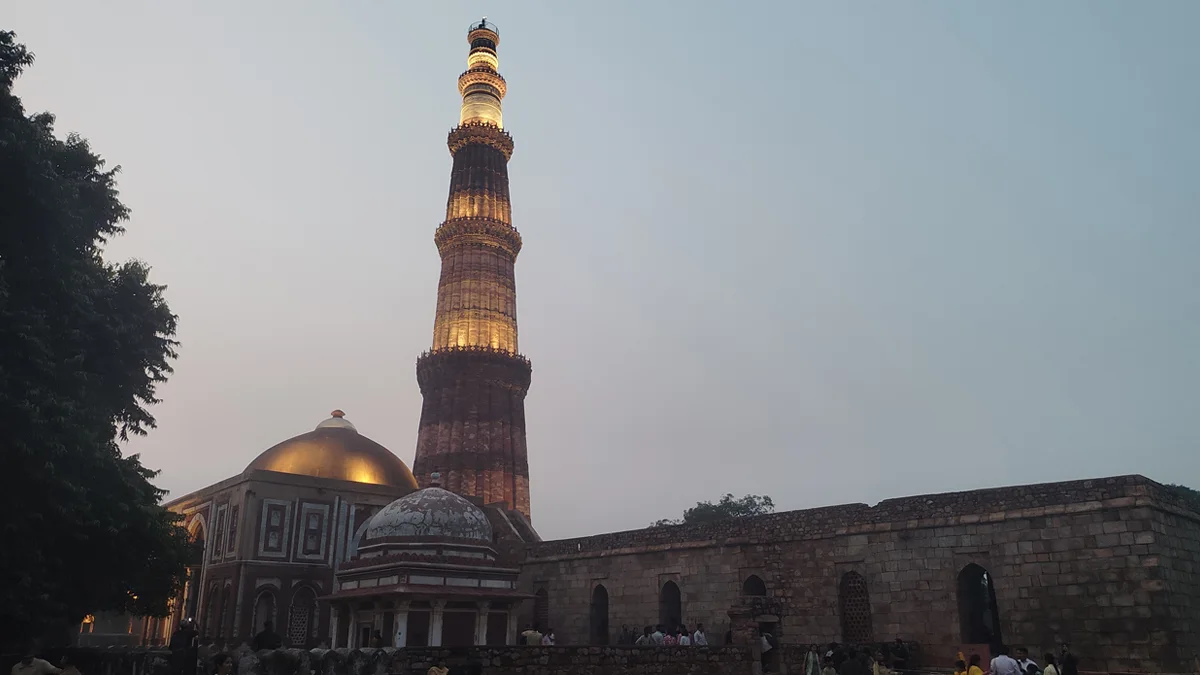
I had visited Qutub Minar earlier during the daytime, and on Sunday, 1st November 2026 I went back with my wife and our two kids (aged 6 and 2) to see it at night. We stayed until late evening to watch the Qutub Minar laser light show and see the monument lit up under the night sky. Safe to say: the night view of Qutub Minar beats the daytime view by a mile.
This is our first-hand Qutub Minar guide. It covers opening hours, ticket price, parking, the light show timing, how to reach, nearby places in Mehrauli, ASI rules and the actual budget of our family trip, plus the history and key facts if you want to know what you are looking at.
Watch Our Full 4-Minute Video Tour (Transport, Tickets, Day & Night Views)
Qutub Minar Quick Facts
| Detail | Information |
|---|---|
| Location | Mehrauli, South Delhi, New Delhi |
| Height | 72.5 metres (5 storeys), the tallest brick minaret in the world |
| Timings | Open all 7 days. Summer 6:00 AM to 9:00 PM, winter 7:00 AM to 9:00 PM |
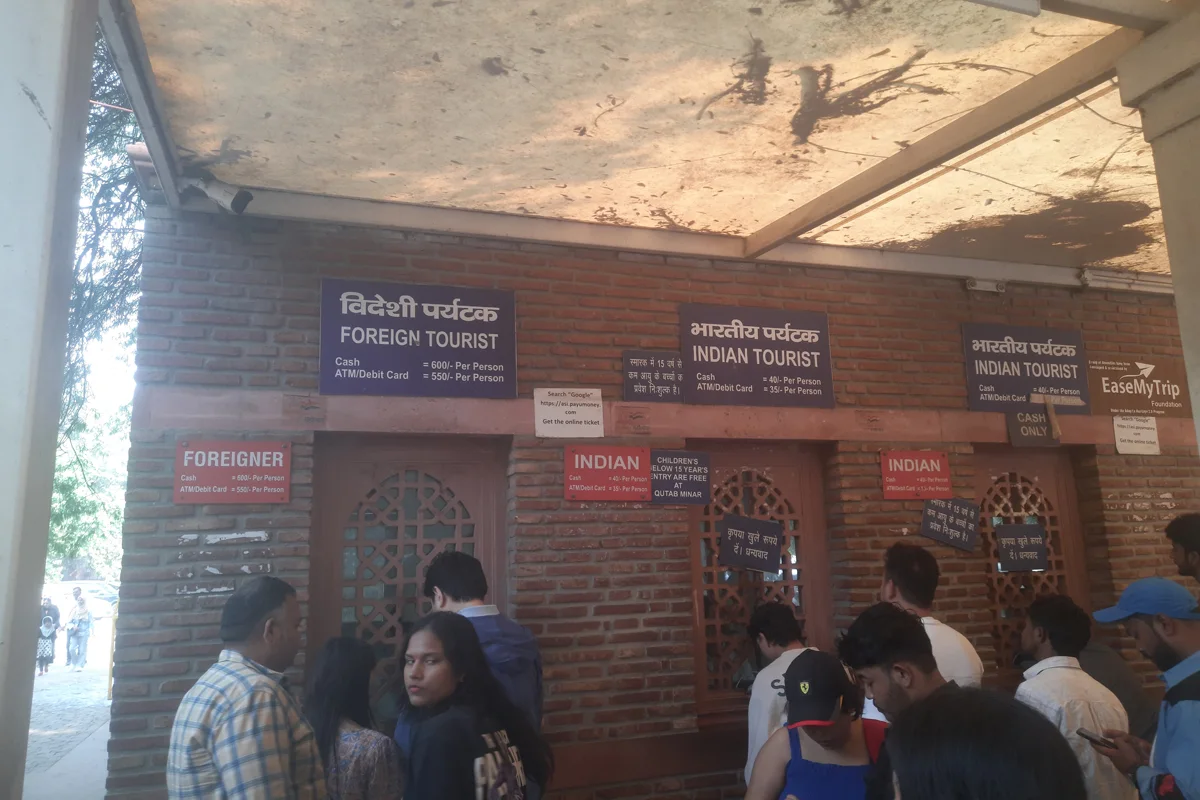
| Ticket price | Indians: ₹40 cash / ₹35 UPI. Foreigners: ₹600 cash / ₹550 UPI. Children up to 15 years: free |
| Laser light show | Around 6:45 PM, 15 to 20 minutes, included in the entry ticket |
| Nearest metro | Qutub Minar Metro Station (Yellow Line) |
| Best time to visit | October to March, arriving around 3:30 to 4:00 PM |
Qutub Minar History: Who Built It, Height and Key Facts
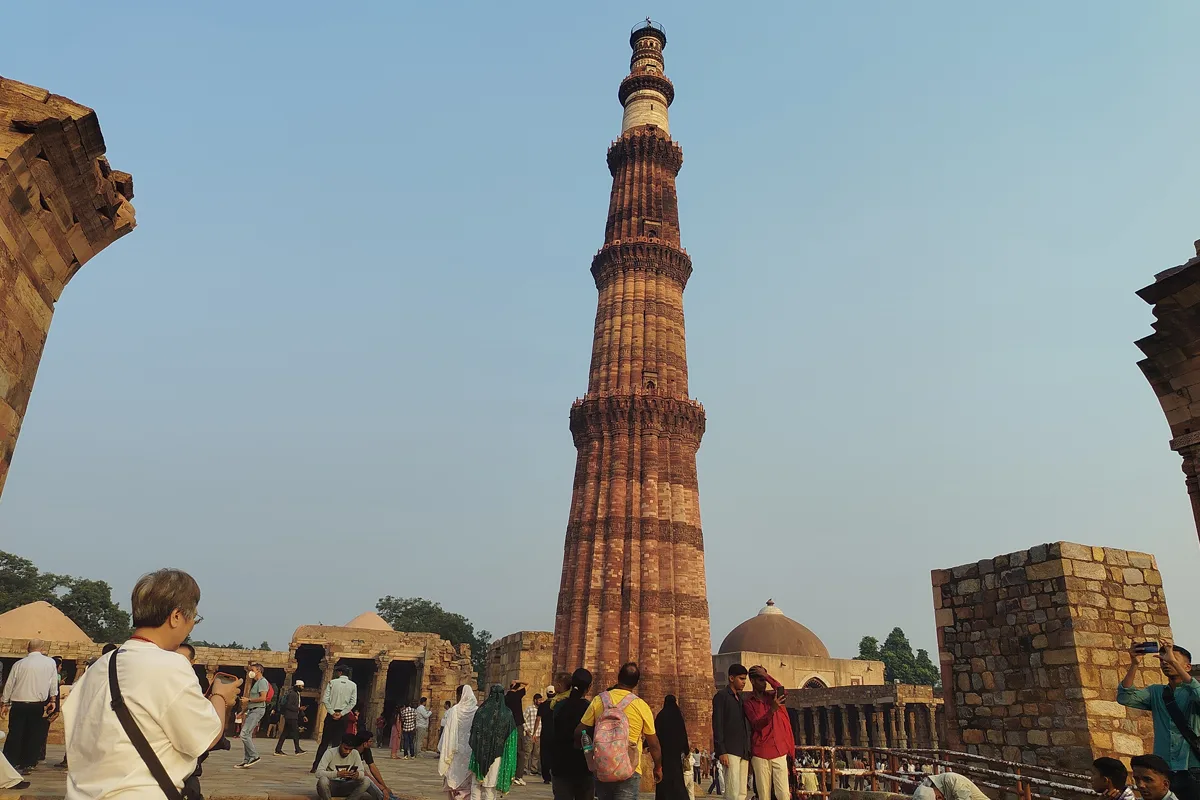
Qutub Minar is in Mehrauli, New Delhi, and rises 72.5 metres, which makes it the tallest brick minaret in the world. Construction began in 1192 under Qutb-ud-din Aibak, the first ruler of the Delhi Sultanate. He completed only the first storey. His successor Iltutmish added three more storeys, and Firoz Shah Tughlaq later rebuilt the top storeys after they were damaged, adding the marble and sandstone finish you see at the top today.
That is why the tower changes colour and style as you look up: red sandstone at the base, then bands of marble and sandstone higher up. The surface is covered with carved bands, verses from the Quran and intricate Indo-Islamic detailing. The monument and the surrounding Qutub complex are listed on the UNESCO World Heritage Centre list.
Can you climb Qutub Minar? No. The staircase inside has been closed to visitors for many years, so you can admire the tower from outside only.
Qutub Minar Opening Hours and Closing Time
Qutub Minar and the complex stay open on all days of the week, so there is no weekly closing day.
| Season | Opening Time | Closing Time |
|---|---|---|
| Summer | 6:00 AM | 9:00 PM |
| Winter | 7:00 AM | 9:00 PM |
Important: The ticket counter closes strictly at 8:30 PM, half an hour before the complex closes at 9:00 PM. Get your tickets before 8:30 PM. Timings are as we observed them on our visit, so check the official ASI listing if you are visiting on a holiday.
Qutub Minar Ticket Price and Entry Fee 2026 (Cash vs UPI)
You can buy tickets at the counters or pre-book online on the official ASI e-ticketing portal. Cash and UPI payments have separate queues at the counters.
| Visitor Category | Cash Payment | Digital / UPI Payment |
|---|---|---|
| Indian Visitors | ₹40 | ₹35 |
| Foreign Visitors | ₹600 | ₹550 |
| Children (up to 15 years) | Free | Free |
For our family of four we bought only 2 adult tickets. Both our kids entered free.
Qutub Minar ki ticket kitne ki hai? Indian visitors pay ₹40 in cash or ₹35 via UPI. Bachchon (15 saal tak) ke liye entry free hai.
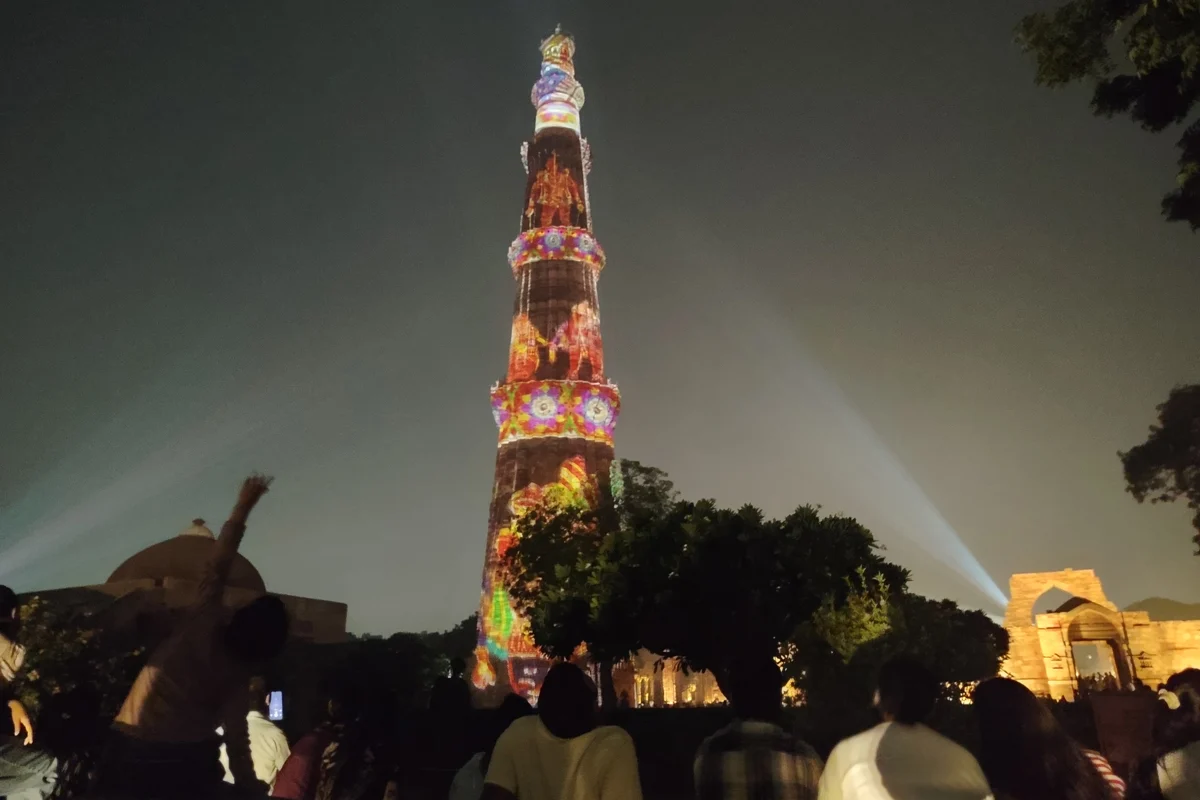
Qutub Minar at Night: Laser Light Show Timing and Lighting
Qutub Minar Laser Light Show Details
- Start time: Around 6:45 PM
- Duration: 15 to 20 minutes
- Extra charge: None. The show is included in your regular entry ticket.
Around 6:00 PM, security guards begin gently guiding visitors away from the outer sections of the complex towards the viewing lawn facing the main minaret. Get a spot on the lawn early, especially on weekends.
What the Night View Is Like
Watching the history and light patterns projected on a 700-year-old stone tower was mesmerizing. After the show, the minaret stays lit under yellow floodlights against the dark sky, and it feels completely different from the afternoon visit. The carvings stand out more, the crowds thin out, and it is much more comfortable in winter evenings. If you are planning a visit, staying back for the show is excellent value, since you pay nothing extra.
Key Attractions Inside the Qutub Complex
The minaret gets all the attention, but the Qutub complex has several other monuments that show centuries of architectural change. Do not skip these:
- Qutub Minar: The central five-storey sandstone and marble tower with band carvings and Quranic inscriptions.
- The Iron Pillar of Delhi: Standing in the courtyard of the Quwwat-ul-Islam Mosque, this roughly 7-metre pillar dates to the Gupta period (around the 4th century) and is famous for its rust-resistant metal.
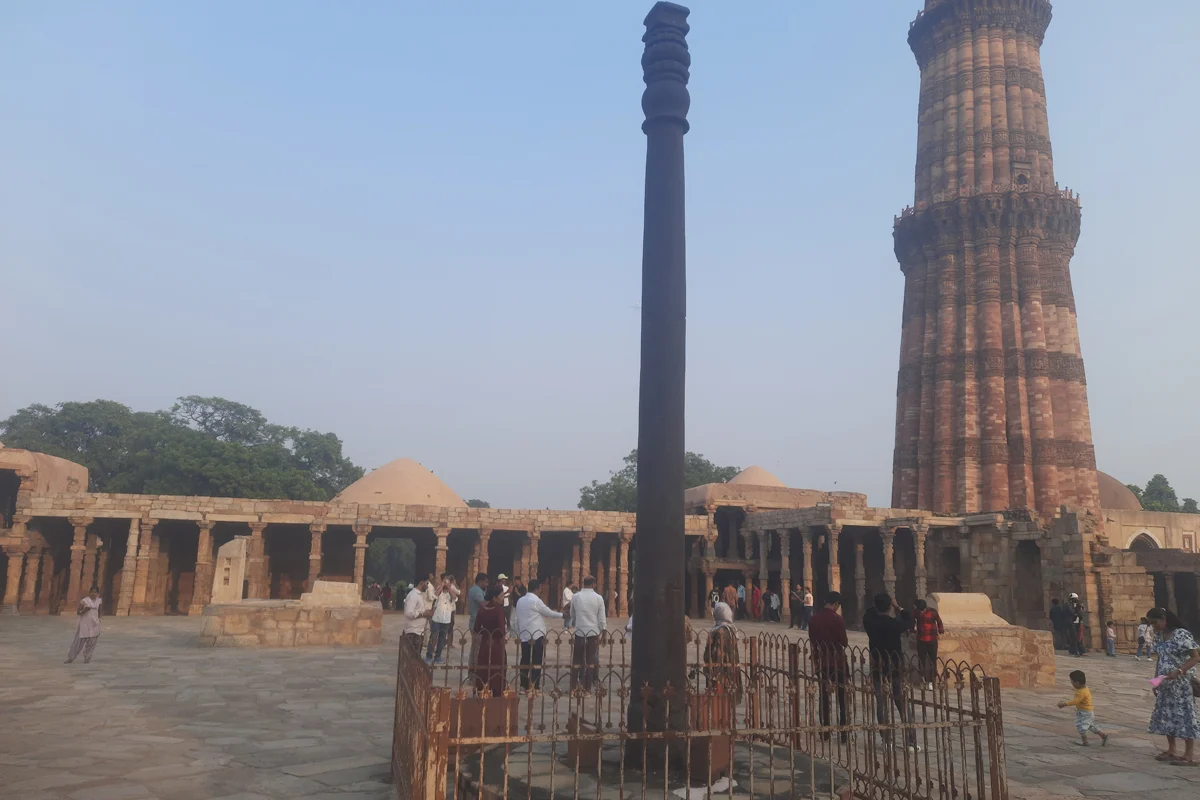
The rust-resistant Iron Pillar of Delhi inside the Qutub complex | Photo: Jaiveer Rawat / Explore India Guide - Quwwat-ul-Islam Mosque: The oldest surviving mosque built by the Delhi Sultans, made with carved pillars reused from older Hindu and Jain temples.
- Alai Darwaza: Built by Alauddin Khilji in 1311 AD, a gateway with red sandstone, white marble inlay, true arches and lattice (jali) windows.
- Alai Minar: Alauddin Khilji’s unfinished project, meant to be twice the height of Qutub Minar. Work stopped at the first tier (about 24.5 metres) after his death.
- Tomb of Iltutmish: Built in 1235 AD, a roofless square chamber with detailed geometric, floral and calligraphic carvings.
- Imam Zamin’s Tomb: A small 16th-century sandstone tomb near Alai Darwaza, built for a cleric named Imam Zamin. Many visitors walk past it, but it is worth a look.
- Alauddin Khilji’s Tomb and Madrasa: An L-shaped complex that served as an early Islamic seminary with a tomb chamber.
How to Reach Qutub Minar
Where Is Qutub Minar Located?
Qutub Minar is in Mehrauli, South Delhi, and the entrance is on the main road that runs past the Qutub Minar Metro Station.
By Delhi Metro (Most Convenient)
- Nearest metro station: Qutub Minar Metro Station on the Yellow Line. Plan your route on the official Delhi Metro Rail Corporation website.
- Exit gates: Gate No. 1 or Gate No. 2.
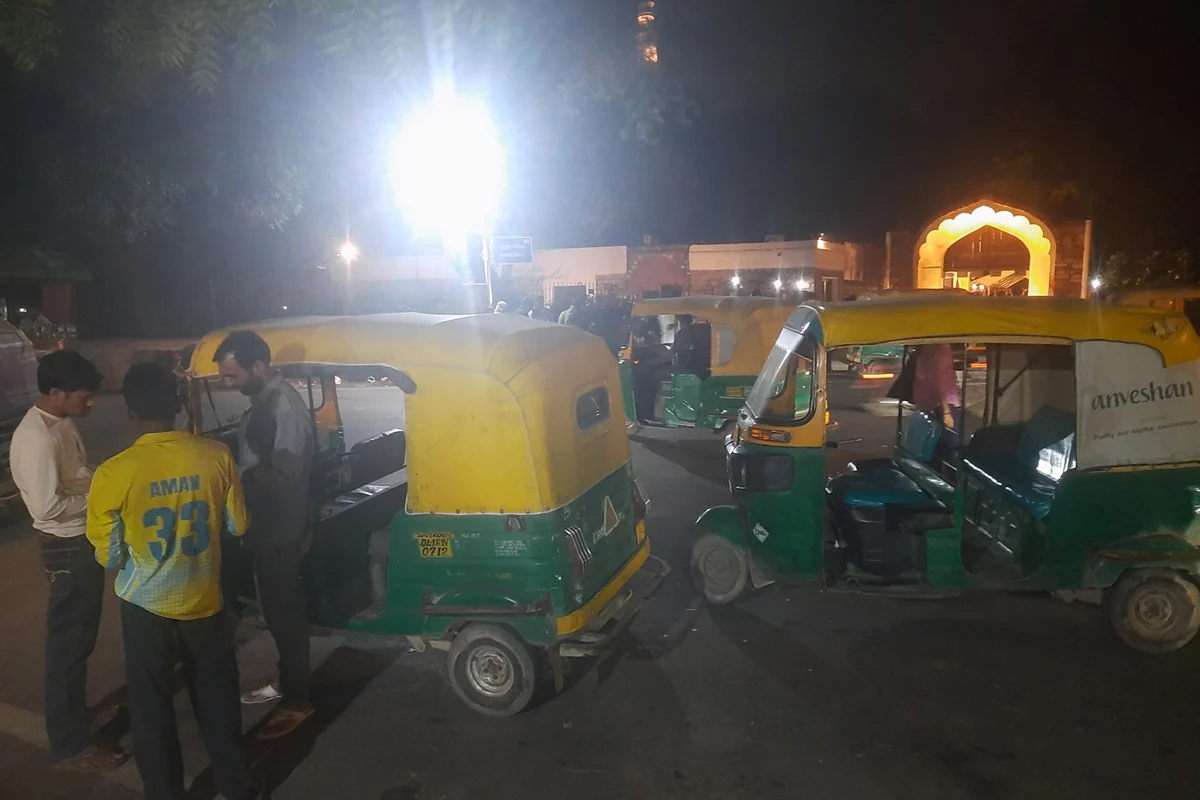
- Last-mile connectivity: Sharing e-rickshaws and sharing autos wait outside both gates and charge ₹20 per person to the monument entrance.
By App Cab (Ola / Uber): Our Choice
With two small kids we booked an Ola cab from Dwarka Mor to Qutub Minar and back:
- Onward trip (afternoon): ₹356
- Return trip (night): ₹394
- Total cab cost: ₹750
Qutub Minar Parking Facility
If you are driving, there is a paid parking lot opposite the main entrance of the complex, run by local authorities. If you are coming for the evening laser show, reach before 4:30 PM on weekends to find a spot easily. Another option on busy days is to park near Qutub Minar Metro Station and take a sharing auto or e-rickshaw for the last stretch.
Places to Visit Near Qutub Minar in Mehrauli
Mehrauli is one of Delhi’s oldest inhabited areas, with over 1,000 years of heritage. If you arrive early in the afternoon, combine Qutub Minar with these places, all within walking distance or a short auto ride. For more ideas, see our guide to the best places to visit in Delhi.
- Mehrauli Archaeological Park (adjacent): About 200 acres of heritage trails with Jamali Kamali Mosque, Balban’s Tomb and Metcalfe’s Canopy.
- Rajon Ki Baoli (10-minute walk): A stepwell inside the Archaeological Park from the Sikandar Lodi era, with arched arcades.
- Hijron Ka Khanqah (5-minute auto): A quiet 15th-century Lodi-period monument in Mehrauli village.
- Zafar Mahal and Adham Khan’s Tomb (Bhool Bhulaiya): The ruins of the last Mughal palace and the 16th-century octagonal tomb near Mehrauli Bus Terminal.
- Ahinsa Sthal (5-minute walk from the Metro): A hilltop shrine with a large marble statue of Lord Mahavira and views over the green canopy towards Qutub Minar.
Food and Refreshments Near Qutub Minar
Inside the Complex
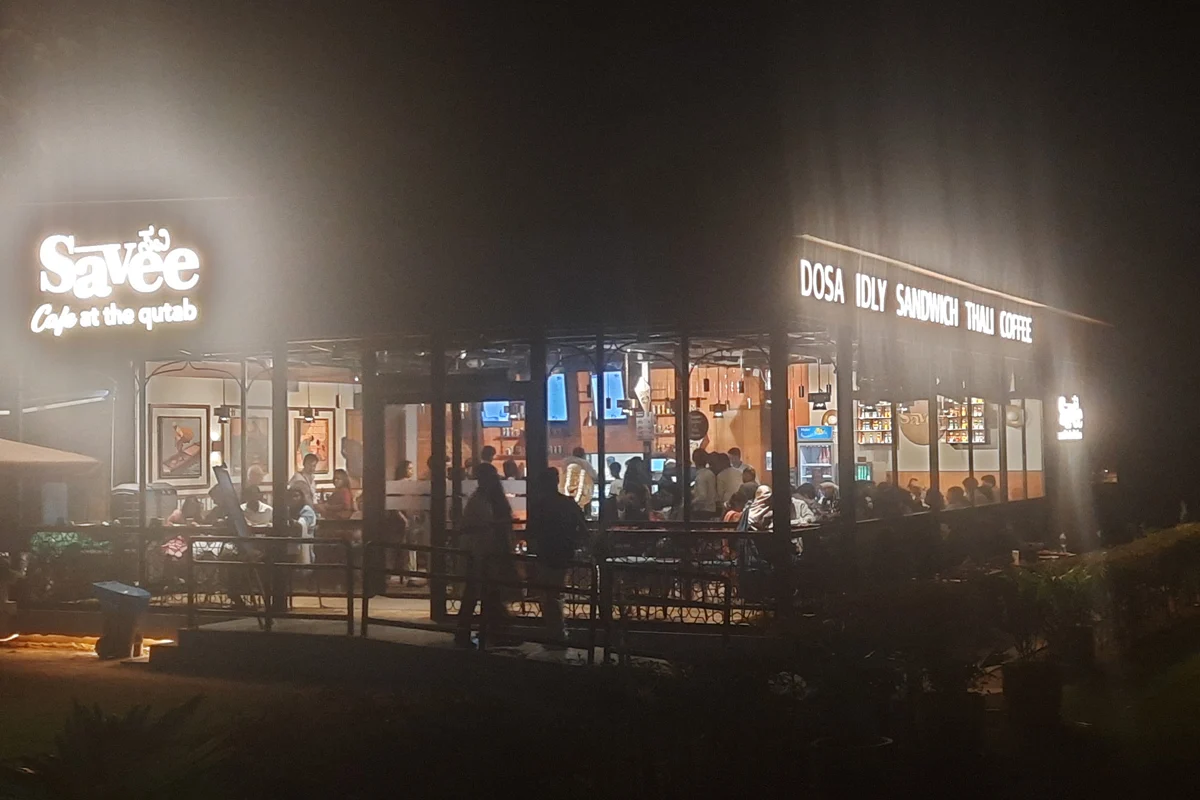
Savee Cafe at Qutub is just before the main exit and serves dosa, idli, sandwiches, thalis, coffee, cold drinks and packaged water.
Outside the Complex
There are many quick-service food stalls near the ticket counter and along the main road outside.
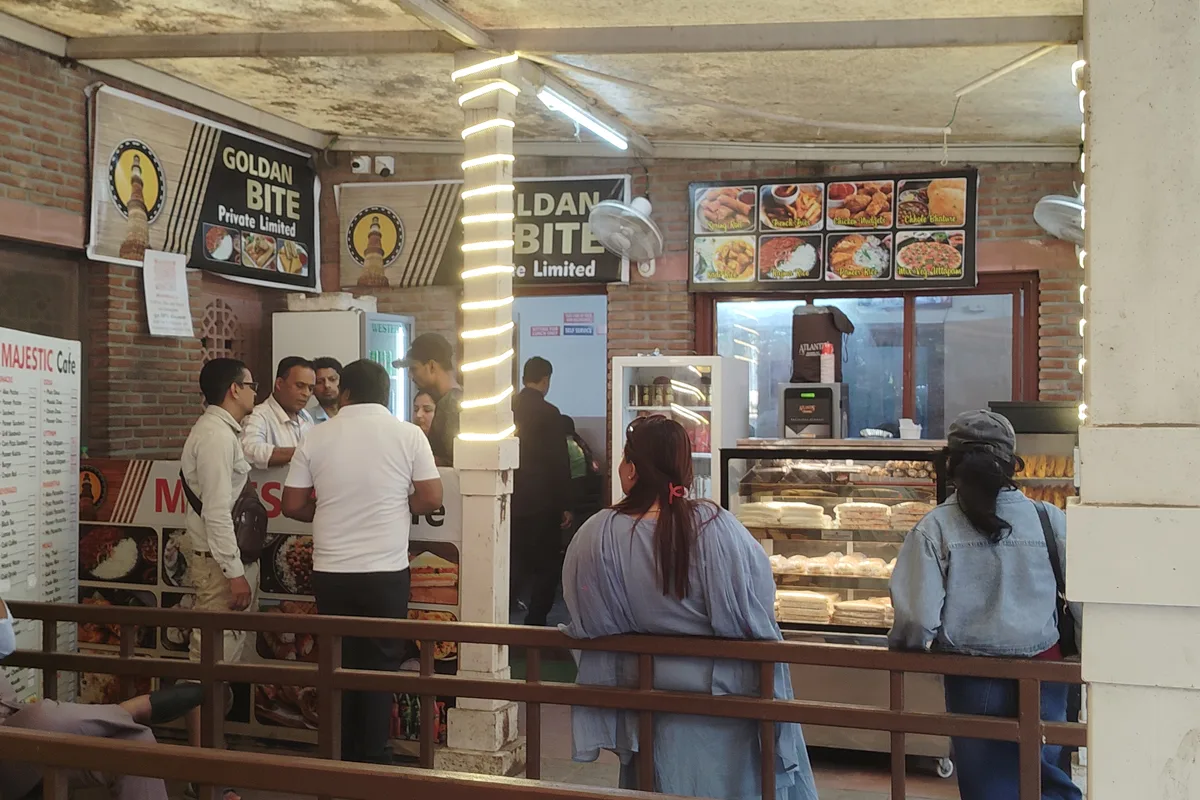
Our food setup: Instead of a sit-down meal we had roadside light bites before and after entering: patties, sandwiches, cream rolls, burgers and bottled water for the whole family across two small halts.
ASI Rules, Guides and Visitor Facilities
As per the Archaeological Survey of India (ASI) guidelines displayed at the entrance, visitors must follow these rules:
- Plastic-free zone: Carrying or throwing plastic inside the monument is strictly prohibited.
- Food and intoxicants: Carrying food items or intoxicating substances into the protected area is banned.
- Tripods and camera stands: Not allowed in the protected area without prior official permission.
- Commercial photography: Commercial photography or videography needs prior permission from ASI.
| Facility | Availability and Notes |
|---|---|
| Qutub Minar guided tour | Official ASI-licensed guides are available near the main entrance gate. Rates range from ₹300 to ₹500 depending on group size and language. Audio guide app and QR options are also available. |
| Cloakroom / luggage | ₹2 per item, cash only, no UPI. Closes at 9:00 PM. |
| Entry ticket token penalty | Keep your physical ticket / QR token safe. Losing it attracts a ₹100 penalty. |
| Washrooms | Clean and accessible at several locations in the complex. |
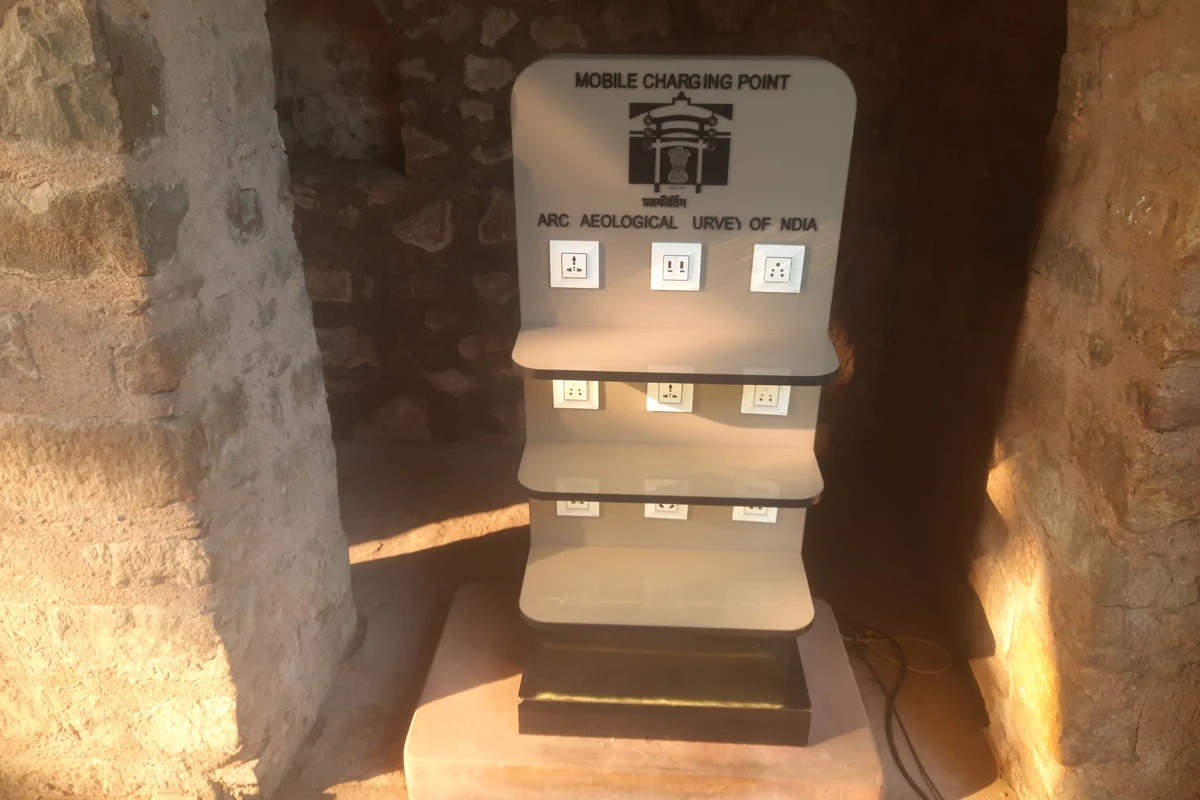
| Mobile charging | Free charging station right after the main entry point. |
| Drinking water | A water point exists but was not working during our visit. Carry your own bottle. |
| Security and police | High security presence inside, with a police post by the roadside next to the ticket counter near the main gate. |
Qutub Minar Trip Cost: Our Actual Family Budget
Here is what a family outing to Qutub Minar cost us in real life (2 adults and 2 kids):
| Expense Item | Amount (INR) |
|---|---|
| Onward Ola cab (Dwarka Mor to Qutub Minar) | ₹356 |
| Return Ola cab (Qutub Minar to Dwarka Mor) | ₹394 |
| Entry tickets (2 adults, cash) | ₹80 |
| Children’s entry (6 and 2 year old) | ₹0 (free) |
| Snacks, beverages and bottled water | ₹420 to ₹520 |
| Total family trip expense | ₹1,250 to ₹1,350 |
If you travel by metro and pay by UPI, you can bring this down further.
Best Time to Visit Qutub Minar and Who It Is For
- Best season: October to March, during Delhi winters.
- Best time of day: Arrive by 3:30 or 4:00 PM. That gives you daylight to see the architecture and take photos, time to catch the sunset, and then the 6:45 PM light show and the night view.
Who Should Visit?
- Families: Plenty of open lawn space where kids can walk around safely.
- Couples: The evening lighting creates a pleasant atmosphere.
- Photography lovers: Great angles for architecture and silhouette shots (no tripods without permission).
- History buffs: Rich heritage from the Slave, Khilji and Tughlaq dynasties.
Pro Tips Before You Visit Qutub Minar
- Pay via UPI: Save a little on entry tickets by using the digital counter.
- Avoid plastic: Do not carry single-use plastic inside.
- Leave tripods at home: Camera stands are restricted without ASI permission.
- Carry water: The water points inside may not be working.
- Skip selfie sticks and extra gear: Security restricts unauthorized equipment.
- Guard your entry token: Losing it costs a ₹100 penalty.
- Watch the time: Do not arrive after 8:00 PM, since tickets stop selling at 8:30 PM sharp.
- Reach early for the show: Be on the viewing lawn by 6:15 PM for a good spot.
Final Verdict: Is the Qutub Minar Night Visit Worth It?
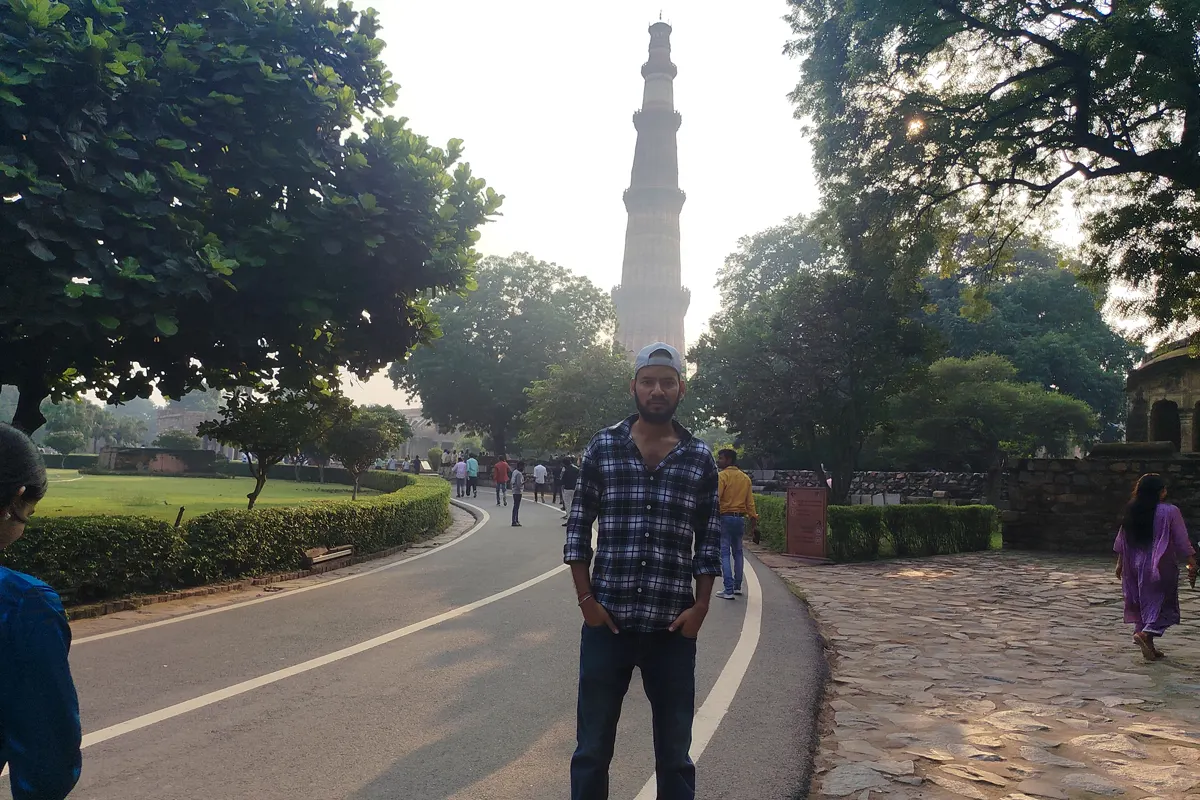
Having done both a daytime and a night visit, I highly recommend planning your Qutub Minar trip for the late afternoon. Seeing the tower under yellow floodlights, with the laser show playing out in front of it, makes it one of the best evening heritage experiences in Delhi. The whole trip cost us under ₹1,400 for a family of four, and the light show cost nothing extra.
Frequently Asked Questions
Yes, it is open all 7 days. It opens at 6:00 AM in summer and 7:00 AM in winter, and closes at 9:00 PM. The ticket counter closes at 8:30 PM.
Indian visitors pay ₹40 in cash or ₹35 via UPI. Foreign visitors pay ₹600 in cash or ₹550 via UPI. Children up to 15 years enter free.
Yes. The show starts around 6:45 PM, lasts 15 to 20 minutes and is included in the regular entry ticket.
It is in Mehrauli, South Delhi. The nearest station is Qutub Minar Metro Station on the Yellow Line, and sharing autos from the exit gates cost about ₹20 per person.
Yes, there is a paid parking lot opposite the main entrance of the complex.
Qutb-ud-din Aibak started it in 1192, Iltutmish added more storeys, and Firoz Shah Tughlaq rebuilt the top storeys later. It is 72.5 metres tall, the tallest brick minaret in the world.
No, climbing inside the minaret is not open to visitors.
Yes. There is plenty of open lawn space, clean washrooms and a cafe. Our 6-year-old and 2-year-old were comfortable throughout, and both entered free.
About the Author
Jaiveer Rawat
Jaiveer Rawat is the founder of Explore India Guide and a travel enthusiast passionate about discovering India's beautiful destinations, hidden gems, and rich culture. Through this blog, he shares travel guides, tips, and inspiration to help travellers explore India.