Deciding where to stay in Agra is the key to experiencing India’s most famous Mughal monuments without unnecessary travel friction. Because the primary attraction—the Taj Mahal—is best visited right at dawn to beat intense daytime heat and tour-bus crowds, choosing a base with straightforward morning access saves precious time. For complete entry rules, ticket tiers, and gate logistics, read our dedicated Taj Mahal guide. However, Agra’s urban layout ranges from modern multi-lane hotel boulevards to dense, centuries-old market alleys where motorized vehicles cannot enter.
Your ideal base depends heavily on your travel style and how you arrive in the city. International visitors and families seeking resort amenities, pool grounds, and reliable dining typically gravitate toward the wide corridor of Fatehabad Road. Backpackers and photographers prioritizing a short, step-free walk to the sunrise ticket queue prefer the pedestrian pockets near the Taj East Gate, while rail passengers arriving on express trains often choose the calmer, colonial cantonment district of Agra Cantt.
Overview: Agra Neighborhood Comparison Matrix
Before making a reservation, compare Agra’s primary lodging areas by atmosphere, proximity to monuments, vehicle accessibility, and typical price points:
| Neighborhood / Area | Primary Vibe | Proximity to Taj Mahal | Vehicle & Transit Access | Typical Budget Range |
|---|---|---|---|---|
| Fatehabad Road | Modern, upscale, resort-lined, dining hub | 2 to 5 km | Direct car drop-offs; Agra Metro connectivity | Mid-range to 5-star international luxury |
| Taj East Gate & Shilpgram | Walkable, tourist-friendly, garden-lined | 500 m to 1 km (Walking distance) | Shilpgram parking hub; electric golf carts; Metro terminal | Boutique hotels, social hostels, ultra-luxury |
| Agra Cantt & Sadar Bazaar | Leafy, colonial, peaceful, commercial | 5 to 7 km | Adjacent to Agra Cantt Railway Station; wide roads | Mid-range family hotels, heritage cantonment stays |
| Taj Ganj (South & West Gate Alleys) | Dense, historic, bustling, rustic | Under 500 m | Strictly pedestrian/e-rickshaw; no car access | Budget guesthouses, rooftop backpacker lodges |
1. Fatehabad Road: Best for Modern Comfort, Resort Luxury, and Families
Stretching southeast from the Taj Mahal complex toward the inner ring road, Fatehabad Road is Agra’s premier commercial and hospitality avenue. Developed specifically to accommodate international visitors, this wide thoroughfare is lined with international hotel chains, standalone North Indian dining rooms, multi-cuisine cafes, and artisanal craft showrooms.
Why Stay on Fatehabad Road
- Full-Service Resort Amenities: The highest concentration of full-service four- and five-star properties in Agra, featuring landscaped outdoor swimming pools, multi-tier spas, expansive breakfast buffets, and secure on-site parking.
- Effortless Vehicle Access: Unlike the narrow lanes immediately surrounding the monuments, private cars, highway tour buses, and app-based cabs (Uber and Ola) can pull directly up to hotel porticos without municipal restrictions.
- Agra Metro Connectivity: Serviced by stations along the Agra Metro Priority Corridor, providing fast, air-conditioned transit directly between the hotel corridor, the Taj East Gate, and Agra Fort.
Trade-Offs to Consider
- Because Fatehabad Road is located 2 to 5 kilometers from the monuments, you cannot simply walk to the Taj Mahal at dawn; you will need a 10-minute taxi, auto-rickshaw, or metro ride to reach the outer ticket barriers.
2. Taj East Gate and Shilpgram: Best for Sunrise Walkability and Photography
The East Gate sector is the cleanest, greenest, and most orderly approach to the Taj Mahal. Anchored by Shilpgram (the government arts, crafts, and parking complex roughly 1 kilometer east of the monument), this district features wide pedestrian sidewalks and manicured green buffers.
Why Stay Near the Taj East Gate
- First in Line for Sunrise: Staying here allows you to wake up at 05:15 AM and stroll to the East Gate ticket checkpoint in 10 to 15 minutes, ensuring you enter the grounds the moment gates open before tour buses arrive from Delhi.
- Vibrant Backpacker and Boutique Culture: Home to social backpacker hostels, welcoming homestays, and boutique hotels with rooftop cafes that offer clear morning views of the Taj Mahal’s marble dome above the treetops.
- Clean and Regulated: The East Gate approach experiences far fewer street touts and aggressive vendors compared to the congested West and South Gate approaches.
Trade-Offs to Consider
- Vehicle Drop-Off Limits: To protect the Taj’s white marble from atmospheric pollution, regular fossil-fuel vehicles are stopped at the Shilpgram parking barrier. If staying within the 500-meter perimeter, you must walk or take an authorized battery-operated golf cart or e-rickshaw for the final stretch with luggage.
3. Agra Cantt and Sadar Bazaar: Best for Rail Transit and Colonial Calm
Located roughly 5 kilometers southwest of the Taj Mahal, the Agra Cantonment (Cantt) district was laid out during the British colonial era. Characterized by broad tree-lined avenues, military grounds, and manicured civil lines, it offers a stark architectural contrast to the dense old city.
Why Stay in Agra Cantt
- Immediate Rail Station Proximity: Located just 5 to 10 minutes from Agra Cantt Railway Station (AGC). This makes it exceptionally convenient if arriving late in the evening or departing early in the morning aboard express rail services like the Gatimaan Express or Vande Bharat.
- Sadar Bazaar Dining and Shopping: Walking distance to Sadar Bazaar, Agra’s primary upscale retail district. It is famous for leather goods, handicraft boutiques, sweet shops serving authentic petha, and popular local dining spots like Chaat Gali.
- Peaceful Nights: The low-density cantonment area is free from early-morning horn honking and loud tourist foot traffic.
Trade-Offs to Consider
- Reaching the Taj Mahal for sunrise requires arranging a morning taxi or auto-rickshaw ride (approximately 15 to 20 minutes) across town.
4. Old Taj Ganj (South and West Gate): The Budget Backpacker Quarter
The historic quarter of Taj Ganj grew directly outside the southern and western royal gates of the Taj Mahal during the 17th century to house the artisans, stonemasons, and laborers who constructed the monument. Today, it remains a dense, sensory labyrinth of narrow streets, rooftop cafes, spice stalls, and low-cost guesthouses.
Why Stay in Old Taj Ganj
- Lowest Accommodation Costs: The city’s most affordable dorm beds, simple family-run homestays, and budget rooms catering to long-term backpackers.
- Atmospheric Rooftop Views: Nearly every guesthouse features an open-air rooftop cafe where you can eat breakfast or sip chai while gazing directly at the south wall of the Taj Mahal.
Trade-Offs to Consider
- No Direct Car Access: Streets are narrow and pedestrian-dominated; cars cannot enter. You must carry your luggage on foot through crowded alleys.
- Noise and Persistent Touts: The area has heavy vendor traffic, persistent marble-souvenir sellers, and continuous horn honking from scooters. Room soundproofing in older budget properties is typically minimal.
How to Choose the Right Base for Your Travel Style
- For First-Time Sightseers & Luxury Travelers (1–2 Nights): Choose a full-service hotel along Fatehabad Road. You will enjoy a peaceful night’s rest, pool amenities to cool off after exploring forts, and reliable hotel concierge services for transport.
- For Photographers & Dedicated Sunrise Visitors: Stay near the Taj East Gate or Shilpgram. Being within walking distance of the gate ensures you beat the ticket line and witness the dawn light striking the white marble facade.
- For Express Train Travelers (Fast 24-Hour Stopovers): Base yourself in Agra Cantt or near Sadar Bazaar. You can drop your luggage right after leaving the train, explore Agra Fort and the Taj Mahal, and return to the station without cross-city traffic stress. If you are structuring your broader itinerary across town, check out our curated guide to the best places to visit in Agra.
- For Budget Backpackers & Solo Explorers: Book a top-rated social hostel near Taj East Gate (for better hygiene and quieter streets) or a traditional rooftop guesthouse in Taj Ganj.
Practical Booking and Travel Logistics
- Remember the Friday Closure: The Taj Mahal is strictly closed every Friday to tourists (open only to registered worshippers for afternoon prayers). Other major sights—including Agra Fort, Fatehpur Sikri, and Itimad-ud-Daulah—remain open. Plan your stay dates so your primary monument visit does not fall on a Friday.
- Book Early for Peak Winter: The primary tourism window runs from October through March. High-end properties with direct monument views on Fatehabad Road and near the East Gate routinely sell out weeks in advance for holiday dates in November, December, and January.
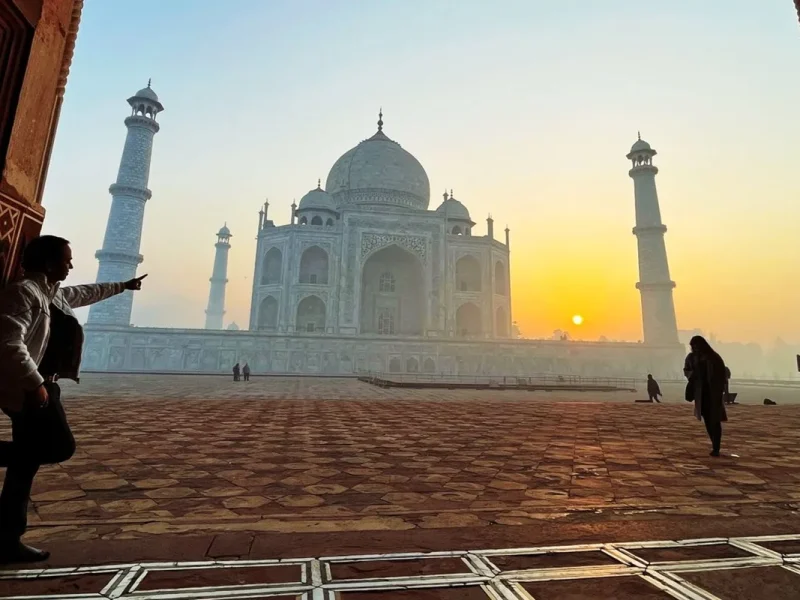
- Prepare for January Morning Fog: Northern plains winter fog frequently blankets Agra during late December and throughout January. Visibility at sunrise can be significantly reduced; on foggy mornings, visiting the Taj Mahal around 09:00 AM or 10:00 AM often yields better light and visibility than entering at dawn.
- Official State Tourism Accommodations: For verified government-run heritage rest houses and state-operated traveler hotels (Rahi Tourist Bungalows) offering transparent pricing across Uttar Pradesh, consult the official Uttar Pradesh Tourism Accommodations Portal.
Frequently Asked Questions
If you prioritize upscale amenities, swimming pools, international restaurant dining, and smooth vehicular access for luggage, Fatehabad Road is superior. If your absolute priority is walking directly into the Taj Mahal at dawn without relying on morning cabs or rickshaws, staying near the Taj East Gate is more practical.
It depends on the hotel’s exact location. Commercial fossil-fuel vehicles are strictly banned within 500 meters of the Taj Mahal by the Supreme Court of India to reduce air pollution. Hotels along Fatehabad Road and near the Shilpgram outer barrier have full car access, but properties located deep within inner Taj Ganj require arriving on foot or by battery-powered e-rickshaw.
Agra Cantt Railway Station (AGC) is located approximately 5 to 6 kilometers southwest of the Taj Mahal. The drive takes about 15 to 20 minutes by prepaid taxi or auto-rickshaw under standard daytime traffic conditions.
A room or rooftop terrace with a verified Taj view can be magnificent at sunrise and sunset. However, confirm that the view is unobstructed, as many budget properties in Taj Ganj advertise “Taj views” that are partially blocked by telephone wires or neighboring concrete rooftops. In peak winter (December–January), dense morning fog can also obscure distant views until mid-morning.

About the Author
Jaiveer Rawat
Jaiveer Rawat is the founder of Explore India Guide and a travel enthusiast passionate about discovering India's beautiful destinations, hidden gems, and rich culture. Through this blog, he shares travel guides, tips, and inspiration to help travellers explore India.