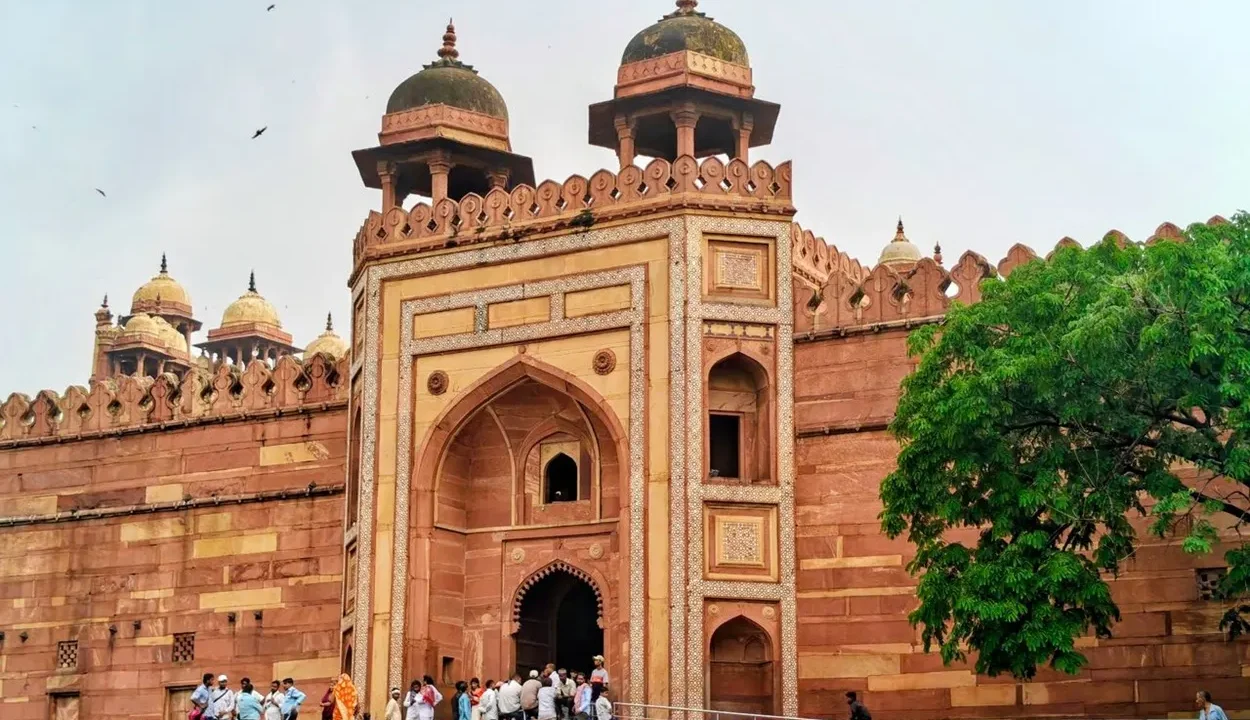
Rising dramatically from a red sandstone ridge 37 kilometers west of Agra, Fatehpur Sikri stands as one of the most magnificent built environments of the Mughal Empire. Constructed under the personal vision of Emperor Akbar the Great in the late 16th century, this imperial city served as the capital of the Mughal Empire from 1571 to 1585 before being completely abandoned. Today, it is recognized as a UNESCO World Heritage site and remains a essential excursion for history buffs, architecture lovers, and spiritual seekers.
Whether you are planning a full-day excursion from Delhi or organizing quick day trips from Agra, this complete Fatehpur Sikri Guide: History, Places to See & Travel Tips provides actionable insights, logistics details, and insider advice to help you navigate the complex hassle-free.
Quick Essential Facts for Visitors
| Parameter | Details |
|---|---|
| Location | Sikri, Uttar Pradesh (37 km west of Agra) |
| Built By / Year | Emperor Akbar / 1571–1585 AD |
| Architectural Style | Indo-Islamic (Mughal-Hindu-Persian Synthesis) |
| Opening Hours | Sunrise to Sunset (Open 7 days a week, including Fridays) |
| Royal Complex Ticket | ₹50 (Indian Citizens) | ₹610 (Foreign Nationals) | Children under 15 FREE |
| Jama Masjid Ticket | Free Entry (Buland Darwaza & Salim Chishti Dargah) |
| Ideal Visit Time | 2.5 to 3.5 Hours |
The History of Fatehpur Sikri: Rise and Abandonment
To appreciate Fatehpur Sikri, one must understand the spiritual and personal motivations of Emperor Akbar. By 1568, despite his vast conquests, Akbar lacked a surviving male heir. Desperate for a successor, he made a pilgrimage to the village of Sikri to seek the blessings of the revered Sufi saint Sheikh Salim Chishti.
The saint predicted that Akbar would be blessed with three sons. When the prediction came true with the birth of Prince Salim (who later ruled as Emperor Jahangir), Akbar decided to honor the saint by shifting his imperial court from Agra to Sikri. He built a grand fortified capital atop the rocky ridge, naming it Fatehabad (“City of Victory”), which later evolved into Fatehpur Sikri.
Why Was Fatehpur Sikri Abandoned?
Fatehpur Sikri served as the vibrant capital of the Mughal Empire for only about 14 years. In 1585, Akbar abruptly abandoned the city and shifted his court north toward Lahore. While popular legend attributes the abandonment entirely to a severe water shortage on the rocky ridge, modern historians suggest dual reasons:
- Acute Water Scarcity: The artificial lake built to supply the city failed to meet the demands of a growing population and imperial army.
- Geopolitical Realities: Akbar needed to secure the northwestern frontiers of his expanding empire against Afghan and Uzbek threats, requiring his physical presence closer to Punjab and Kabul.
By 1610, the city was completely deserted, leaving behind a perfectly preserved ghost city of red sandstone that showcases Mughal urban design at its peak.
Understanding the Layout: Two Distinct Sectors
First-time visitors often get confused by the layout. Fatehpur Sikri is divided into two primary, physically separate walled zones:
- The Sacred / Religious Sector (Jama Masjid Complex): This open-access zone houses the Buland Darwaza, the Jama Masjid, and the Tomb of Sheikh Salim Chishti. There is no entry ticket for this complex, but strict religious dress codes and shoe rules apply.
- The Royal Civil Palace Complex (ASI Ticketed Zone): Located roughly 200 meters from the mosque, this ticketed area contains the palaces, administrative quarters, courts, gardens, and imperial residences.
Understanding this distinction helps avoid scams where self-appointed guides demand money to enter the free mosque section.
Top Places to See in Fatehpur Sikri
1. Buland Darwaza (Gate of Magnificence)
Rising 54 meters (177 feet) above the surrounding plains, the Buland Darwaza is the highest gateway in the world. Akbar constructed this awe-inspiring portal in 1575 to commemorate his military victory over Gujarat. Built from red and buff sandstone with marble inlay, it features 42 steps leading up to its arched entrance, offering panoramic views of the countryside.
Inscribed on the central archway is a famous Quranic quotation reflecting Akbar’s philosophical worldview: “Isa (Jesus), son of Mary said: ‘The world is a Bridge, pass over it, but build no houses upon it. He who hopes for a day may hope for eternity.'”
2. Tomb of Sheikh Salim Chishti
Situated within the courtyard of the Jama Masjid, this delicate, single-story mausoleum is built entirely of shimmering white marble—contrasting sharply with the red sandstone around it. Built between 1580 and 1581, it contains exquisite serpentine marble brackets and intricately carved lattice screens (jalis).
Cultural Experience: Pilgrims and tourists of all faiths tie red threads to the marble jali screens while making a secret wish. If your wish is granted, tradition holds that you must return to untie a thread.
3. Jama Masjid
Constructed in 1571, the congregational mosque of Fatehpur Sikri was one of the first structures completed in the city. Designed in the classic Persian congregational style with Indian regional influences, its expansive courtyard can accommodate thousands of worshippers.
4. Panch Mahal (Five-Story Palace)
Located in the Royal Complex, the Panch Mahal is an extraordinary open-air, five-tiered pavilion constructed on 176 intricately carved columns. The columns on the ground floor are all uniquely decorated. The structure tapers up to a single domed kiosk on the top floor and served as a summer retreat for royal women (purdah women who watched city life behind screen walls).
5. Diwan-i-Khas (Hall of Private Audience)
Though modest in size from the exterior, the Diwan-i-Khas is an architectural genius. At its center stands a massive single stone pillar with a carved capital composed of 36 intricate serpentine brackets. This pillar supports a central circular platform connected to four elevated walkways. Akbar sat on this central elevated throne, listening to representatives of various religions and philosophies discuss faith, state policy, and justice.
6. Jodha Bai’s Palace (Mariam-uz-Zamani Palace)
As the largest residential quarters in the Royal Complex, this palace exhibits a blend of Hindu Rajput and Islamic Mughal architecture. Built around a central courtyard, it features traditional Gujarati and Rajasthani architectural motifs, including tile work, jharokhas (carved balconies), and dedicated shrines.
7. Birbal’s House & Anup Talao
- Birbal’s House: Constructed for Akbar’s favored Hindu minister, Raja Birbal, this highly ornate two-story residential building features elaborate stone carving, double domes, and sunshades (chhajjas).
- Anup Talao: An ornamental red sandstone pool featuring a central island platform connected by four narrow bridges. Legend holds that imperial court musician Tansen performed classical ragas from this central platform.
How to Reach Fatehpur Sikri
Fatehpur Sikri is well-connected by road and rail from nearby major urban centers:
From Agra (37 km / 1 Hour)
- By Private Taxi: A round-trip private cab from Agra costs roughly ₹1,800 to ₹2,500. This is the most comfortable option for international visitors. You can easily combine this with other places to visit in Agra.
- By Local Bus: Government buses depart every 30 minutes from Idgah Bus Stand in Agra. The fare is around ₹50–₹70 per person, taking roughly 1.5 hours.
From Delhi (210 km / 3.5 to 4 Hours)
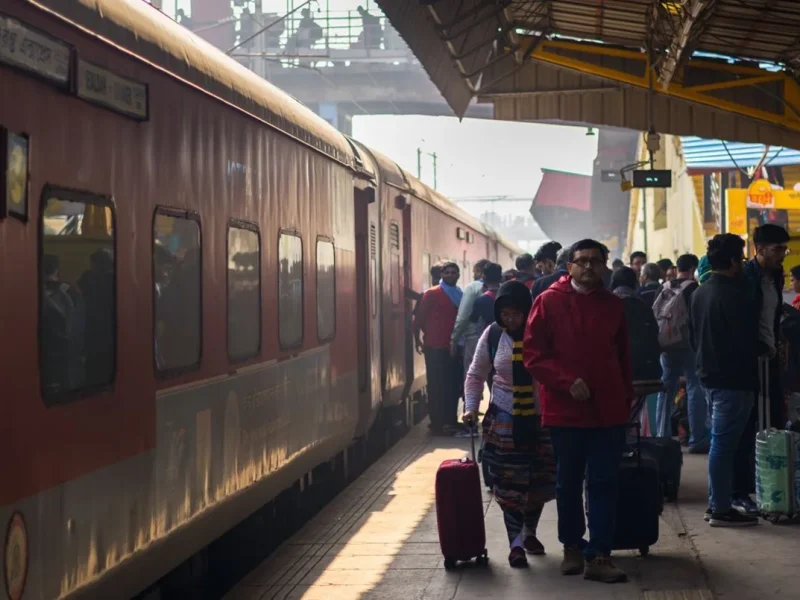
Travelers coming from Delhi can opt for a Delhi to Agra road trip via the Yamuna Expressway, taking the NH21 bypass direct to Sikri. Alternatively, catch a morning Delhi to Agra train like the Gatimaan Express, and hire a cab upon arrival at Agra Cantt station.
From Bharatpur (25 km / 45 Mins)
Fatehpur Sikri lies right near the Rajasthan border. If you are exploring regional routes like Agra to Bharatpur, taking a taxi or local bus between the Keoladeo National Park in Bharatpur and Fatehpur Sikri is straightforward and quick.
Crucial Last-Mile Transit Rule (Mandai Parking Shuttle)
Private cars and tourist buses are prohibited from driving directly up to the hill monuments. All vehicles must park at the official Mandai Parking Area at the base of the hill. From there, you must take the official Uttar Pradesh Tourism battery-operated shuttle bus (approx. ₹20 per person) or walk 1 km uphill to reach the gates.
Essential Travel Tips & Scam Protection
1. Avoiding the “Fake Guide” and Gemstone Scam
Fatehpur Sikri is known for persistent touts. Unlicensed guides often approach travelers at Mandai Parking or Buland Darwaza claiming to offer “free tours” or official services. They usually divert tourists to local shops selling overpriced marble souvenirs, fake gemstones, or demanding exorbitant donations at the shrine.
Tip: Only hire Ministry of Tourism approved guides possessing valid photo ID cards at the official ASI ticket counter.
2. Navigating Footwear Rules at Jama Masjid
Because the Jama Masjid sector is an active religious shrine, shoes are strictly prohibited inside the courtyard.
Tip: Carry a tote bag in your daypack to carry your shoes with you, rather than leaving them with shoe handlers at Buland Darwaza who demand unreasonable “tipping fees.” Alternatively, wear clean socks as the red stone floor gets hot under direct sunlight.
3. Cultural & Dress Code Guidelines
Dress modestly when visiting the Jama Masjid complex. Both men and women should cover their shoulders and knees. Women should bring a lightweight scarf (head covering) which is required to enter the inner sanctum of Sheikh Salim Chishti’s tomb.
4. Hydration and Sun Protection
The open stone courtyards reflect significant heat, especially between March and October. Carry a reusable water bottle, wear a wide-brimmed hat, apply sunblock, and carry sunglasses. Review our guide to the best time to visit Agra to plan around high temperatures.
How to Fit Fatehpur Sikri into Your Travel Itinerary
Depending on your pace, Fatehpur Sikri pairs easily with wider travel schedules:
- If you have an Agra 1-day itinerary: Start early at the Taj Mahal at sunrise, explore Agra Fort mid-morning, take a taxi to Fatehpur Sikri by 2:00 PM, and return to Agra by sunset.
- If you have an Agra 2-day itinerary: Dedicate Day 2 to extended day trips. Combine Fatehpur Sikri in the morning with a visit to Akbar’s Tomb at Sikandra or take a circuit heading from Agra to Mathura and Vrindavan.
To plan your overall budget including transport, food, and entry fees, review our complete breakdown of Agra trip costs and general Agra travel tips before setting off.
Frequently Asked Questions
Yes! Unlike the Taj Mahal (which is closed to tourists every Friday), Fatehpur Sikri remains open 7 days a week, from sunrise to sunset.
Fatehpur Sikri is located approximately 38 kilometers west of the Taj Mahal. By car, it takes about 1 hour to 1.15 hours depending on traffic. You can read more about attractions close to the mausoleum in our guide to places to visit in Agra near Taj Mahal.
Plan for 2.5 to 3.5 hours. This allows 1 hour for the Jama Masjid / Buland Darwaza sector and 1.5 to 2 hours for the Royal Palace Complex.
The Royal Palace Complex has paved pathways and ramped access in several areas, making it moderately accessible. However, entering via the Buland Darwaza requires climbing 42 steep stone steps. Elderly travelers should enter the mosque complex via the flatter rear gate (Shahi Darwaza).
Dining options directly near the complex are basic. Government-run Hotel Gulistan (UP Tourism) near the parking area offers reliable, clean food options. For broader culinary recommendations, consult our Agra food guide.