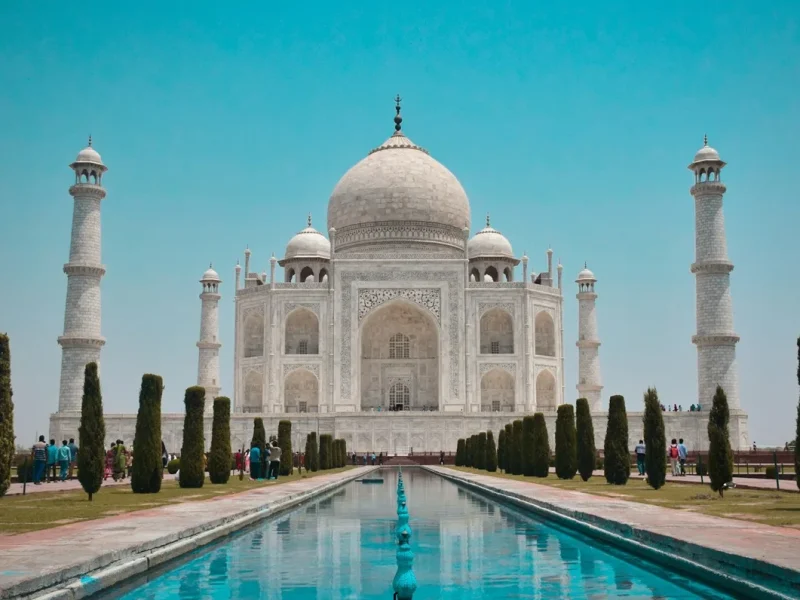
Located in the quiet suburb of Sikandra on the northwestern edge of Agra, the mausoleum of Emperor Akbar the Great stands as one of the most intriguing masterpieces of Mughal architecture. Unlike the dramatic white marble symmetry of the Taj Mahal or the imposing red sandstone walls of Agra Fort, Akbar’s Tomb is celebrated for its serene atmosphere, synthesis of architectural styles, and expansive lush gardens where blackbucks, peacocks, and langurs roam freely.
Whether you are planning a stop along your journey from Delhi or building an extensive itinerary around the places to visit in Agra, this Akbar’s Tomb, Sikandra: Complete Visitor Guide provides all the historical background, transportation details, architectural highlights, and travel tips you need for a smooth visit.
Quick Facts for Visitors
| Parameter | Details |
|---|---|
| Location | Sikandra, Agra, Uttar Pradesh (Approx. 10 km from Agra Cantt) |
| Built By / Completed | Initiated by Emperor Akbar (1605), Completed by Jahangir (1613) |
| Architectural Style | Indo-Islamic (Mughal-Rajput-Buddhist Influences) |
| Opening Hours | Sunrise to Sunset (Open 7 days a week, including Fridays) |
| Entry Fee (ASI) | ₹35 (Indian Citizens & SAARC) | ₹550 (Foreign Nationals) | Children under 15 FREE |
| Camera Fees | Still Photography: Included | Video Cameras: Nominal extra fee |
| Suggested Duration | 1.5 to 2 Hours |
The Unique History of Akbar’s Tomb
Emperor Akbar the Great (who ruled from 1556 to 1605) was renowned for his religious tolerance, administrative genius, and patronization of arts and philosophy. True to Tartar tradition, Akbar commenced the planning and construction of his own mausoleum during his lifetime, selecting a calm site in Sikandra, named after Sikandar Lodi, the Sultan of Delhi who ruled the region prior to the Mughals.
Akbar designed a garden complex that reflected his personal philosophy of Sulh-i-kul (“Universal Peace”), blending design elements from Islam, Hinduism, Buddhism, and Jainism. However, when Akbar died in 1605, only the base structure was finished. His son and successor, Emperor Jahangir, found the progress unsatisfactory, dismantled parts of the upper level, and completed the tomb in 1613 with refined marble inlay work and ornate gateways.
Desecration and Restoration
The tomb faced severe damage in the late 17th century during a revolt by local Jats led by Raja Ram. Historical accounts record that the rebels ransacked the complex, looted gold and silver ornaments, and desecrated Akbar’s grave. It was later protected and restored during the British colonial period under Lord Curzon, restoring its grandeur as a central heritage asset in the grand Agra travel guide circuit.
Key Architectural Highlights to See
1. The South Gate (Jehangir Gate)
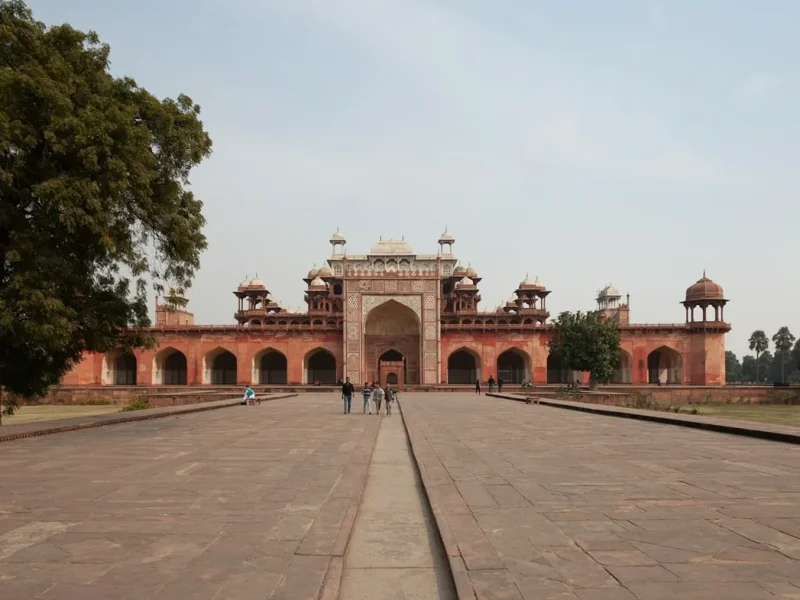
Your journey begins at the magnificent South Gate, which serves as the main entrance to the tomb complex. Constructed from red sandstone with striking geometric and floral marble inlays, it features four soaring white marble minarets at its corners—an architectural choice that influenced the design of later monuments like the Itmad-ud-Daulah Tomb and the Taj Mahal.
2. The Charbagh Gardens & Wildlife
The main mausoleum sits in the center of a traditional Mughal Charbagh (four-fold garden) divided by wide stone causeways and water channels. Unlike most historical sites in northern India, Sikandra doubles as a peaceful wildlife sanctuary. Visitors regularly spot herd of native blackbuck deer, spotted deer, strutting peacocks, and playful monkeys roaming across the manicured lawns.
3. The Main Pyramid Building
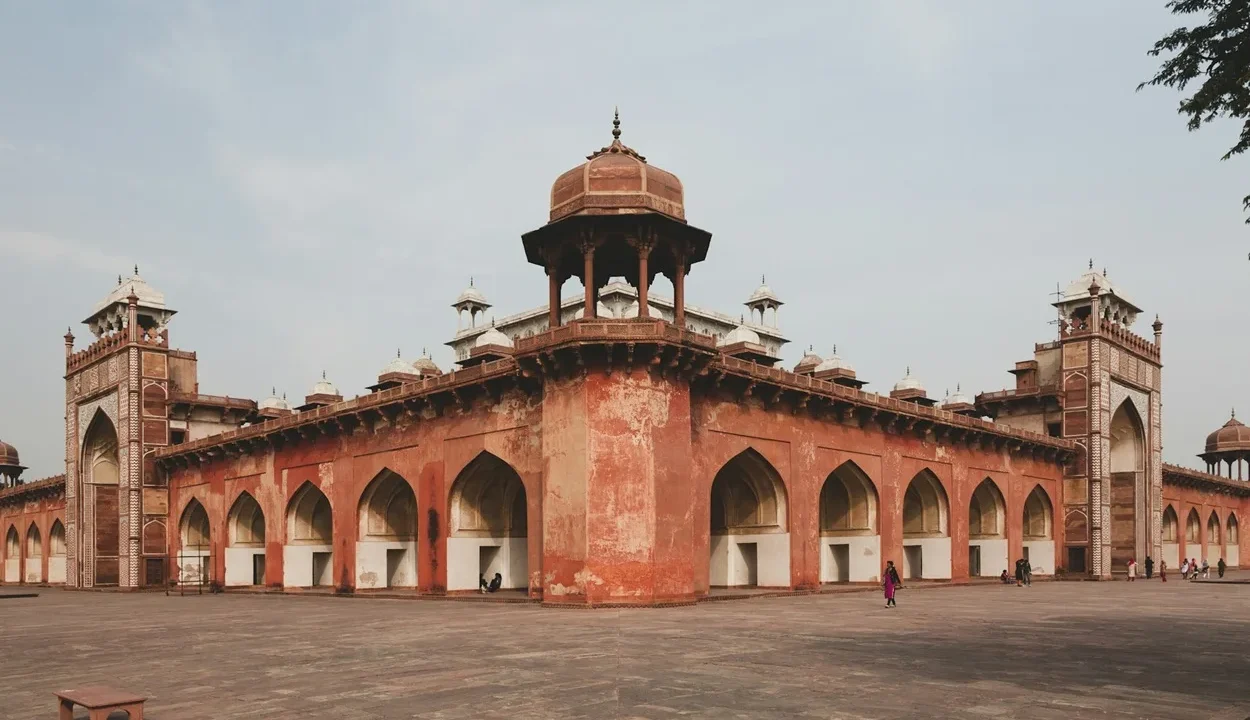
The primary structure is a five-tiered square pyramid built mostly of red sandstone, tapering upward over five levels:
- Ground Level: Massive vaulted arcades with central grand entrance arches.
- Middle Levels: Three tiers of pillared red sandstone pavilions resembling Buddhist viharas.
- Top Level: An open-air square courtyard crafted entirely from carved white marble lattice screens (jalis), housing a delicate cenotaph surrounded by cloisters.
Note on the Missing Dome: Unlike most royal Mughal tombs, Akbar’s Tomb does not have a central dome over its top floor. Historians debate whether Akbar intended for an open-air top tier or if Jahangir chose to leave it un-domed to maintain its terraced appearance.
4. The Burial Crypt
From the main entrance vestibule—adorned with Persian calligraphy and ceiling frescoes in deep blues and gold—a long, narrow, sloping brick ramp leads deep into the quiet underground burial chamber. Here lies the simple plaster tomb of Emperor Akbar, positioned according to tradition facing toward the heavens.
How to Reach Akbar’s Tomb, Sikandra
Sikandra is located along National Highway 19 (Mathura Road), roughly 10 km northwest of central Agra city center.
From Delhi
- By Road: Sikandra is the first major historical sight you hit when driving into Agra via the highway. If you are taking a Delhi to Agra road trip via NH19, stopping at Sikandra first is very convenient before proceeding toward the city center. Learn more on how to reach Agra from Delhi.
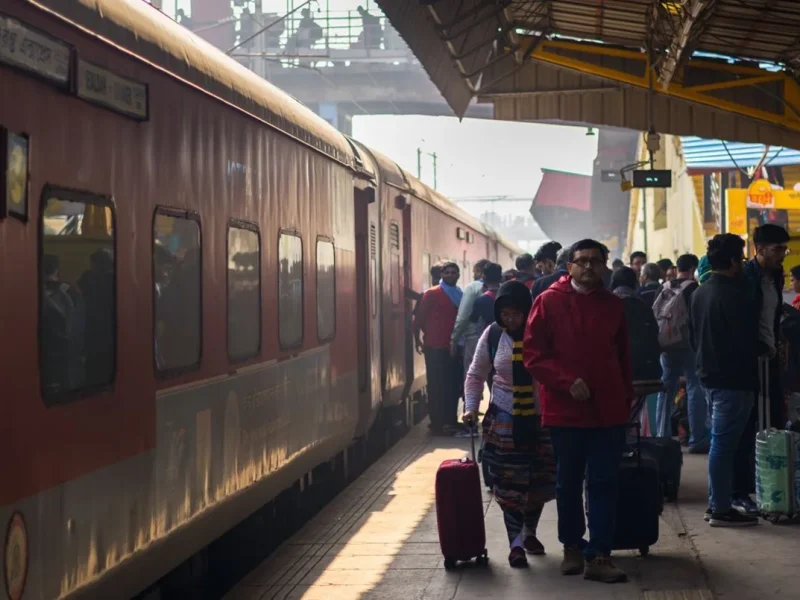
- By Train: If arriving on a Delhi to Agra train at Agra Cantt (AGC) or Agra Fort station, you can hire an auto-rickshaw, app-based taxi (Uber/Ola), or private car to cover the 10–12 km distance to Sikandra in about 25–30 minutes.
From Central Agra Monuments
From central hubs near Agra Fort or Mehtab Bagh, a taxi or auto-rickshaw ride takes roughly 20–30 minutes depending on city traffic.
Essential Travel Tips for Visitors
1. Best Time to Visit
The ideal season to explore Sikandra is between October and March when the weather in Uttar Pradesh is pleasant for outdoor walking. Read our seasonal guide on the best time to visit Agra to plan around winter morning fog or summer heat. Visit early in the morning (around 7:30 AM–9:00 AM) or late afternoon (after 4:00 PM) for the best light, cooler temperatures, and active wildlife sightings.
2. Combine with Mariam’s Tomb
Just 1 km west of Akbar’s Tomb along the same highway lies Mariam’s Tomb, the resting place of Akbar’s Hindu wife, Mariam-uz-Zamani (popularly known as Jodha Bai). It is an understated red sandstone mausoleum set in a peaceful garden, making it a natural 20-minute addition to your Sikandra visit.
3. Footwear and Accessibility
- Shoes: You can keep your shoes on while exploring the wide garden causeways and main courtyard. However, you must remove your shoes or wear shoe covers when stepping inside the inner crypt area.
- Accessibility: The long central stone pathways leading from the South Gate to the main tomb are flat and wheelchair-friendly. However, entering the main crypt involves descending a sloped ramp, and reaching the upper levels requires climbing stone stairs.
4. Interacting with Wildlife
While the resident blackbucks and peacocks are accustomed to human presence, keep a respectful distance. Do not feed, chase, or attempt to pet the animals. Keep food items sealed in bags to avoid attracting rhesus macaques.
Integrating Sikandra into Your Agra Itinerary
Because of its location on the highway entrance to Agra, Sikandra fits easily into broader travel plans:
- 1-Day Express Itinerary: Make Sikandra your first morning stop when arriving from Delhi by road. Follow it with Agra Fort, sunset at the Taj Mahal, and exploring things to do in Agra. See our full Agra 1-day itinerary.
- 2-Day Relaxed Circuit: Save Sikandra for Day 2 along with the Fatehpur Sikri guide tour or a trip outward from Agra to Mathura and Vrindavan. Check our balanced Agra 2-day itinerary.
To budget for logistics, accommodations, and dining nearby, check our guides on Agra trip costs, where to stay in Agra, Agra food guide, and practical Agra travel tips.
Frequently Asked Questions
Yes! Akbar’s Tomb at Sikandra remains open 7 days a week, from sunrise to sunset. This makes it an ideal attraction to visit on Fridays when the Taj Mahal is closed to the public.
Absolutely. While smaller in scale than the Taj Mahal, Akbar’s Tomb offers a far quieter, less crowded experience, unique architecture with no central dome, and free-roaming wildlife in red sandstone courtyards.
Sikandra is located approximately 15 kilometers (about 30 to 40 minutes by car) northwest of the Taj Mahal. You can explore other attractions nearby in our guide to places to visit in Agra near Taj Mahal.
Yes. Tickets can be purchased online via the official Archaeological Survey of India (ASI) portal or by scanning the QR code posters located outside the South Gate ticket counter. Purchasing online often offers a small discount on the ticket price.
Yes. Sikandra lies on the western corridor toward Mathura and Bharatpur. It pairs very smoothly with trips like Agra to Bharatpur or regional day trips from Agra.