Standing grandly along the banks of the Yamuna River, Agra Fort is a massive 94-acre UNESCO World Heritage fortress that served as the imperial seat of the Mughal Dynasty for generations. While many travelers visit Agra solely for the Taj Mahal, Agra Fort offers an equally compelling journey into royal court life, military grandeur, and breathtaking architectural fusion. Whether you are an Indian traveler exploring domestic heritage or an international tourist visiting from the USA, UK, Australia, or Europe, this colossal red sandstone complex is an essential stop on your journey.
This comprehensive Agra Fort Guide: History, Timings, Tickets & Travel Tips covers everything you need for a seamless visit—from entry fees and digital ticketing to secret architectural features and photography spots. Combine this resource with our overarching Agra travel guide to plan your complete itinerary.
1. History & Architectural Evolution
Before becoming the glittering seat of Mughal power, Agra Fort was a brick fort known as Badalgarh, held by Rajput rulers and later the Lodi dynasty. Emperor Akbar the Great recognized its strategic importance, rebuilding it with red sandstone from Rajasthan between 1565 and 1573.
Key Historical & Architectural Highlights:
- Dynastic Powerhouse: Four legendary emperors—Akbar, Jahangir, Shah Jahan, and Aurangzeb—governed from within these walls, each leaving their distinct architectural stamp.
- Red Sandstone to White Marble: While Akbar built mostly with rustic red sandstone (such as Jahangiri Mahal), his grandson Shah Jahan demolished older structures to erect opulent white marble palaces inland (such as Khas Mahal and Diwan-i-Khas).
- Imperial Captivity: In a twist of fate, Shah Jahan was imprisoned inside the fort’s Musamman Burj by his ambitious son Aurangzeb during his final eight years, spending his days gazing out at the Taj Mahal—the tomb of his cherished wife.
2. Agra Fort Timings & Operating Days
Planning your visit around the official hours ensures you beat the midday sun and peak tour groups.
- Standard Opening Hours: Open daily from Sunrise to Sunset (approximately 6:00 AM to 6:00 PM).
- Last Entry: Ticket booths and security gates stop accepting entry 30 to 45 minutes before sunset (around 5:00 PM – 5:30 PM).
- Open 7 Days a Week: Unlike the Taj Mahal, which is closed on Fridays, Agra Fort is OPEN EVERY DAY, including Fridays and public holidays. This makes it the premier sight to visit on a Friday in Agra.
Best Time of Day to Visit
- Early Morning (6:30 AM – 9:00 AM): Ideal for avoiding crowds, enjoying cooler temperatures, and capturing soft morning light hitting the red sandstone walls.
- Late Afternoon (3:30 PM – 5:30 PM): Beautiful “golden hour” lighting turns the red fort amber and offers spectacular views of the Taj Mahal framed by the setting sun.
3. Ticket Prices & Online Booking Guide
Tickets are issued by the Archaeological Survey of India (ASI). Prices vary depending on nationality.
| Visitor Category | Ticket Price (Approx.) | Notes |
|---|---|---|
| Indian Citizens & OCI Cardholders | ₹50 | Slight discount applied when booking digitally online |
| SAARC & BIMSTEC Country Visitors | ₹90 | Valid passport required for verification |
| Foreign Tourists (USA, UK, AUS, EUR, etc.) | ₹650 | Includes entry to main fort complex |
| Children (Under 15 Years) | Free | Applies to all nationalities with valid age ID |
How to Purchase Tickets:
You can buy tickets directly at the entry gate, but purchasing digital tickets via the official Archaeological Survey of India portal or scanning QR codes at the site helps you skip ticket window queues. Digital tickets generally receive a small booking discount.
4. Entry Gates & Security Guidelines
Agra Fort original construction features four grand gates, but public access is strictly regulated:
- Amar Singh Gate (South): This is the ONLY gate open to tourists for both entry and exit. You will cross a drawbridge over the moat and ascend a steep stone ramp built to slow down historic cavalry charges.
- Delhi Gate (West): The original grand entrance is used exclusively by the Indian Military and is closed to the general public.
Security & Prohibited Items
Security checks at Amar Singh Gate are thorough and follow airport-style screening protocols:
| Allowed Items | Prohibited Items |
|---|---|
| Mobile Phones & Digital Cameras | Tripods, Monopods, & Drones |
| Small Shoulder Bags / Purses | Large Backpacks & Luggage (use cloakrooms outside) |
| Clear Water Bottles | Eats, Snacks, Cigarettes, & Lighters |
| Wallets & Personal Documentation | Power Banks, Extra Cables, & Sharp Objects |
5. Key Palaces & Structures to See Inside
Allow at least 2 to 2.5 hours to properly walk through the complex. Do not miss these primary palaces:
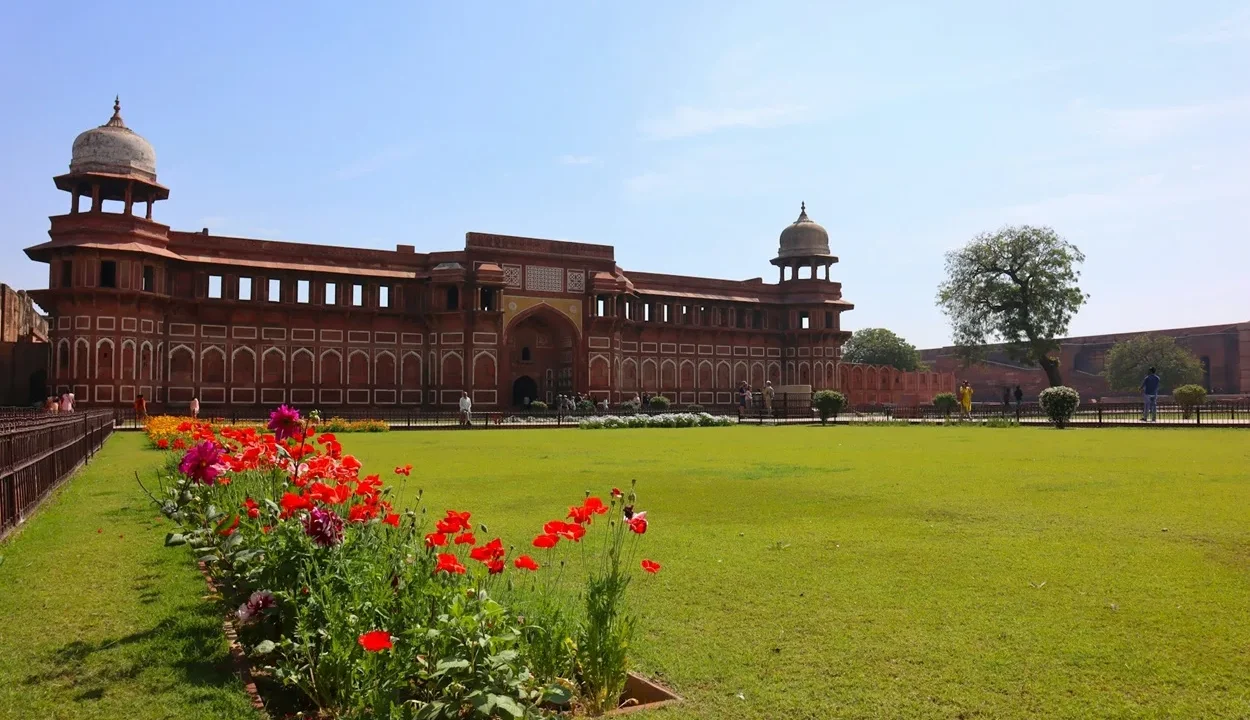
- Jahangiri Mahal: The massive red sandstone palace built by Akbar for his son Jahangir. It blends Hindu and Islamic architectural motifs with intricate wooden brackets and carved stone beams.
- Diwan-i-Aam (Hall of Public Audience): A grand pillared hall featuring classic white plasterwork where the emperor addressed the public and heard petitions.
- Diwan-i-Khas (Hall of Private Audience): An exquisite marble hall where royal dignitaries and foreign ambassadors met with the emperor.
- Musamman Burj: An octagonal white marble tower featuring delicate openwork screens and Pietra Dura stone inlay. This is where Shah Jahan spent his final years under house arrest with an unobstructed view of the Taj Mahal.
- Sheesh Mahal (Mirror Palace): A royal bathhouse adorned with thousands of tiny glass mirror mosaics that reflect candlelight across the ceiling.
- Anguri Bagh: A geometric Mughal courtyard garden surrounded by royal female quarters (Harem).
6. How to Reach Agra Fort from Delhi
Located just 2.5 km west of the Taj Mahal and 5.5 km from Agra Cantt Railway Station, Agra Fort is easy to reach by multiple transport modes. Check our detailed guide on how to reach Agra from Delhi for complete logistics.
- By Train: High-speed trains like the Gatimaan Express or Vande Bharat Express run daily from Delhi to Agra Cantt (AGC) in about 100 minutes. For a full schedule breakdown, read our Delhi to Agra train guide.
- By Road: Driving via the Yamuna Expressway takes about 3 to 3.5 hours. Explore our Delhi to Agra road trip itinerary for driving directions and expressway toll details.
- Local Transit in Agra: Electric auto-rickshaws, app-based cabs (Uber/Ola), and local taxis readily drop passengers right outside Amar Singh Gate.
7. Expert Travel & Photography Tips
Make the most of your visit by incorporating these practical Agra travel tips:
- Friday Taj Mahal Alternative: Since the Taj Mahal is closed on Fridays, plan your visit to Agra Fort on Friday morning. You can catch stunning views of the Taj Mahal across the Yamuna River from the fort’s marble balconies.
- Hiring Licensed Guides: Only hire official guides wearing government-issued photo ID badges from the ASI booth near Amar Singh Gate. Agree on the fee before starting your tour.
- Wear Comfortable Footwear: The fort covers 94 acres with cobblestone pathways and ramps. Expect to walk between 2 and 3 kilometers during your visit.
- Best Viewpoint for the Taj Mahal: Walk to the outer marble arches near Musamman Burj and Khas Mahal for iconic framed telephoto photos of the Taj Mahal.
8. Nearby Attractions in Agra
Agra Fort sits right at the heart of Agra’s heritage zone. Combine your visit with these top places to visit in Agra:
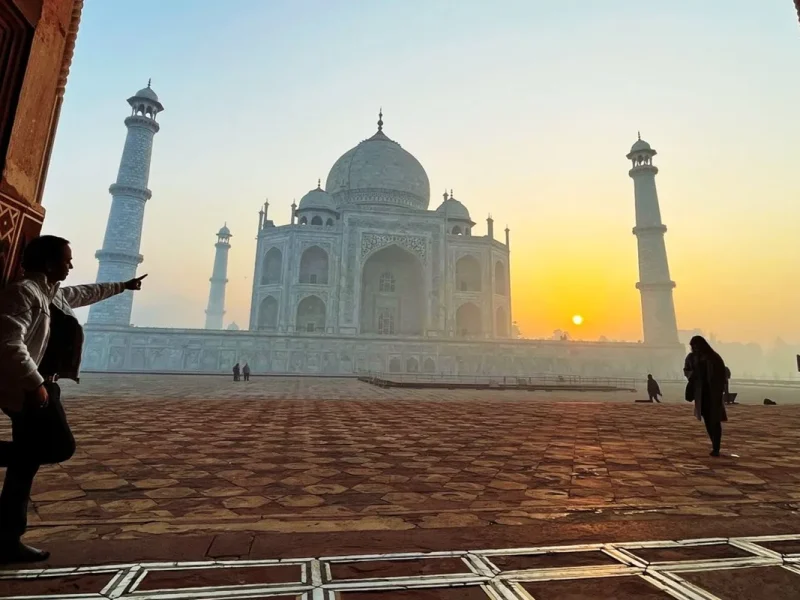
- Taj Mahal Guide: Plan your visit to India’s premier monument located just 10 minutes away.
- Places to Visit Near Taj Mahal: Explore cluster sights situated around the central monument area.
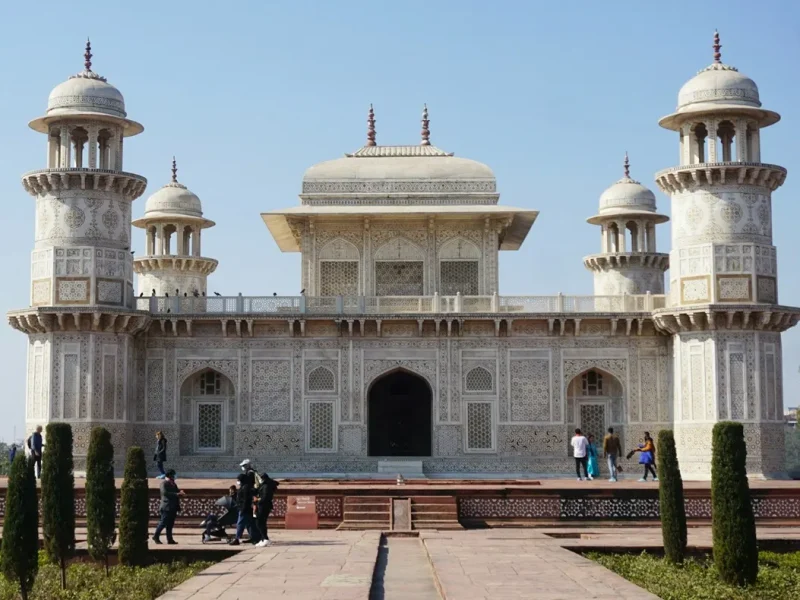
- Itmad-ud-Daulah (Baby Taj): Visit this exquisite marble tomb located across the river.
- Mehtab Bagh: Catch a sunset view of the Taj Mahal from across the riverbanks.
- Akbar’s Tomb at Sikandra: Explore Akbar’s majestic final resting place on the city outskirts.
- Fatehpur Sikri: Journey 40 km west to tour Akbar’s royal ghost city.
Comprehensive Trip Planning
Whether you have limited time or a full weekend, pick between our 1-day Agra itinerary and 2-day Agra itinerary. Check details on Agra trip costs, choose where to stay in Agra, and discover local experiences with our things to do in Agra, Agra food guide, and Agra shopping guide.
Planning to venture further? Explore day trips from Agra or discover neighboring destinations with our guides on places to visit near Agra, Agra to Mathura & Vrindavan, and Agra to Bharatpur. Always review the seasonal weather in our guide on the best time to visit Agra before setting out.
Frequently Asked Questions
No, Agra Fort is open 7 days a week, from sunrise to sunset, including Fridays and public holidays.
Agra Fort is approximately 2.5 kilometers (1.5 miles) away from the Taj Mahal. It takes 10 minutes by auto-rickshaw or taxi to travel between the two sites.
Yes, you can get stunning distant views of the Taj Mahal across the Yamuna River from Musamman Burj, Khas Mahal, and the outer marble balconies inside Agra Fort.
Most visitors spend between 2 and 2.5 hours exploring the main palaces, halls, and courtyards inside the complex.
Tourists must enter and exit through Amar Singh Gate on the south side. Delhi Gate is reserved strictly for military use.