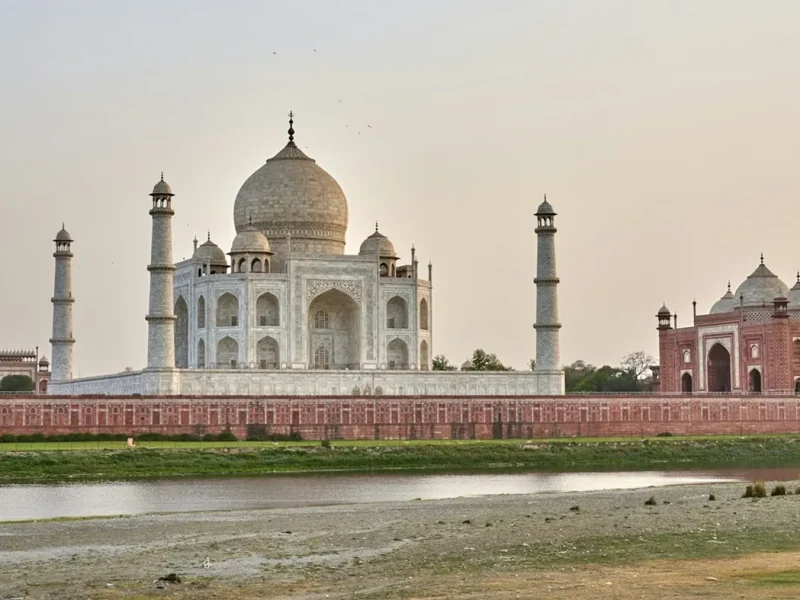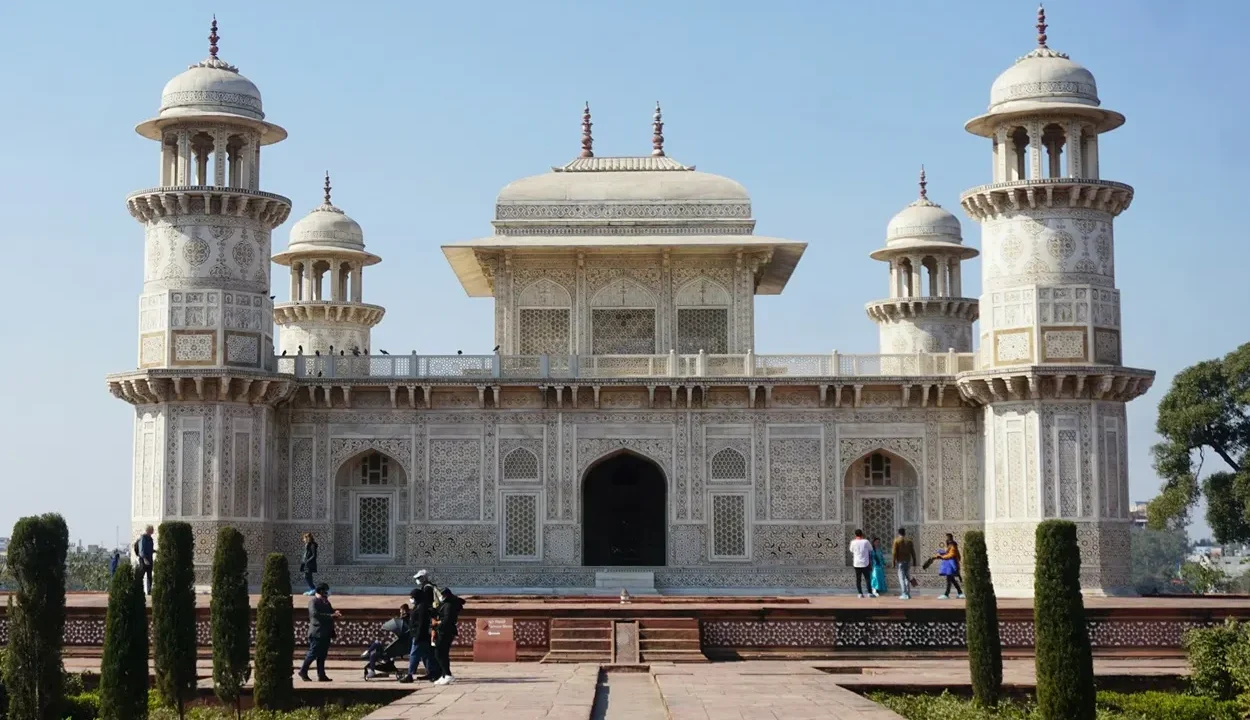
Nestled peacefully on the eastern bank of the Yamuna River in Agra, the Tomb of Itmad-ud-Daulah—affectionately known to travelers worldwide as the “Baby Taj”—is one of the most exquisite jewels of Mughal architecture. Often overshadowed by its world-famous neighbor, the Taj Mahal, this delicate marble mausoleum is widely regarded as the architectural prototype that inspired Shah Jahan’s iconic masterpiece.
Built between 1622 and 1628 AD, Itmad-ud-Daulah’s Tomb represents a dramatic turning point in Mughal monument design: the transition from heavy red sandstone structures to refined, jewel-encrusted white marble palaces. Whether you are crafting a detailed list of places to visit in Agra or seeking quiet, picturesque heritage sites away from tour groups, this Itmad-ud-Daulah’s Tomb: Complete Visitor Guide provides all the history, practical travel advice, entry details, and sightseeing tips you need.
Quick Visitor Information
| Parameter | Details |
|---|---|
| Popular Name | Baby Taj / Jewel Box Tomb |
| Location | Moti Bagh, Eastern Bank of Yamuna River, Agra |
| Commissioned By | Empress Nur Jahan (Wife of Emperor Jahangir) |
| Dedicated To | Mirza Ghiyas Beg (Itmad-ud-Daulah) and Asmat Begum |
| Architectural Era | 1622–1628 AD (Mughal Transition Period) |
| Opening Hours | Sunrise to Sunset (Open 7 days a week, including Fridays) |
| Entry Fee (ASI) | ₹30 (Indian Citizens) | ₹310 (Foreign Nationals) | Children under 15 FREE |
| Recommended Time | 1 to 1.5 Hours |
History: Empress Nur Jahan’s Tribute to Her Father
The story behind Itmad-ud-Daulah’s Tomb is a compelling narrative of family, influence, and imperial power. Mirza Ghiyas Beg was a Persian noble who migrated to India and rose through the imperial ranks to become the trusted Chief Minister (Treasurer) of Emperor Jahangir. Jahangir bestowed upon him the honorific title Itmad-ud-Daulah, meaning “Pillar of the State.”
Mirza Ghiyas Beg was also the father of Mehr-un-Nissa, who later became Empress Nur Jahan—the powerful and intelligent wife of Jahangir. Additionally, he was the grandfather of Arjumand Banu Begum (popularly known as Mumtaz Mahal), for whom the Taj Mahal was later constructed.
When Mirza Ghiyas Beg passed away in 1622, Empress Nur Jahan commissioned this mausoleum to honor both her father and mother, Asmat Begum. She personally oversaw the construction, selecting white marble from Rajasthan and hiring skilled artisans from Persia and India to pioneer complex stone inlay techniques.
Why It Is Called the “Draft of the Taj Mahal”
Architectural historians frequently call Itmad-ud-Daulah’s Tomb the precursor or draft of the Taj Mahal. Before this monument was constructed, royal Mughal tombs—such as Akbar’s Tomb at Sikandra and Humayun’s Tomb in Delhi—were constructed primarily of red sandstone with limited marble accents.
Itmad-ud-Daulah’s Tomb changed Mughal aesthetics forever in three key ways:
- First All-Marble Mausoleum: It was the first major Mughal structure built entirely from white marble, setting a precedent that Shah Jahan later followed for his imperial projects.
- Pioneering Pietra Dura (Parchin Kari): It introduced extensive semi-precious stone inlay work into marble walls. Artisans carved motifs of cypress trees, wine decanters, floral vases, and geometric shapes using lapis lazuli, carnelian, jasper, topaz, and onyx.
- Corner Minarets: The central chamber is flanked by four prominent hexagonal corner towers (minarets), a layout that directly influenced the larger detached minarets of the Taj Mahal.
Interior Splendor: Painted Ceilings and Intricate Jalis
While the exterior garden pavilion is striking, stepping inside the central tomb chamber reveals remarkable artistry. The walls and arched ceilings feature hand-painted Persian floral murals in gold, crimson, and turquoise. The light inside filters through carved marble lattice screens (jalis), illuminating the twin cenotaphs of Mirza Ghiyas Beg and his wife carved from yellow marble.
How to Reach Itmad-ud-Daulah’s Tomb
The tomb is situated on the eastern side of the Yamuna River, opposite the main city center of Agra. Connecting to the monument from major transit hubs is easy:
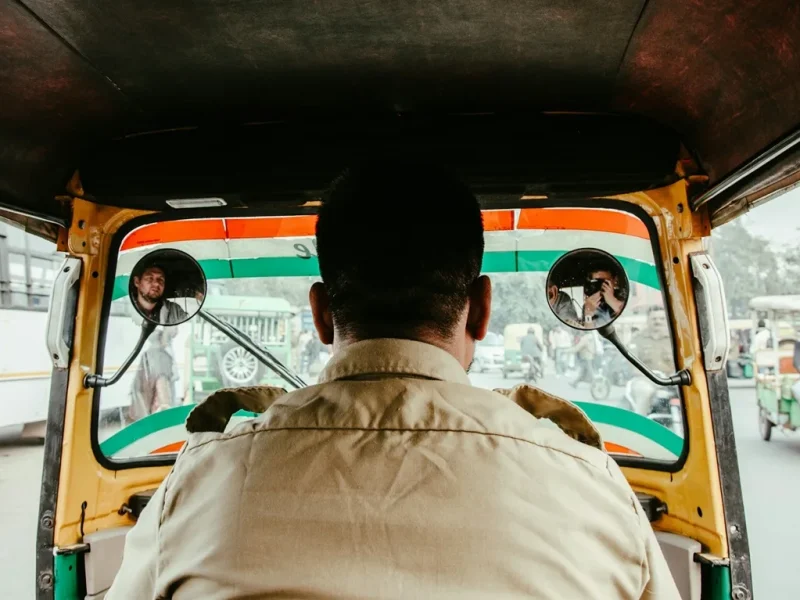
- From Taj Mahal / City Center (Approx. 6 km): Cross the Yamuna River via the Ambedkar Bridge or Strachey Bridge. An auto-rickshaw or app-based cab ride (Uber/Ola) takes around 15–20 minutes.
- From Agra Cantt Railway Station (Approx. 8 km): If you arrive via a Delhi to Agra train, you can book a pre-paid taxi or auto directly to the tomb (approx. 25 minutes travel time).
- From Delhi by Road: If taking a Delhi to Agra road trip via the Yamuna Expressway, the exit highway drops you conveniently near the eastern bank, making Itmad-ud-Daulah or Mehtab Bagh a great first stop before crossing into central Agra. Check our route overview on how to reach Agra from Delhi.
Essential Visitor & Travel Tips
1. Sunset Views Along the Riverfront
The rear of the tomb complex opens directly onto a stone pavilion overlooking the Yamuna River. In the late afternoon, the setting sun casts a warm golden light over the white marble inlay. It offers a calm, photogenic riverfront sunset spot with significantly fewer crowds than other spots along the river.
2. Footwear & Dress Code
Like most historical mausoleums in India, you must remove your shoes or slip on fabric shoe covers before stepping onto the raised marble plinth and entering the tomb chamber. Wearing shoes with socks or easy slip-on footwear makes this step simple.
3. Best Time of Year to Visit
The best months to explore Agra are between October and March when temperatures are comfortable for walking around open courtyards. For detailed seasonal information, consult our breakdown of the best time to visit Agra.
4. Ideal Combination Sightseeing Route
Because of its geographic location on the eastern bank, it is best to combine a visit to Itmad-ud-Daulah’s Tomb with Mehtab Bagh (the moonlight garden across from the Taj Mahal) in a single afternoon outing. Both sites lie on the same side of the river, saving you time in city traffic.
How to Fit Itmad-ud-Daulah’s Tomb into Your Travel Plans
Depending on your overall travel pace, the “Baby Taj” fits seamlessly into standard Agra circuits:
- Agra 1-Day Express Itinerary: Visit the Taj Mahal at sunrise, explore Agra Fort in the late morning, have lunch, visit Itmad-ud-Daulah’s Tomb around 3:30 PM, and finish at Mehtab Bagh for sunset. See our complete Agra 1-day itinerary.
- Agra 2-Day Comprehensive Itinerary: Take a more relaxed pace. Spend Day 1 focusing on central city sights and shopping for local marble handicrafts (see our Agra shopping guide). Dedicate Day 2 to cross-river heritage sites like Itmad-ud-Daulah, followed by a trip outward via the Fatehpur Sikri guide circuit. Check our Agra 2-day itinerary.
To help organize your trip budget, transportation options, food, and accommodations, read through our companion guides on Agra trip costs, where to stay in Agra, Agra food guide, and general Agra travel tips.
Frequently Asked Questions
Yes! Unlike the Taj Mahal (which is closed every Friday), Itmad-ud-Daulah’s Tomb is open 7 days a week from sunrise to sunset. It is one of the best monuments to visit in Agra on a Friday.
It earned the nickname “Baby Taj” because of its structural resemblance to the Taj Mahal—featuring white marble, inlaid semi-precious stone work (Pietra Dura), intricate lattice screens, and corner towers. It was built prior to the Taj Mahal and served as an architectural prototype.
A typical visit takes between 45 minutes to 1.5 hours. This allows ample time to stroll through the Charbagh garden, inspect the interior painted ceilings and marble inlay work, and enjoy views of the Yamuna River.
Yes, non-commercial still photography is allowed throughout the garden and inside the central tomb chamber. Using flash photography inside the painted chamber is restricted to preserve the historic wall pigments.
Yes. If you are exploring nearby region routes like places to visit near Agra or planning excursions such as day trips from Agra, Agra to Mathura and Vrindavan, or Agra to Bharatpur, starting your day on the eastern riverbank near Itmad-ud-Daulah provides quick highway access.